

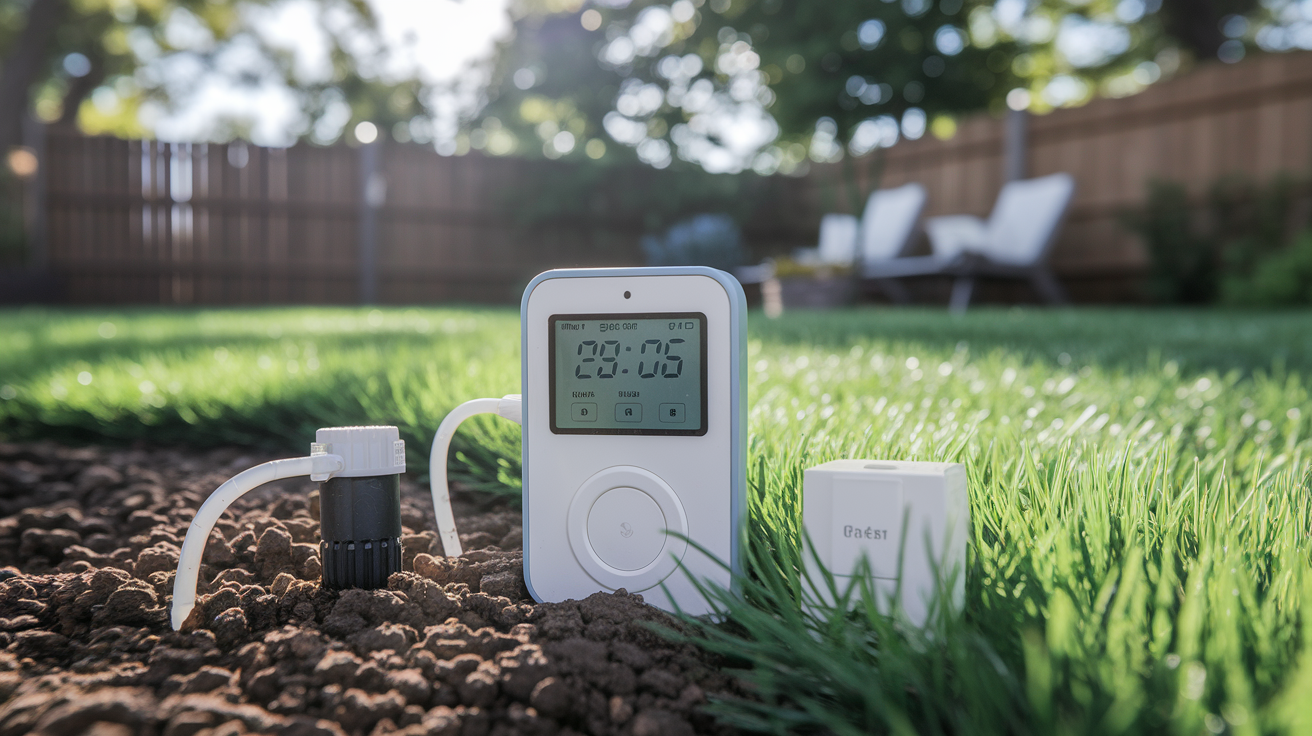

What if your sprinklers actually knew when the soil was thirsty and when to hold off?
Smart irrigation controllers do exactly that by using sensors in the ground and weather data to decide when and how long to water.
Soil moisture probes, on-site weather stations, flow meters, and cloud forecasts feed the controller, and algorithms turn that data into real-time watering decisions that save water and keep plants healthy.
This post walks through how those sensors work, what the controller calculates, and the real-world gains you can expect.
Core Operating Principles of Smart Irrigation Controllers
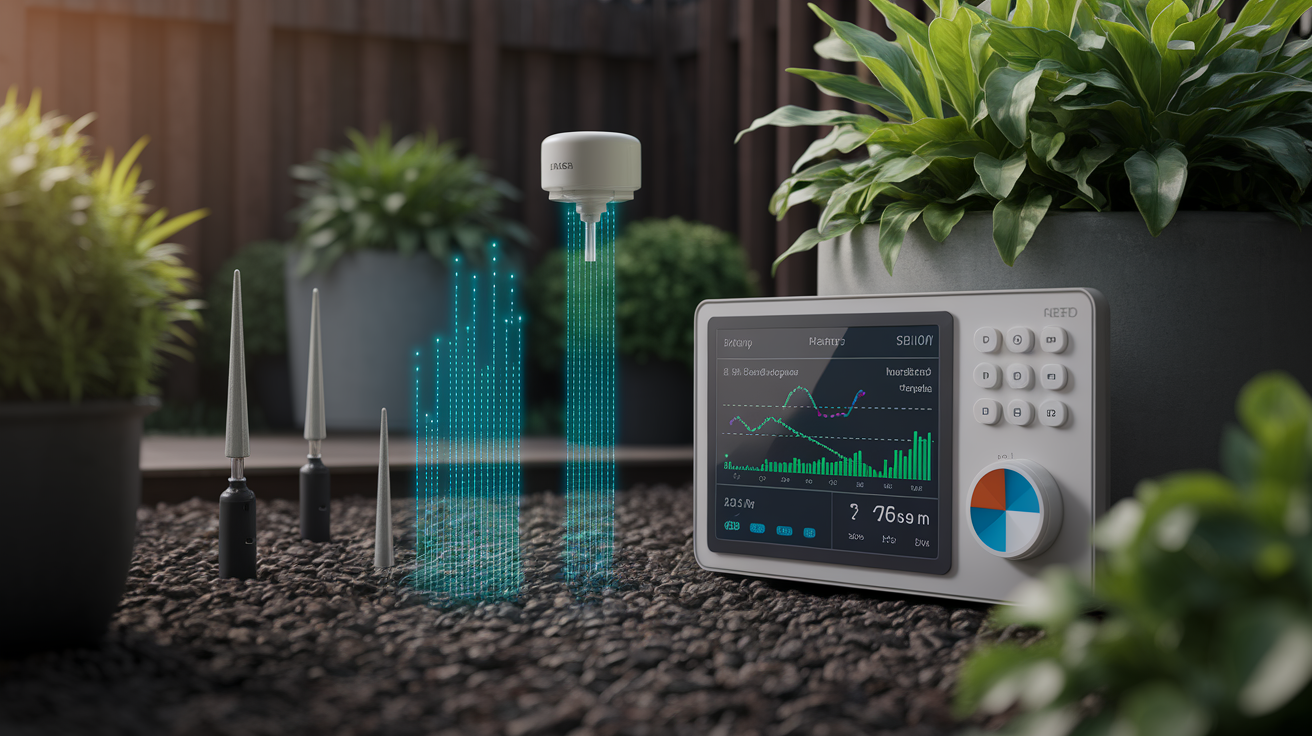
Smart irrigation controllers replace guesswork with data. These systems pull information from two places: sensors you install on your property (buried in soil or mounted nearby) and weather services they reach over Wi‑Fi or a cellular connection. Soil moisture probes tell you exactly how much water sits around plant roots. Weather stations track temperature, humidity, sun exposure, and wind. The controller also grabs forecast data and historical climate records from subscription feeds or public weather sources. All of it gets fed into the processor, which builds a real-time picture of how much water each zone actually needs, right now and over the next day or two.
Once the data lands, algorithms take over. Instead of running the same schedule you set three weeks ago, the system recalculates valve open times based on current plant demand. If soil moisture readings show the ground’s still damp and rain’s coming tomorrow, tonight’s cycle gets shortened or skipped. During a heatwave? The controller extends watering or adds a second pass to replace what evaporated and what the plants drank. Most of this math revolves around evapotranspiration, the water lost through soil evaporation and plant use. The controller estimates ET using weather inputs, then adjusts per zone depending on plant type, how deep the roots go, and whether you’re watering a slope.
This is where real efficiency happens. Old-school timers water by the clock. Smart controllers water by need. They adapt daily, sometimes more than once, without you touching anything or remembering to check the weather.
Five key mechanisms that make this work:
- Soil moisture monitoring turns irrigation on or off when readings hit thresholds you’ve set.
- Real‑time weather adjustments use temperature, humidity, wind, and sun data to fine-tune daily ET estimates and shift runtimes up or down.
- Evapotranspiration calculations figure out how much water the landscape lost, then schedule just enough irrigation to replace it.
- Flow sensing measures water delivered per zone, confirms volumes, and flags weird patterns like leaks or stuck valves.
- Adaptive scheduling compares sensor data, forecasts, and historical trends to tweak, delay, or cancel watering events automatically.
Key Hardware Components in Smart Irrigation Systems

Sensors are what make a smart system actually smart. Soil moisture sensors go into the ground at root depth and report volumetric water content, usually as a percentage. When the reading dips below your target, the controller knows it’s time to water. When it climbs back up, watering stops or gets pushed back. Rain sensors are simpler but just as useful. They pause scheduled cycles as soon as rainfall hits a set amount, which keeps you from watering in the middle of a storm. Both types send data to the controller via wires or short-range wireless.
Weather stations and flow meters add more intelligence. An on-site station measures conditions constantly: air temp, humidity, wind speed and direction, solar radiation. These readings go straight into evapotranspiration formulas, giving you a far more accurate sense of water demand than any regional average could. Flow meters sit inline on each zone and count every gallon that passes through. They confirm you delivered the planned volume, and if flow spikes or drops suddenly, the controller flags a potential leak, clog, or valve problem before you waste hundreds of gallons.
Controllers pull in all this hardware data through a mix of wired sensor leads, low-power wireless for battery-operated probes, and standard plumbing hookups for flow meters. The more complete your hardware network, the sharper the watering decisions become, zone by zone.
Data Processing and Decision-Making Algorithms
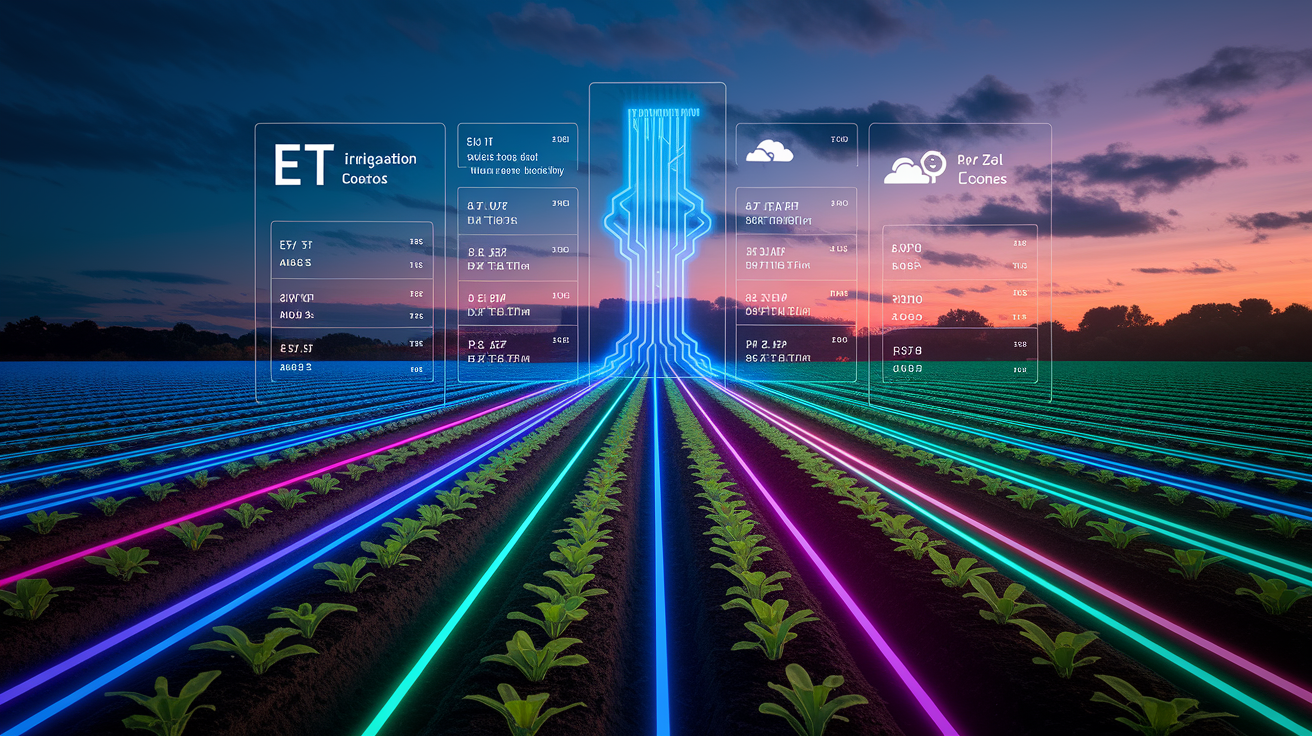
Evapotranspiration sits at the heart of most smart irrigation logic. The controller takes weather data (temperature, humidity, solar radiation, wind) and runs it through an ET formula, often a simplified Penman-Monteith equation, to estimate how much water the landscape lost since the last watering. It converts that ET number into runtime for each zone, factoring in sprinkler output, plant type, and soil. If today’s ET is high because it was hot and windy, tonight’s watering stretches longer. If it was cool and cloudy, duration drops or the cycle gets skipped.
Forecast integration pushes this further. Controllers download short-term predictions, usually 24 to 48 hours out, and use them to postpone or cancel upcoming irrigation. If the forecast shows a 70% chance of half an inch of rain tomorrow morning, the system holds off on tonight’s cycle and waits to see if the rain shows up. After it does, soil moisture sensors check whether enough water fell to meet plant needs. This stops the classic waste scenario where sprinklers run at 3 a.m. and it pours at 9.
Seasonal and daily tweaks happen nonstop. Controllers track day length, temperature trends, and historical ET for your area. In spring, when plants are growing fast and temps climb, the system slowly ramps up watering frequency or duration. In fall, as growth slows and temps drop, it scales back. Daily micro-adjustments respond to sudden shifts, a surprise cold snap or early heatwave, keeping irrigation aligned with real conditions instead of an average you programmed weeks ago.
| Input Type | Source | How It Affects Irrigation |
|---|---|---|
| Soil Moisture | In-ground sensors at root zone | Triggers or pauses watering when readings cross thresholds; overrides schedule if soil is already wet |
| Current Weather | On-site station or internet feed | Calculates daily ET and adjusts runtime up or down to match water loss |
| Weather Forecast | Subscription service or public API | Delays or skips cycles if significant rain is predicted within 24 to 48 hours |
| Flow Data | In-line flow meters per zone | Confirms delivery volume; detects leaks or clogs and triggers alerts or automatic shutoff |
Connectivity and System Integration

Most smart controllers rely on Wi‑Fi or cellular to stay current. The controller uses these connections to pull weather forecasts from subscription services or free APIs, download updated ET data, and sync with a cloud platform that logs history and stores settings. That same connection powers the mobile app, so you can check soil moisture, tweak zone settings, or start a cycle manually from anywhere. If a leak gets detected or a valve fails, you get a push notification or email right away. No need to walk the yard and discover a flooded flower bed.
Integration with smart home systems is pretty common now. Many controllers work with voice assistants and home automation platforms, so you can fold irrigation into bigger routines. If your weather app says rain’s coming, a linked smart home setup can tell the controller to skip tonight’s schedule without you doing anything. Firmware updates arrive over the same Wi‑Fi or cellular link, adding features, tweaking algorithms, or patching bugs automatically in the background.
Four common connectivity tasks that smart controllers handle remotely:
- Remote scheduling lets you adjust watering times, durations, and zone settings from a phone app, even when you’re not home.
- System alerts send instant notifications for leaks, low flow, skipped cycles, or sensor failures.
- Firmware updates download and install new software and algorithm improvements without you touching anything.
- Weather data syncing continuously refreshes forecast and ET data to keep decisions accurate and current.
Practical Examples of Smart Irrigation in Action
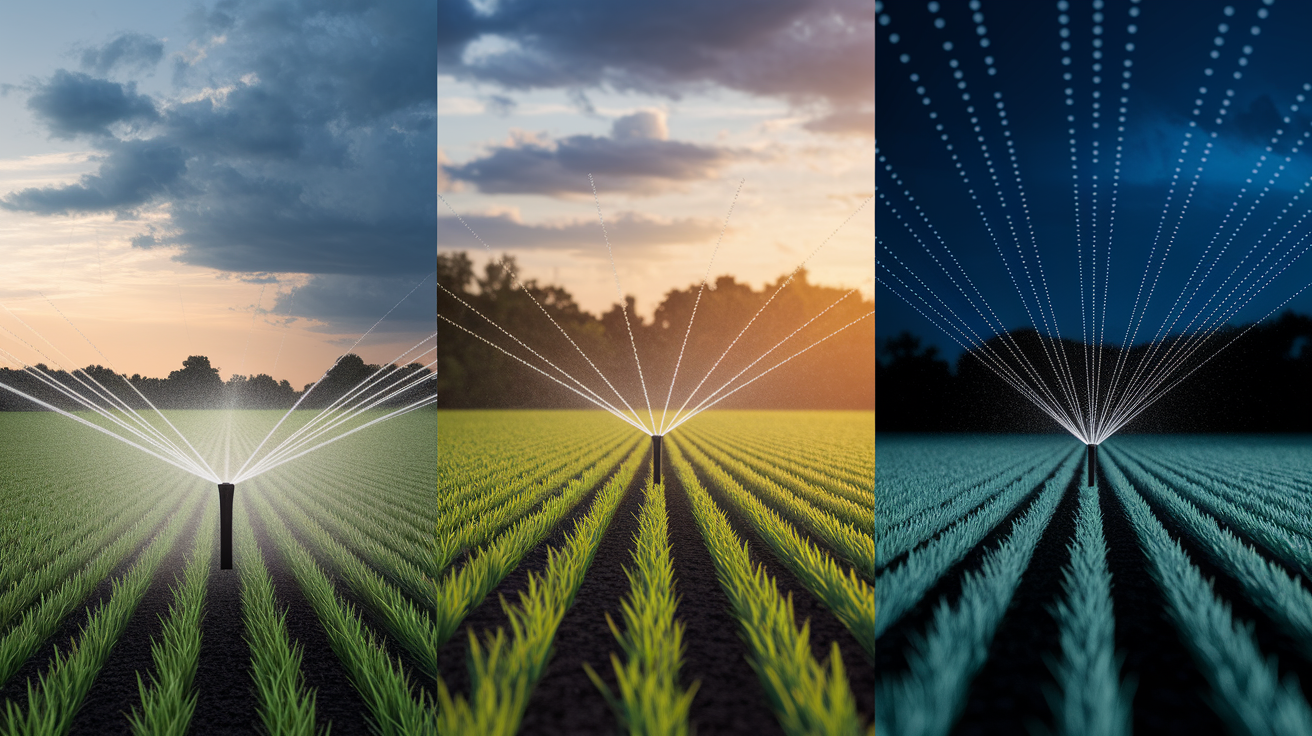
It’s a Tuesday evening in July. Your system’s set to water the front lawn at 10 p.m., but the controller just pulled a forecast showing a 60% chance of three-quarters of an inch of rain starting at 2 a.m. Instead of running the usual 20-minute cycle, it postpones irrigation until Thursday morning, after the storm clears. Thursday at 6 a.m., it checks rain gauge data from your weather station. The station logged 0.9 inches overnight, more than the lawn needs, so Thursday’s cycle gets skipped too. You didn’t touch a dial. You didn’t waste a gallon.
Now picture mid-August. A heatwave rolls in. Daytime temps hit 98°F for three straight days, and the on-site weather station reports high solar radiation and low humidity. The controller recalculates ET every morning and sees that water loss jumped 40% above the seasonal average. Instead of the usual 15-minute runtime for your vegetable beds, the system bumps it to 21 minutes and adds a second cycle at dawn to replace the extra moisture plants are losing to heat stress. Soil sensors confirm the ground’s drying faster than normal, so the adjustment checks out.
Three practical scenarios where smart systems adapt automatically:
- Pre‑storm shutoff. When forecast models predict 0.5 inches or more of rain within 24 hours, the controller delays or cancels the next cycle and waits for sensor confirmation after the rain.
- Daytime heatwave adjustment. During multi-day high temps, ET calculations spike and the system extends runtimes or splits watering into morning and evening cycles to keep plants from wilting.
- Nighttime optimization. Controllers schedule most watering between midnight and 6 a.m., when wind and evaporation are lowest, then fine-tune start times based on dew point and local humidity to cut disease risk.
Comparison to Traditional Irrigation Controllers
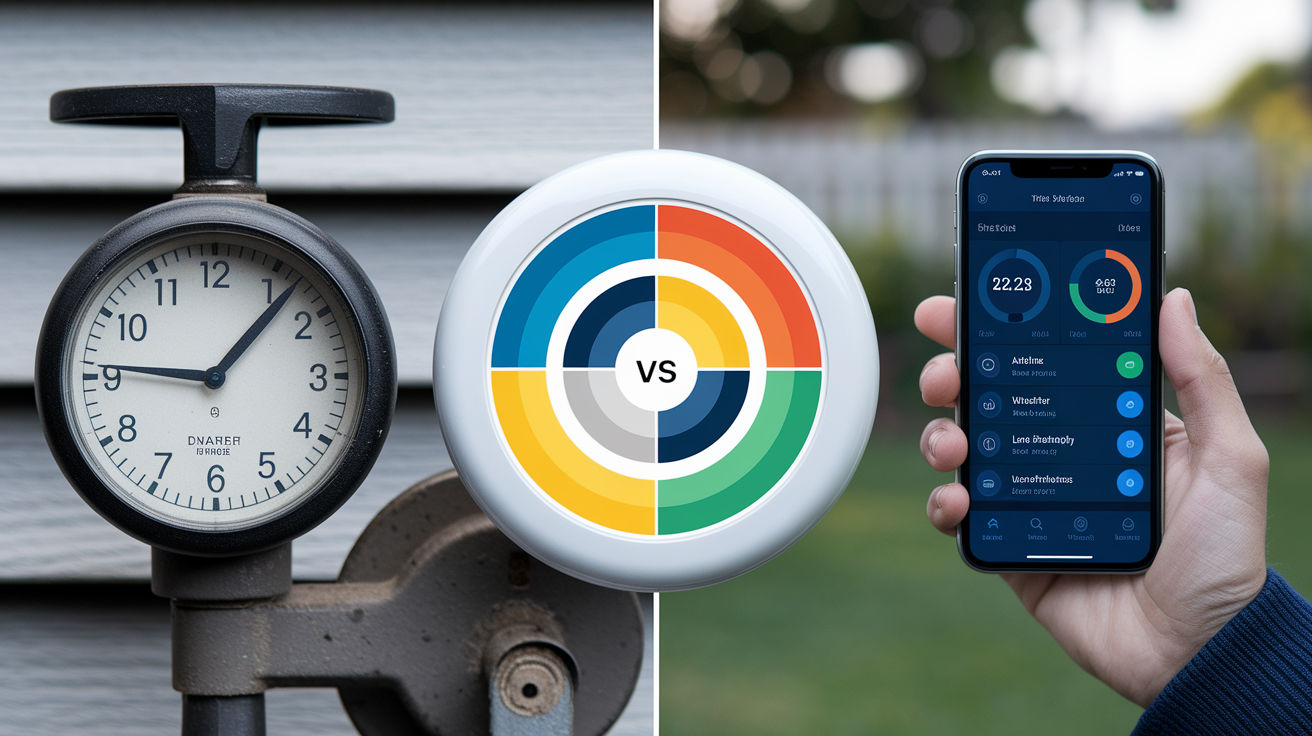
Traditional timers are basically clocks with switches. You program a fixed schedule (15 minutes for the lawn every Monday, Wednesday, and Friday at 6 a.m.) and the system runs that schedule until you manually change it. If it rains Tuesday, the lawn still gets watered Wednesday morning. If a heatwave hits and the lawn needs more water, it keeps getting the same 15 minutes until you notice brown patches and remember to bump up the runtime. There’s no feedback, no weather awareness, no automatic correction. The job of adjusting for changing conditions falls entirely on you.
Smart controllers flip that. They watch conditions constantly and tweak watering decisions multiple times per week, or even daily, without manual input. Soil moisture sensors tell the system when the ground’s already wet, so it skips pointless cycles. Weather forecasts and ET calculations tell it when demand’s higher or lower, so runtimes stretch or shrink to match. Flow meters catch problems (leaks, clogs) that a traditional timer would never notice until your water bill shows up or plants start dying.
| Feature | Traditional | Smart | Benefits of Smart |
|---|---|---|---|
| Schedule Adjustment | Manual, infrequent | Automatic, continuous | Adapts to weather and soil changes daily; no forgotten adjustments |
| Weather Awareness | None | Real-time and forecast data | Skips watering before rain; increases watering during heatwaves |
| Leak Detection | None | Flow meters and anomaly alerts | Catches leaks immediately, potentially saving thousands of gallons per month |
| Water Savings | Baseline (100%) | Typically 20 to 25% reduction | Lower bills, healthier plants, less waste, and easier regulatory compliance |
Final Words
In the action, we ran through how controllers collect soil and weather data, the algorithms that use evapotranspiration and forecasts to set run times, the core hardware and connectivity, real-world examples, and a quick versus‑old‑timer comparison.
If you’re asking how do smart irrigation controllers work, they pull sensor and weather info together and adjust schedules so plants get water only when they need it.
Result: less wasted water, healthier plants, and one small chore you don’t have to worry about.
FAQ
Q: What are the disadvantages of a smart irrigation system?
A: The disadvantages of a smart irrigation system are higher upfront cost, extra setup and sensor maintenance, possible Wi‑Fi or data outages, occasional incorrect sensor readings, and limited savings if zones are poorly planned.
Q: What is the 30 30 rule for irrigation?
A: The 30 30 rule for irrigation is a cycle‑and‑soak guideline: run sprinklers for 30 minutes, pause 30 minutes to let water soak in, then repeat to reduce runoff and improve absorption.
Q: How does a smart irrigation controller work?
A: A smart irrigation controller works by collecting sensor and weather data, using evapotranspiration and scheduling algorithms, then automatically adjusting watering duration, frequency, and timing for efficient irrigation.
Q: How many minutes should I run my sprinkler per zone?
A: The number of minutes you should run your sprinkler per zone is usually 15–45 minutes per cycle, depending on soil and plants; use catch‑cup tests to find your zone’s application rate.