



Want a home business that actually pays the bills this year?
You don’t need a storefront or investors.
With a laptop, internet, and a small plan you can start freelance work, sell handmade goods, run online shops, offer local services, or build passive income.
This post lays out five real home-based business categories: digital, service, product, e-commerce, and passive, with what each makes, how fast they grow, and how much they cost to start.
If you want practical ideas that fit real life (kids, small budgets, busy schedules), read on.
High-Level Overview of Profitable Home-Based Business Categories
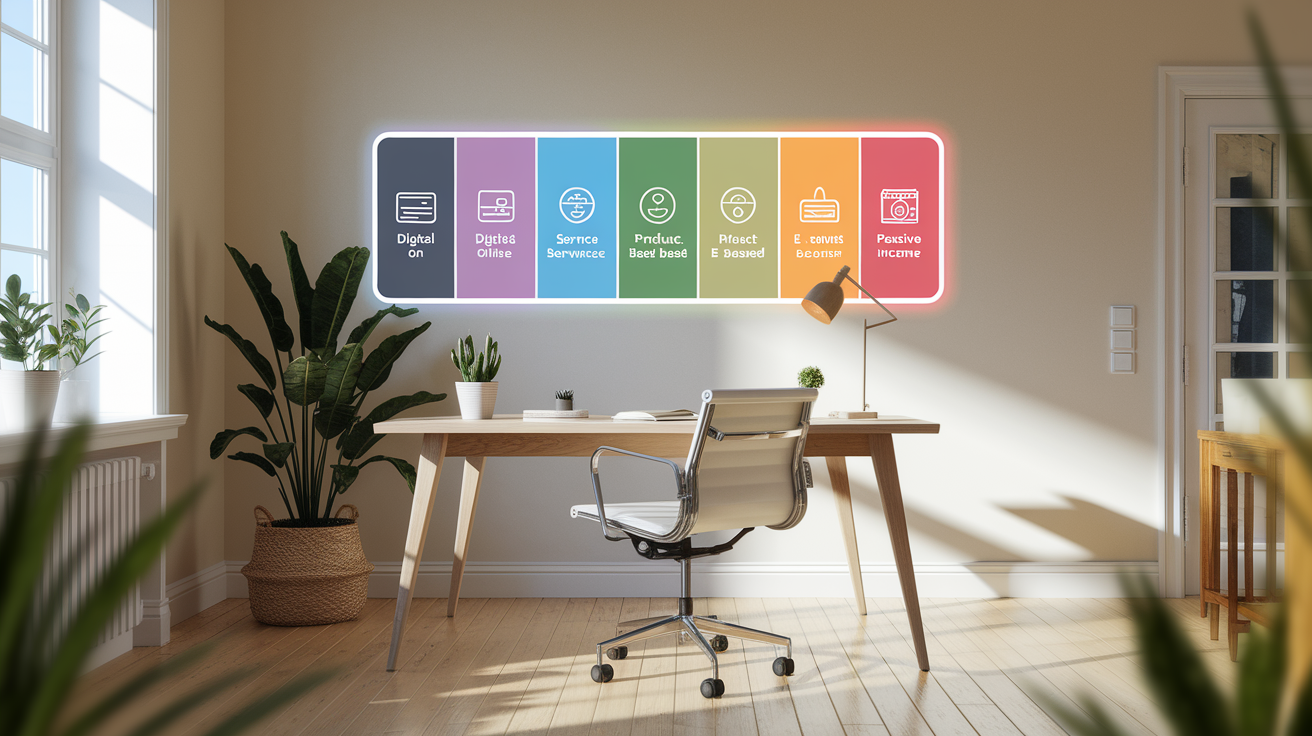
Home businesses break down into five main categories. Each one’s got a different timeline, earning potential, and skill floor. Digital stuff covers freelancing, content creation, online consulting. Service models lean on what you know, not what you stock. Think virtual assistants, fitness coaches, in-person specialists. Product ventures mean you’re making or sourcing physical items like candles, jewelry, home décor. E-commerce lets you sell through Shopify, Etsy, Amazon without ever opening a storefront. And passive or semi-passive income comes from digital downloads, affiliate cuts, subscription content.
These categories work because three trends collided. Remote work made video calls and digital payments normal. Online marketplaces made it cheap to find customers. And rising costs for office space pushed entrepreneurs toward home setups.
The five categories:
- Digital and online businesses: freelancing, blogging, virtual services, content creation
- Service-based businesses: consulting, coaching, tutoring, local client work
- Product-based businesses: handmade goods, crafted items, curated physical products
- E-commerce models: dropshipping, print-on-demand, reselling, platform selling
- Ressive income streams: digital products, affiliate marketing, membership sites
Most home businesses need similar basics. A computer. Solid internet. A phone or video setup. Software for invoicing, scheduling, project tracking. And some kind of workspace, even if it’s just a desk corner or cleared shelf.
Digital and Online Home-Based Business Ideas for Modern Entrepreneurs

Digital businesses scale faster than physical ones because geography doesn’t limit them. A freelance designer in Ohio can work with clients in California, Singapore, London in the same week. A blogger earning affiliate income from 500 readers can grow to 50,000 without hiring staff or renting warehouse space. Startup costs stay low. Usually just software and a portfolio site. You can test ideas before going full-time.
The catch? You need visible skills and you can’t ghost your audience. Freelancers need portfolios. Bloggers need consistent posts. Video creators need lighting and editing chops. But you get flexibility. Set your hours. Pick your clients or topics. Work anywhere with Wi-Fi.
Skill requirements shift by model. Writing, design, coding need training or years of practice. Virtual assistant work needs organization and detail focus, less formal education. Blogging and affiliate marketing depend more on showing up than credentials.
Ten digital business ideas:
- Freelance writing: blog posts, marketing copy, technical docs for businesses and publications (around $48,000/year average; highest demand in digital marketing, ecommerce, blog content)
- Virtual assistant services: email, scheduling, data entry, admin tasks for small businesses or pros working remotely
- Blogging and affiliate marketing: publish niche content, earn commissions promoting products to your readers (works best if you’ve already got a social following or YouTube channel)
- Freelance graphic design and digital art: logos, social graphics, illustrations on Fiverr, Upwork, Behance
- Freelance coding and app development: websites, mobile apps, custom software (high pay if you’ve got the skills and find the right fit)
- Social media management: content calendars, post scheduling, brand account handling for businesses without in-house teams
- Video production and editing: promo videos, tutorials, event coverage for brands or creators
- Podcasting: record and publish audio on niche topics, monetized through sponsors, ads, listener subscriptions (nearly 160 million people in the U.S. listen monthly)
- Online course creation: package what you know into lessons, sell access via Teachable or Gumroad
- Digital product sales: templates, printables, stock photos, design assets customers download instantly
Success comes down to three things. Niche focus helps you stand out. Writing about “productivity” means competing with thousands. Writing about “productivity tools for freelance videographers” puts you in a smaller pool. Consistency builds trust and visibility. Publishing every Tuesday or replying within two hours matters. And portfolio quality beats credentials. A strong showcase wins clients faster than a wall of degrees.
Service-Based Home Business Ideas That Rely on Expertise, Not Inventory

Service businesses trade your time and know-how for payment. Low startup costs. No inventory stress. A virtual assistant needs a laptop and scheduling tool. A tutor needs a webcam and subject knowledge. A dog walker needs a leash and local clients. Most of these start as side work and grow into full income as word spreads and repeat clients stack up.
Main advantage? You can land your first client this week if you’ve got the skill and a way to reach people who need it. The limit is that income usually ties directly to hours worked, unless you build systems to delegate or package your offering differently.
Twelve service ideas built on expertise, not inventory:
- Virtual assistance: remote admin support like email, calendar, travel booking, data entry for entrepreneurs and small teams
- Online tutoring: teach subjects, languages, music via video (platforms include Chegg Tutors and Tutor.com; no geographic limits)
- Online coaching and consulting: business strategy, life coaching, financial planning, career advice over Zoom or Skype
- Social media management: plan, create, schedule content for business accounts on Instagram, LinkedIn, TikTok, Facebook
- Childcare services: home daycare or babysitting for local families (daycare market over $65 billion and growing; requires local compliance and background checks)
- Pet services: pet sitting, dog walking, in-home grooming (grooming market nearly $7 billion; steady demand as pet ownership climbs)
- Online fitness training and wellness coaching: custom workout plans, nutrition guidance, virtual sessions for remote clients
- In-person fitness and wellness classes: yoga, dance, strength training from a home studio or client visits
- Digital marketing agency services: SEO, email campaigns, content marketing, ad management for local or remote businesses
- Freelance bookkeeping: manage accounts, invoices, financial records for small businesses (around $44,000 average salary; freelancers often earn more as they scale and specialize)
- Translation services: documents, websites, audio between languages for businesses expanding or serving multilingual audiences
- Event planning: coordinate virtual conferences, webinars, celebrations using online platforms and vendor networks
Certification and licensing shift by service and location. Fitness trainers, massage therapists, childcare providers often need credentials or permits. Bookkeepers may need software skills or certification depending on complexity. Most consulting, tutoring, virtual assistant work needs proven ability but no formal license. Before you launch, check your state and local rules, especially for anything involving children, food, health, finances.
Product-Based and Handmade Home Business Ideas for Creative Entrepreneurs

Product businesses turn creative skill into physical items people buy, keep, gift. Jewelry makers, candle pourers, sewers, potters start with raw materials and finish with goods ready to photograph, list, ship. Startup costs vary. A candle business might begin with $200 in wax, wicks, fragrance. A furniture maker needs more space and tools. But all product ventures follow a similar path: source materials, build inventory, shoot products, list them on a marketplace or your site, fulfill orders.
Product businesses need more upfront cash than most service models. But they create assets you can sell repeatedly. One candle mold produces dozens of units. A single jewelry design can be remade in different colors or sizes. And unlike trading hours for dollars, you can sell while you sleep if your listings stay live and your inventory’s ready.
Eight product and handmade business ideas:
- Handmade jewelry: necklaces, bracelets, earrings, rings using beads, wire, resin, metal (sell on Etsy, local craft fairs, Instagram shops)
- Candle making: scented or decorative candles in small batches, sold online or at markets (Brooklyn Candle Studio started in 2013 when founder Tamara Mayne bought a kit, sold at local markets, quit her job a year later)
- Sewing and textile goods: clothing alterations, custom garments, quilts, bags, home textiles (Peg and Awl began when husband and wife Walter and Margaux Kent sold items made from reclaimed materials in their home workshop)
- Home décor items: wall art, planters, signs, decorative objects fitting current interior trends
- Ceramics and pottery: throw or hand-build functional or decorative pieces like mugs, bowls, vases, plates (Helen Levi is a Queens, New York potter who sells ceramics from her online store)
- Subscription boxes: curate themed boxes, sell recurring monthly deliveries (Ashley Reynolds created Cloth & Paper by bundling surplus products into subscription boxes; online subscription box industry forecast to grow 12.64% annually between 2026 and 2034)
- Herbal products and natural goods: teas, salves, soaps, wellness items using natural ingredients (Lauren Haynes started Wooden Spoon Herbs in her kitchen using American-grown herbs and traditional methods)
- Digital crochet or craft patterns: sell downloadable instructions instead of finished items to cut production time and avoid burnout (Genna Tatu of Crochet by Genna added digital patterns for passive income alongside made-to-order items)
Branding and photography matter more for product businesses than almost anything else. Customers can’t touch or smell your candles through a screen. Clear photos showing size, texture, color, packaging become your main sales tool. Invest time learning basic product photography. Natural light near a window, simple backdrop, phone camera. That’s enough to start. As you grow, consider a lightbox or ring light. Your brand name, logo, packaging also signal quality and help customers remember you when they’re ready to reorder or tell a friend.
Home-Based E-commerce Models Using Popular Online Selling Platforms

E-commerce models let you sell products without keeping inventory or fulfilling orders yourself. Makes them some of the lowest-risk ways to test a product idea. Dropshipping connects you with suppliers who store and ship after you make a sale. Print-on-demand services let you upload designs, sell custom items like t-shirts, mugs, phone cases without printing until a customer orders. Reselling platforms like eBay or Poshmark turn thrift finds or unused stuff into cash. And Amazon FBA handles storage, packing, shipping for a fee while you focus on sourcing and marketing.
These models remove barriers like warehouse rent, bulk inventory buys, packing supplies. The tradeoff? Lower profit margins and less control over fulfillment speed or product quality. A dropshipping supplier might run out of stock without warning. A print-on-demand shirt might arrive smudged. And platform fees can eat into earnings, especially on cheaper items. But for entrepreneurs testing a concept or launching with limited capital, these models let you start selling this week.
Six core e-commerce options:
- Dropshipping: list products on your store, forward orders to a third-party supplier, let them handle storage and shipping (low-risk model; Subtle Asian Treats succeeded by targeting a niche with cute and kawaii merchandise)
- Print-on-demand: upload designs to Printful or Printify, sell branded products like t-shirts, hoodies, hats, mugs, blankets, pillows, shoes, backpacks, phone cases (Raven Gibson launched Legendary Rootz to empower Black women through t-shirts and accessories using print-on-demand)
- Reselling and online thrifting: source secondhand or vintage items, sell on eBay, Poshmark, Depop (global secondhand market expected to nearly triple by 2029, reaching $367 billion; COAL N TERRY started selling vintage clothing from a college dorm, now has celebrity fans)
- Amazon FBA (Fulfillment by Amazon): send inventory to Amazon warehouses, let them pick, pack, ship while you focus on sourcing and listings
- Etsy shop: sell handmade goods, vintage items, craft supplies on a marketplace built for creative entrepreneurs
- Shopify store with Shopify Subscriptions: build your own store, offer one-time purchases or recurring subscription boxes (Shopify Subscriptions app is free; Charlotte and Dave Cho started Soko Glam in 2012 to bring Korean beauty products to the U.S.)
Marketing for e-commerce leans on targeted traffic. Paid ads on Facebook, Instagram, Google can bring fast results but require testing to find profitable campaigns. Organic traffic from SEO-friendly product descriptions and blog content takes longer but costs less over time. Social proof like reviews, user photos, influencer partnerships builds trust and lifts conversion rates. And email marketing turns one-time buyers into repeat customers by announcing new products, offering discounts, sharing behind-the-scenes stuff.
Local and In-Person Home Business Ideas With Strong Community Demand

Local service businesses thrive on proximity, reputation, repeat clients. A lawn care provider serves a five-mile radius. A caterer builds relationships with event planners and families in town. A home daycare depends on parents nearby who need reliable, trusted care. These businesses often start through word of mouth and grow as happy customers refer friends, leave reviews, post about your work on neighborhood social groups.
The upside? Competition tends to be limited to your immediate area. Customers value convenience and personal connection. The downside? Growth requires expanding your area, raising prices, or hiring help. You can’t serve fifty clients a week if you’re the only cleaner, dog walker, or personal trainer.
Ten local and in-person business ideas with strong demand:
- Gardening and landscaping services: lawn mowing, planting, weeding, seasonal yard work for homeowners (lawn and garden market generates more than $188 billion annually in the U.S.; can start with just a few basic tools)
- Home cleaning and organizing services: regular or deep cleaning for busy households, or help decluttering and reorganizing spaces (global home cleaning services market projected to reach almost $13 billion by 2030; Molly Graves and Ashley Murphy created Neat, a home organization franchise with professional organizers nationwide)
- Pet sitting and dog walking: care for pets in your home or theirs, walk dogs while owners work (steady demand as pet ownership increases)
- Pet grooming: bathe, trim, style dogs or cats from a home grooming space (pet grooming business market size almost $7 billion)
- Catering and meal prep services: cook for events or prep weekly meal packages for busy families (Organic Oren is a Southern California meal delivery service that opens online ordering once weekly with pickup in Los Angeles or Montecito; may require access to a commercial kitchen or food permits depending on local rules)
- In-person fitness and wellness classes: teach yoga, Pilates, strength training, dance from a home studio or clients’ homes (personal training industry estimated at nearly $12 billion)
- Massage therapy and wellness services: therapeutic or relaxation massage, energy work, other bodywork from a dedicated home treatment room (requires state certification, business license, equipment in most locations)
- Childcare and daycare services: licensed home care for infants, toddlers, school-age children (daycare market valued at more than $65 billion; requires licensing, background checks, compliance with local child care regulations)
- Eldercare and companion services: assist seniors with daily activities, appointments, companionship in their homes (licensing or certification may be required depending on scope)
- Bed-and-breakfast management: rent spare bedrooms or a guest house to travelers through Airbnb or direct bookings (requires compliance with local lodging rules and short-term rental permits)
Zoning and permit requirements vary widely by city and county. Childcare, food service, lodging businesses often face the strictest rules. Inspections, liability insurance, specific facility standards. Pet grooming, massage therapy, fitness instruction may require professional licenses or certifications. Before investing in equipment or marketing, check with your local planning department and business licensing office to confirm what’s allowed in your home and neighborhood.
Passive and Semi-Passive Income Home-Based Ideas for Long-Term Earnings

Passive income businesses generate revenue without needing you present for every transaction. A blogger earns affiliate cuts while sleeping. A course creator sells access to recorded lessons months after filming. A designer sells the same digital template hundreds of times. Semi-passive businesses need occasional updates or customer support but don’t demand constant hands-on work. A subscription box requires monthly curation and shipping. A membership site needs fresh content every week or month.
The line between passive and semi-passive blurs depending on how you structure things. Affiliate marketing is passive once content’s published and ranked. But it becomes semi-passive if you’re constantly creating new posts to grow traffic. Digital products are passive after launch, semi-passive if you’re updating files, answering customer questions, running promotions.
Eight passive and semi-passive income ideas:
- Blogging with affiliate marketing: publish niche content, embed affiliate links to products or services; earn commissions when readers buy (works best if you’ve got subject knowledge or you’re willing to research and write consistently)
- Digital downloads: sell printable planners, art prints, checklists, worksheets, design templates customers download instantly (platforms include Etsy, Gumroad, your own site)
- Digital craft patterns: offer downloadable instructions for sewing, crochet, knitting, woodworking projects instead of finished goods (Genna Tatu of Crochet by Genna added digital patterns to avoid burnout from made-to-order items alone, creating passive income)
- Online courses and tutorials: record video or written lessons teaching a skill, sell lifetime or subscription access through Teachable, Udemy, Kajabi
- Stock photography or design assets: upload photos, vectors, illustrations to stock sites like Shutterstock or Creative Market, earn royalties each time someone licenses your work
- Print-on-demand products: upload designs once, earn profit each time a customer orders a printed item, no ongoing fulfillment work required
- Subscription boxes: curate and ship recurring themed boxes to subscribers (online subscription box industry forecast to grow at an annual rate of 12.64% between 2026 and 2034)
- Membership sites and Patreon communities: offer exclusive content, resources, or community access to paying members monthly
Automation tools and content systems make passive income scalable. Email platforms like ConvertKit or Mailchimp let you set up automated welcome sequences, product promos, follow-ups. Course platforms handle payment processing, user access, content delivery without manual work. Print-on-demand integrations connect your store to fulfillment partners so orders flow automatically. And scheduling tools like Buffer or Later let you queue weeks of social posts in advance. The more you automate, the more time you free up to create new income streams or enjoy the flexibility you built the business for.
Startup Requirements and Tools Needed to Launch Home-Based Business Ideas

Most home businesses share a core set of tools and systems, no matter the industry. A laptop or desktop handles everything from client communication to product listing. Reliable internet supports video calls, file uploads, online transactions. A phone or dedicated line keeps business and personal calls separate. And a simple webcam or smartphone camera works for video meetings and product photos.
Software needs shift by business type. Freelancers and service providers use invoicing tools like FreshBooks or Wave, project management systems like Trello or Asana, video platforms like Zoom or Google Meet. E-commerce sellers rely on Shopify, Etsy, Amazon, plus shipping software if they’re fulfilling orders themselves. Content creators need editing tools like Canva for graphics, Descript or Audacity for audio, DaVinci Resolve for video.
Seven essential tools and systems for running a home business:
- Computer and reliable internet connection: foundation for communication, research, content creation, order management
- Business email and phone number: separate contact methods that look professional and protect personal privacy
- Invoicing and payment processing software: tools like PayPal, Stripe, Square, FreshBooks for billing clients and accepting payments
- Project management or scheduling system: Trello, Asana, Notion, Google Calendar to track tasks, deadlines, appointments
- Marketing and social media tools: Canva for graphics, Buffer or Later for post scheduling, Mailchimp or ConvertKit for email campaigns
- Video and audio equipment: webcam, microphone, ring light, smartphone setup for meetings, content creation, tutorials
- Shipping and fulfillment supplies: if selling physical products, get a scale, printer for labels, packing materials, shipping software or marketplace integrations
Workspace setup matters more than most beginners expect. A dedicated corner, spare bedroom, even a closet desk signals to your brain it’s time to work. Helps you separate business from household distractions. You don’t need a fancy office. Just a consistent spot with decent lighting, comfortable chair, enough space to store your most-used tools and materials. If you’re running a product business, add shelving for inventory and packing supplies. If you’re filming videos or hosting client calls, position your desk so the background looks tidy and the lighting flatters your face.
Legal, Financial, and Administrative Setup for Home-Based Business Operations

Choosing a legal structure protects your personal assets and clarifies tax obligations. Sole proprietorships are simplest. You and the business are legally one, you report income on your personal tax return. Partnerships work similarly but split ownership and liability between two or more people. LLCs create legal separation between you and the business, shielding personal assets if the business gets sued or incurs debt. Corporations offer the most structure and separation but come with more paperwork and regulation, usually for businesses planning significant growth or outside investment.
Most home businesses start as sole proprietorships or LLCs. An LLC costs a few hundred dollars to file in most states, offers peace of mind if you’re worried about liability. A sole proprietorship costs nothing to establish but leaves you personally liable for business debts. Evaluate your risk tolerance, the nature of your work, your state’s filing fees before deciding.
Tax rules for home businesses include deductions most employees never access. You can deduct a portion of rent or mortgage interest, utilities, internet, home repairs if you use a dedicated space exclusively for business. You can write off software subscriptions, equipment, shipping costs, advertising, professional development. And if you drive for business, mileage and vehicle expenses may be deductible. Keep receipts, track expenses in a spreadsheet or tool like QuickBooks, consult a tax pro to maximize deductions without triggering audits.
Five required administrative steps to establish your home business:
- Create a business plan: define what you’re selling or offering, who your customers are, how you’ll reach them, what financial goals you’re targeting (include startup costs, pricing strategy, realistic timeline)
- Choose a legal structure: evaluate sole proprietorship, partnership, LLC, corporation based on liability protection, tax implications, administrative complexity
- Register your business name and obtain licenses or permits: file a DBA (doing business as) if using a name other than your own; apply for local business licenses, sales tax permits, industry-specific credentials as required
- Open a business bank account: separate business income and expenses from personal finances to simplify bookkeeping and tax filing
- Set up accounting and invoicing systems: use software like Wave, QuickBooks, FreshBooks to track income, expenses, invoices from day one
Budgeting and startup cost planning prevent cash flow surprises. List every expense you’ll incur in the first three months: business registration fees, software subscriptions, initial inventory or materials, website hosting, marketing costs, a buffer for unexpected purchases. If your total exceeds what you have saved, look for low-cost alternatives or consider a microloan, small business grant, side income to cover the gap. Many home businesses start for under $500. Some require $2,000 to $5,000 depending on equipment, inventory, certification costs.
Scaling, Marketing, and Long-Term Growth of Home-Based Business Ideas

Scaling a home business means increasing revenue without proportionally increasing your time investment. Freelancers scale by raising rates, hiring subcontractors, productizing services into packages or templates. Product sellers scale by expanding product lines, automating fulfillment, wholesaling to retailers. Content creators scale by building email lists, launching premium offerings, licensing their work.
Automation plays a central role in growth. Email sequences nurture leads and convert them into customers while you sleep. Scheduling tools publish social media posts weeks in advance. Print-on-demand integrations send orders to suppliers automatically. And outsourcing (hiring a virtual assistant, bookkeeper, part-time packer) frees your time to focus on strategy, product development, client acquisition.
Eight marketing strategies that work for home businesses on a budget:
- Social media content: post helpful tips, behind-the-scenes photos, customer stories, product demos on Instagram, TikTok, Facebook, LinkedIn to build awareness and trust
- Search engine optimization (SEO): write blog posts or product descriptions targeting keywords your ideal customers search for, rank in Google to attract organic traffic
- Email list building: offer a freebie, discount, exclusive content in exchange for email addresses, send regular updates, tips, promotions to stay top of mind
- Local partnerships and referrals: collaborate with complementary businesses, ask satisfied customers for referrals, join local business groups and chambers of commerce
- Online reviews and testimonials: encourage happy clients to leave reviews on Google, Yelp, industry-specific platforms to build social proof
- Content marketing: publish how-to guides, case studies, videos that demonstrate your expertise and attract potential customers searching for solutions
- Paid ads on Facebook, Instagram, or Google: test small-budget campaigns targeting specific demographics, locations, interests to drive traffic to your website or listings
- Influencer or affiliate partnerships: collaborate with micro-influencers or affiliates who promote your products or services to their audiences in exchange for commissions or free products
Tracking key performance indicators keeps growth intentional. Monitor monthly revenue, profit margin, customer acquisition cost, repeat purchase rate. If you’re running ads, track cost per click and conversion rate. If you’re blogging, watch organic traffic and time on page. If you’re selling products, measure average order value and cart abandonment rate. Review these numbers monthly or quarterly, then adjust your strategy based on what’s working and what’s not. Retention matters as much as acquisition. A customer who buys from you three times is worth more than three one-time buyers. So invest in follow-up emails, loyalty programs, customer service that makes people want to come back.
Final Words
Jump in by choosing the category that fits your skills and schedule, like digital, service, product, e-commerce, local, or passive. Try one small idea this week.
The post covered what each model needs, common startup tools and platforms, plus simple legal and bookkeeping steps to get started.
Use these home-based business ideas as a map, pick one tiny next step, test it, and tweak as you go. You’ve got this.
FAQ
Q: What is the best business to start from home and which home-based business is most profitable?
A: The best home business depends on your skills and goals, and the most profitable are scalable digital models like online courses, affiliate marketing, e-commerce, or software because they have low startup costs and high margins.
Q: How to make $10,000 a month at home?
A: To make $10,000 a month at home, build scalable income by selling online courses, coaching, e-commerce, or digital products, grow traffic, convert customers, automate sales, and reinvest profits to scale revenue.
Q: What are the top 10 home-based businesses?
A: The top 10 home-based businesses include freelance writing, virtual assistant services, online course creation, e-commerce or dropshipping, print-on-demand, affiliate marketing, blogging, social media management, tutoring, and handmade goods selling.