

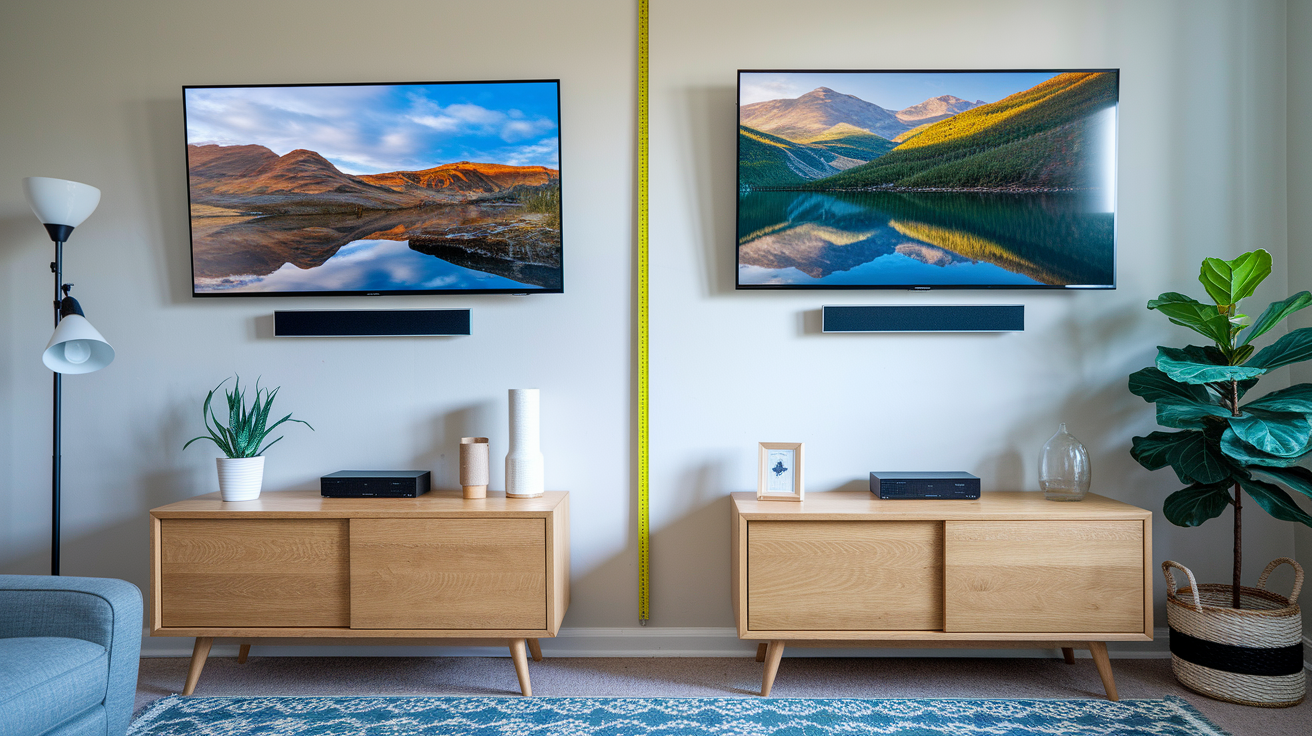

Think a bigger TV is always better?
It can be tempting, but a giant screen in a small room ends up awkward and uncomfortable.
Measure your couch-to-screen distance first.
For modern 4K sets, multiply feet by 7 or 8 to get inches, then check if the screen fits your wall and furniture.
This quick guide walks you through the math, gives room-by-room examples, and shows easy tweaks so your TV looks right, fits your space, and doesn’t give you a sore neck.
Quick Guide to Selecting the Ideal TV Size
The fastest way to find your ideal TV size? Measure from your couch to where the screen’s going to sit, then use a simple formula. For 4K TVs, multiply your viewing distance in feet by 7 to 8. That’ll land you on a screen size in inches that feels immersive without making you crane your neck to catch corner action. Sitting 8 feet back? A 55 to 65 inch TV hits the sweet spot.
This works because 4K resolution packs enough pixels to stay sharp even when you’re closer than you’d sit with an old 1080p set. You get a bigger, more engaging picture without blur or pixelation. The table below matches your seating distance to the right screen size range.
| Viewing Distance Range (ft) | Recommended TV Size (inches) |
|---|---|
| 5–6 | 40–50 |
| 6.5–8 | 50–65 |
| 8–10 | 65–75 |
| 10–12 | 75–85 |
| 12+ | 85–100+ |
These recommendations assume you’re buying a 4K display, which is standard now for screens 50 inches and up. Working with an older 1080p TV? Add about a foot to your viewing distance to keep things looking smooth. The chart’s a starting point. Fine tune based on whether you want a cinematic feel (go bigger) or something more relaxed (stick to the smaller end).
Calculating the Best TV Size Based on Viewing Distance
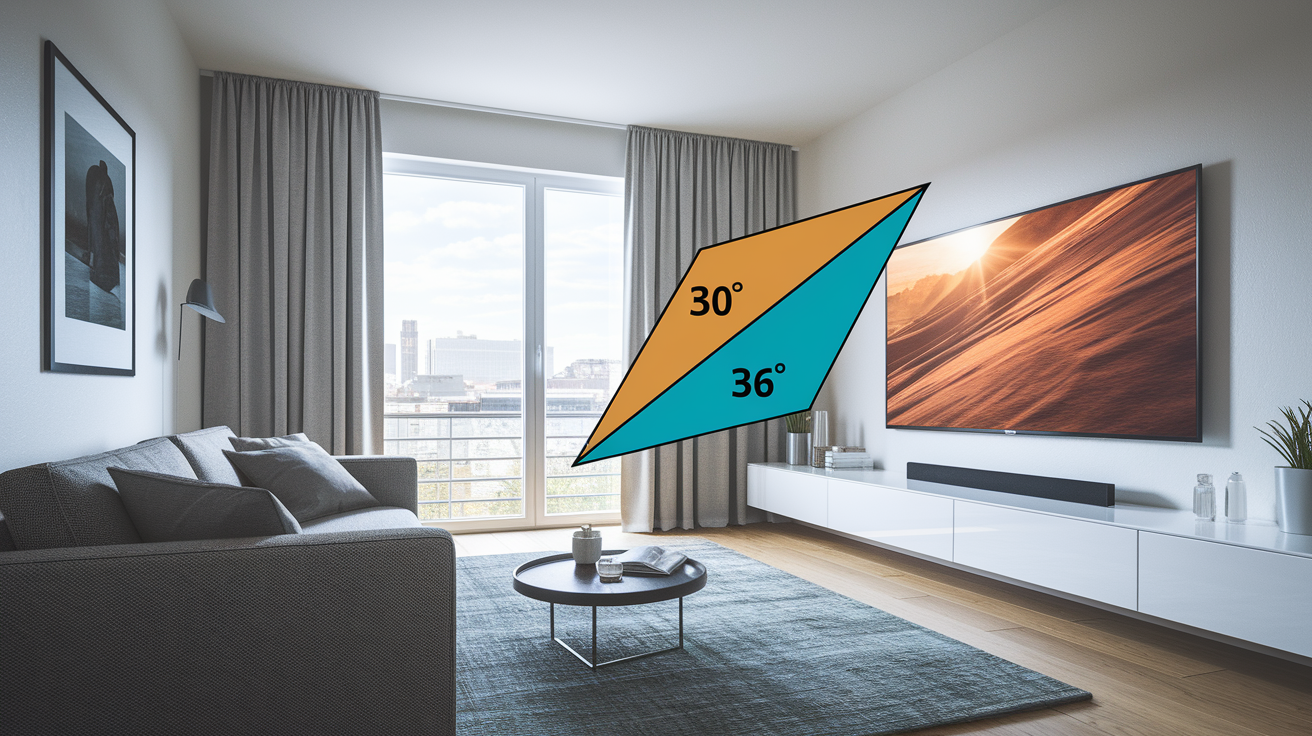
Viewing distance matters most when sizing a TV because it controls how much of your field of view the screen fills. Industry groups like SMPTE recommend a TV occupy about 30 degrees of your field of view for everyday watching: sports, news, sitcoms, occasional movies. THX pushes that to around 36 degrees for a theater experience that wraps you deeper into films and immersive stuff. The wider the viewing angle, the larger the screen needs to be at any given distance.
For 4K TVs, you can sit closer than those guidelines without seeing individual pixels. The old “sit three times the screen width away” rule from the plasma days doesn’t apply anymore. Higher pixel density means a 65 inch 4K set looks smooth and detailed even at 7 feet, a distance that would’ve shown visible lines on a 1080p screen the same size.
A few factors fine tune the formula in real homes.
Seating distance. Measure from your eyes to the screen, not from the front of the couch to the wall. Add a few inches for seat depth.
Resolution. 4K lets you size up or sit closer. 1080p requires more distance or a smaller screen to avoid pixelation.
Field of view. A 30 degree fill feels balanced for everyday TV. 40 degrees feels cinematic and works best for dedicated movie setups.
Personal preference. Some people like to see the whole image at a glance. Others want to turn their head slightly and feel surrounded by the picture.
There’s no perfect answer for everyone. Start with the formula, measure your actual seating, and adjust based on what you watch most and how big you like your picture to feel.
TV Size Recommendations by Room Type
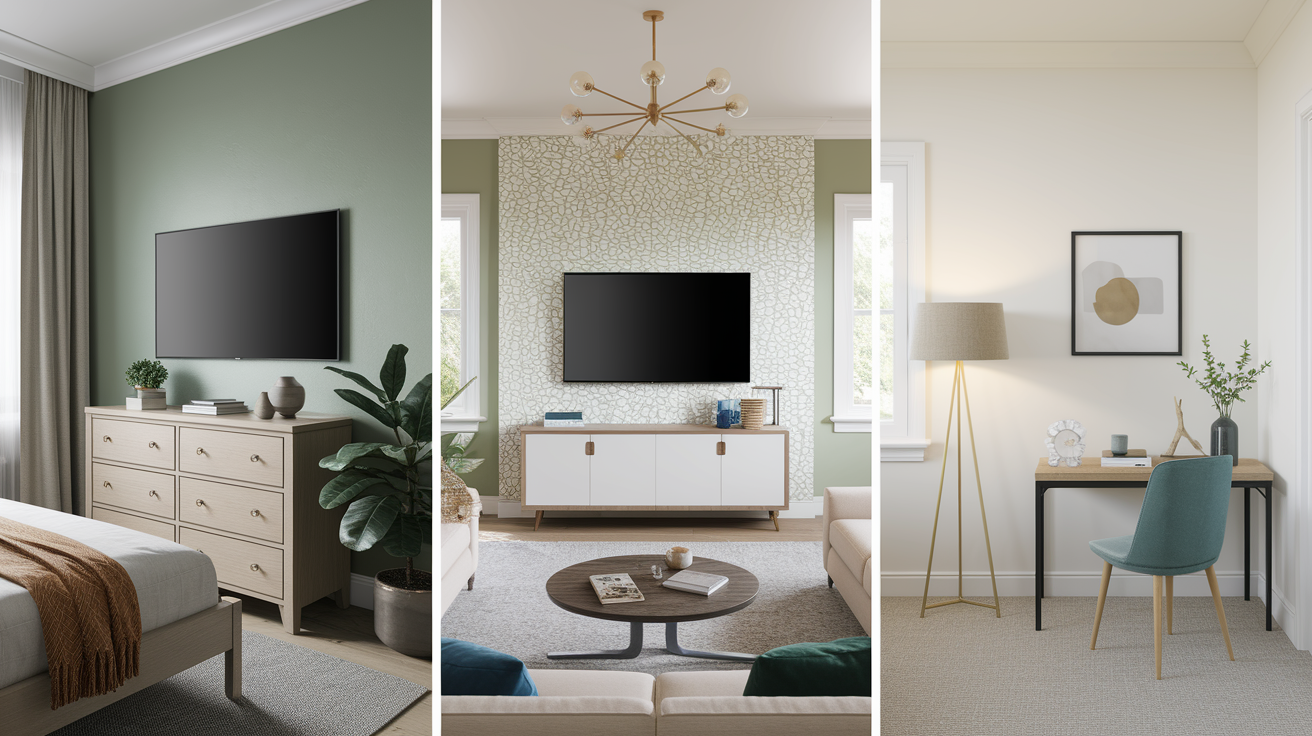
Bedrooms usually put your eyes closer to the screen, often 6 to 9 feet from the footboard or a dresser mount. That shorter distance points you toward 32 to 55 inch TVs. A 43 inch screen works well in a typical 10 by 12 foot bedroom, and a 50 or 55 inch set feels generous without overwhelming the space. If you watch a lot of movies in bed, a 55 inch 4K display at 7 feet delivers a theater experience without straining your neck or eyes.
Living rooms are where most people land in the 55 to 75 inch range. A typical living room seats you 8 to 12 feet away, and that distance fits a 65 inch screen comfortably for mixed viewing or a 75 inch if you lean toward movies and sports. The 65 inch size is the current sweet spot for most homes. Big enough to feel immersive but small enough to fit on standard media consoles and not dominate a wall.
Small apartments, studios, and rooms with unusual layouts may need a more compact approach. A 43 to 55 inch TV keeps the picture engaging without crowding limited floor space or forcing awkward furniture rearrangements. In open plan homes where seating can be 10 feet or more from the screen, a 75 to 85 inch display ensures everyone in the room gets a clear, detailed view without squinting or leaning forward.
How Seating Layout Influences TV Size
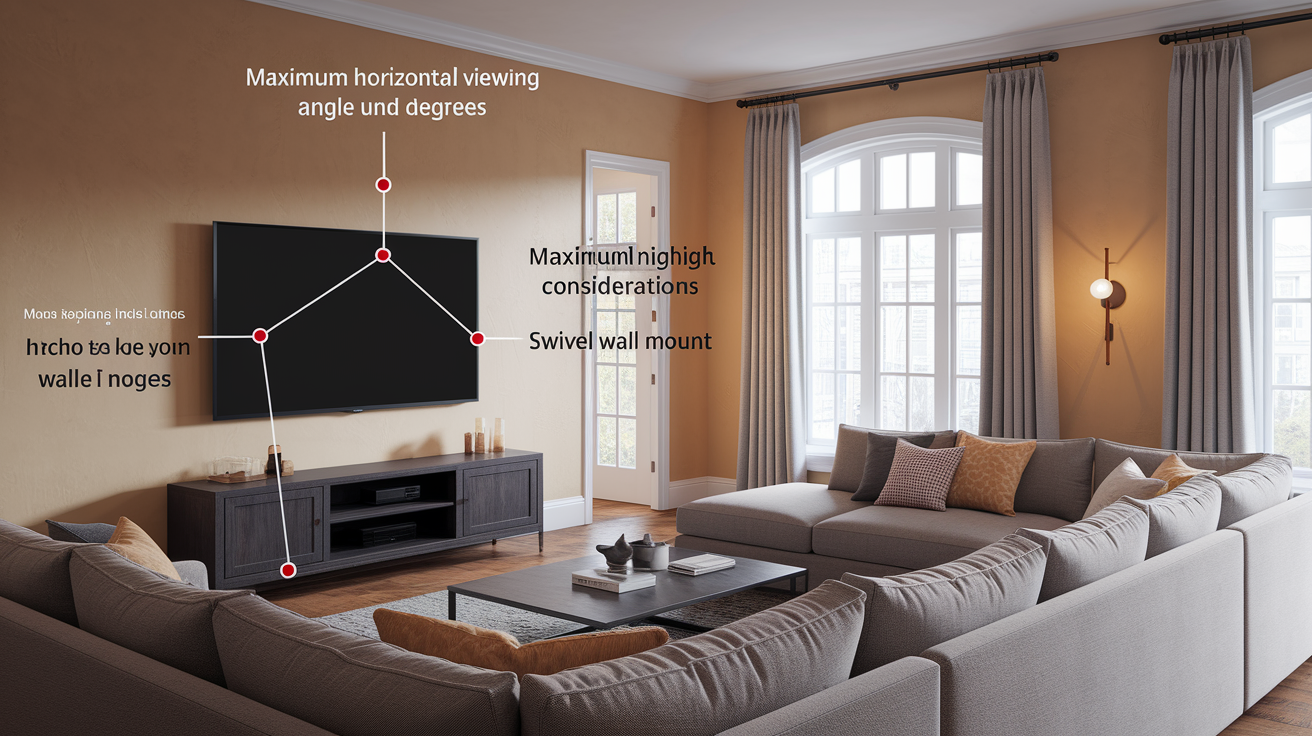
If your couch sits directly in front of the TV and you’re the only viewer most of the time, you can dial in the exact size for your seating distance. But if you have a sectional, extra chairs, or seating that wraps around the room, you need to account for off axis viewers. A larger screen helps people seated to the side see detail and read on screen text without the image washing out or shrinking too much from their angle.
Wide seating spreads also change how the TV feels in the room. When viewers are scattered across a 12 foot wide sectional, a 65 inch screen can look small because it occupies a narrower slice of the sightline for anyone not sitting dead center. Bumping to 75 or 85 inches pulls the whole group into the picture and reduces the need for people to shift seats during a movie or game.
When planning for mixed seating, try these layout adjustments.
Measure to the farthest regular seat and use that distance as your baseline, then round up one size if you have off center spots.
Keep horizontal viewing angles under 30 degrees from center if possible. Beyond that, colors shift and contrast drops on most panels.
Use a swivel mount or corner placement if your layout forces some viewers to sit far to one side, so you can angle the screen toward the active seating area.
Resolution and Screen Size Compatibility

Resolution determines how close you can sit before you start seeing the grid of pixels that make up the picture. A 4K TV packs 3,840 pixels across and 2,160 down. Four times the total pixel count of a 1080p set. That density means you can sit much closer to a 65 inch 4K screen than you could to a 65 inch 1080p and still see a perfectly smooth image. For most people, 4K unlocks the option to go one size larger than they would’ve chosen a few years ago, or to sit a few feet closer without any loss in clarity.
On a 1080p display, sitting closer than about 1.5 times the screen height starts to reveal individual pixels, especially in bright scenes or text overlays. That limitation pushes you farther back or forces you to pick a smaller screen to keep the picture sharp. If you’re choosing between a 55 inch 1080p TV and a 65 inch 4K set for the same 8 foot viewing distance, the 4K screen will look larger, clearer, and more detailed without any downside, assuming your budget supports the step up.
Wall Mounting and Furniture Placement Considerations
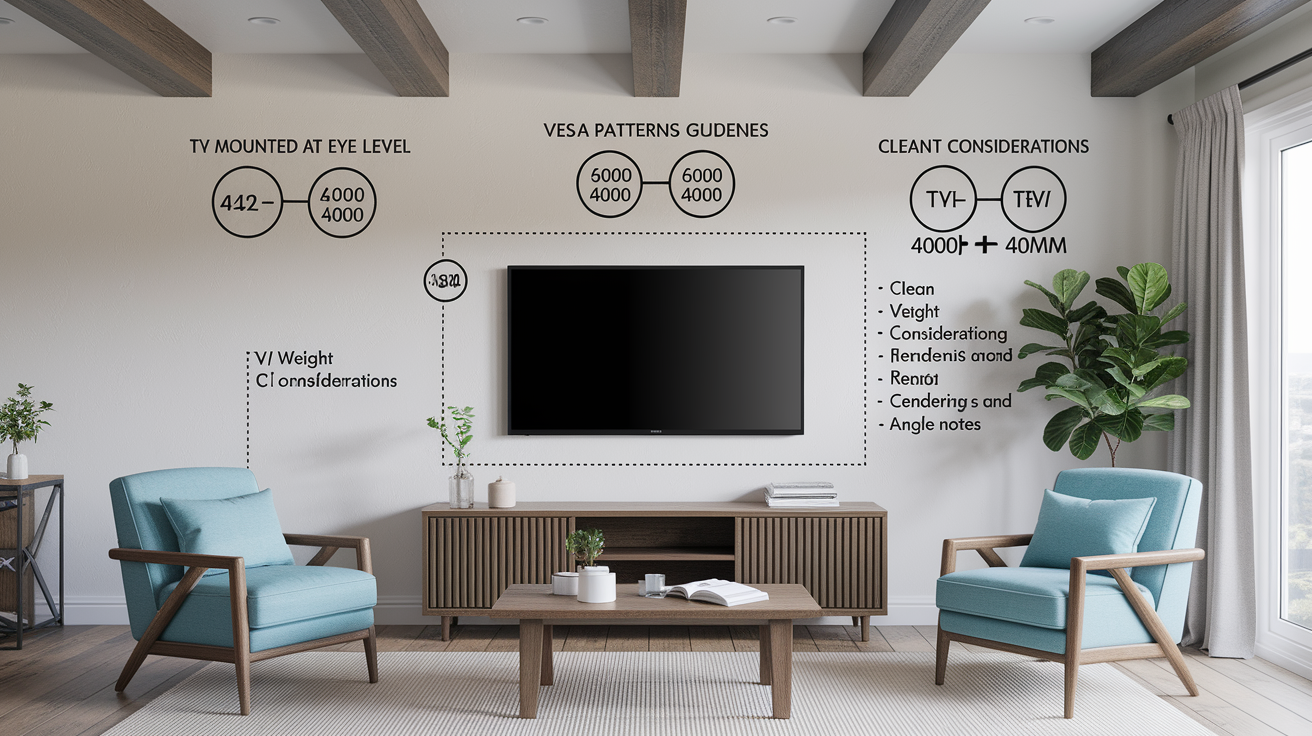
The center of your TV screen should sit at seated eye level, which for most couches is about 42 to 48 inches off the floor. If you mount the TV higher, above a fireplace for example, the screen appears smaller and you’ll tilt your head up, which gets uncomfortable during longer viewing sessions. A tilting wall mount can angle the screen down to meet your sightline, but even with the tilt, a high mount rarely feels as natural as an eye level setup.
Furniture placement also affects how big the TV can be. A 65 inch screen is roughly 57 inches wide without the bezel, so your media console or TV stand needs to be at least that wide to support the set safely and look balanced. If your stand is only 50 inches, you’ll need to wall mount or size down.
When planning mounts and stands, keep these points in mind.
Check the VESA mounting pattern on the back of the TV and confirm your wall bracket or stand supports it. Most 55 to 75 inch sets use 400×400mm or 600×400mm patterns.
Verify weight capacity on both the mount and the wall anchors. A 75 inch TV can weigh 70 to 90 pounds, and the mount should support at least 20 percent more than that for safety.
Measure total width including the bezel before assuming the TV will fit your existing furniture. Slim bezels add less than an inch on each side. Bulkier frames can add two or three.
Final Words
Use the quick formula (viewing distance in feet times 7 to 8 = screen inches) to get an instant answer for most 4K TVs. It’s a fast starting point.
Then check room type and seating layout. Living rooms, bedrooms, and small rooms need different sizes. Also think about mount height and resolution since 4K lets you sit closer.
Measure your main seating spot, plug it into the formula, and check the chart. This guide on how to choose the right TV size for your room should make picking the best screen easier. You’ll enjoy the result.
FAQ
Q: How big should your TV be based on room size?
A: How big your TV should be based on room size is driven by viewing distance: use viewing distance in feet × 7–8 to get the ideal screen diagonal in inches for modern 4K TVs.
Q: Should I get a 55 or 65 TV?
A: Choosing between a 55 or 65 TV depends on viewing distance and room layout: 55 inches suits about 6–7.5 feet, 65 inches suits about 8–9.5 feet; consider wall space and seating.
Q: How far should you sit from a 65 inch TV?
A: The distance you should sit from a 65 inch TV is about 8–9 feet (use the inches ÷ 7–8 rule); sit closer with 4K for a more immersive view and farther if sharing seating.
Q: What size TV for a 12×12 room?
A: The size TV for a 12×12 room is usually 55–65 inches if your couch sits about 8–10 feet away; pick 50–55 inches for tighter layouts or closer seating.