


Think small apartments have to feel cluttered? Think again.
Most of us treat walls, under-bed gaps, and the space above doors like wasted real estate.
This guide walks you through smart, low-cost storage ideas, like vertical shelves, multiuse furniture, over-the-door and under-bed solutions, plus a few DIY hacks that free floor space and make rooms feel bigger.
You’ll get quick wins for an afternoon project, product picks that actually fit your measurements, and room-by-room tips so every inch pulls its weight.
The Most Effective Small‑Apartment Storage Solutions (Start Here)
Small apartments force you to get creative with every square inch. When closet space is limited and floor area feels scarce, the fastest way to gain breathing room is to rethink how you’re using walls, furniture, and hidden zones that already exist.
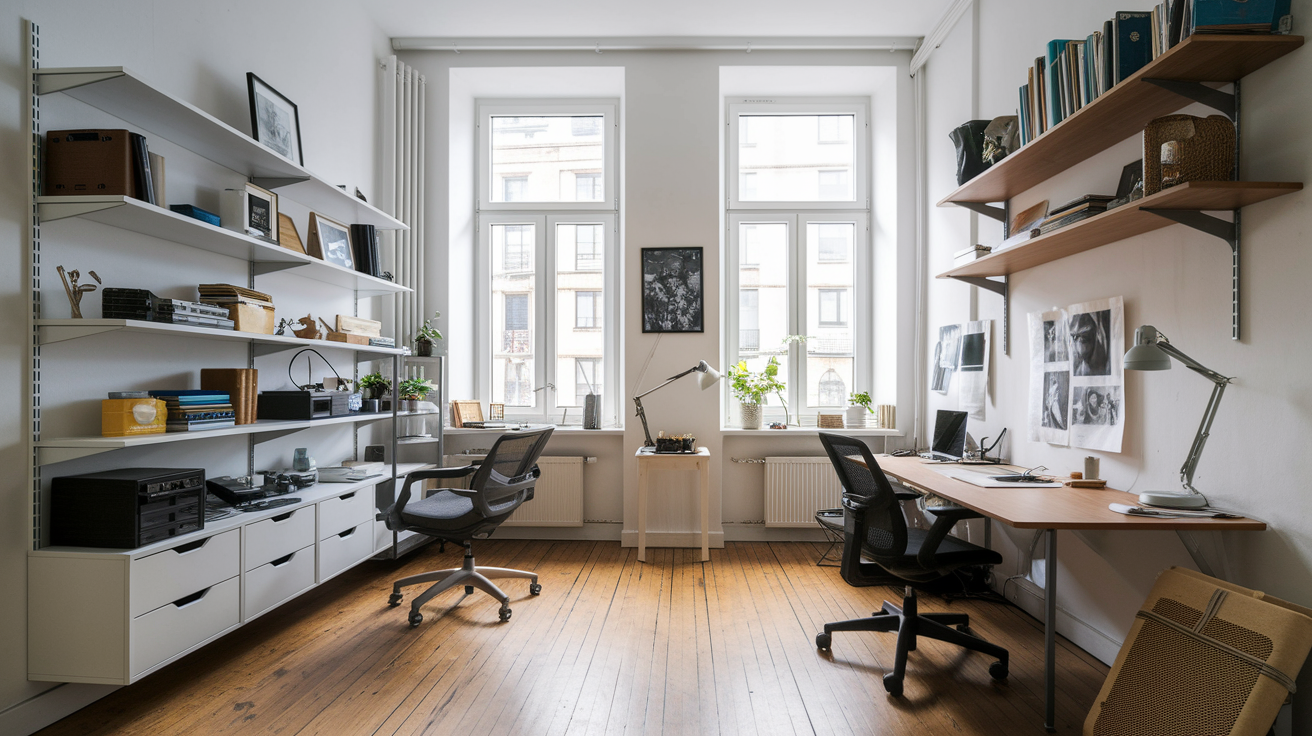
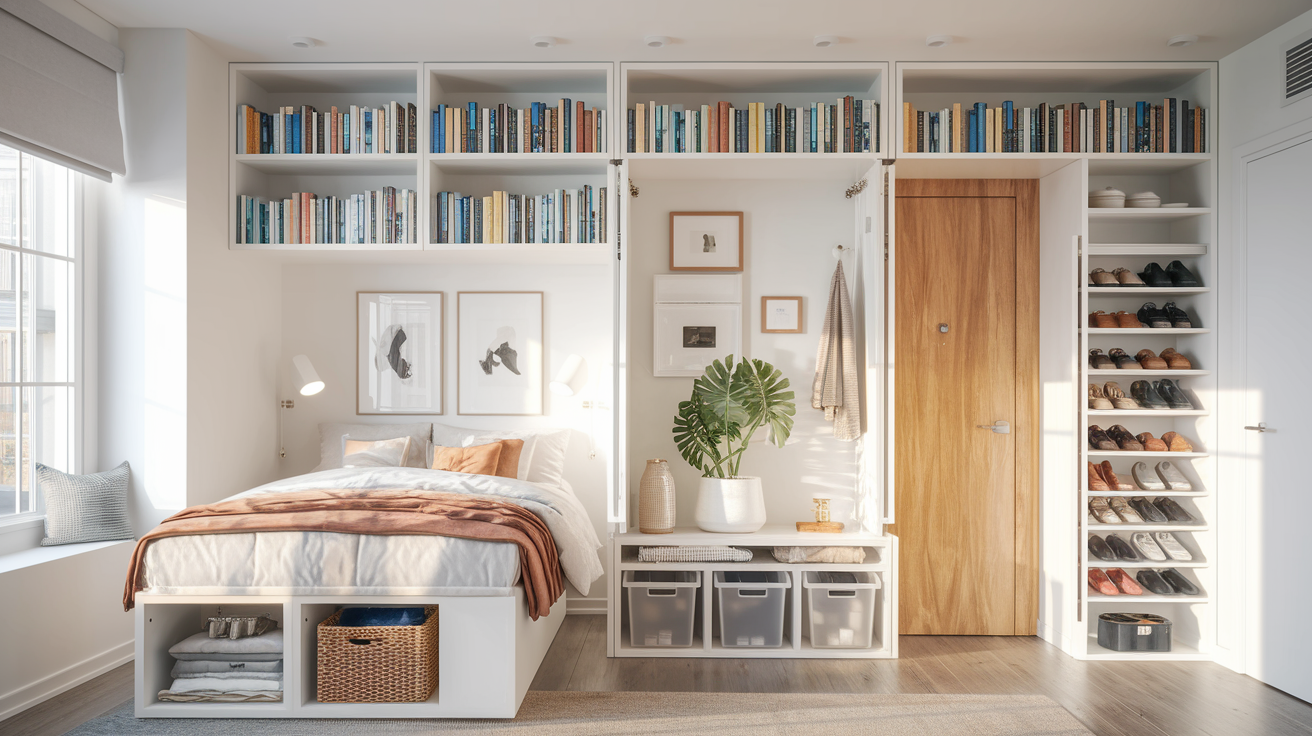
Start with vertical shelving to make use of wall height up to your ceiling. Floating shelves or tall bookcases push storage upward and free up floor space for furniture or walking paths. Next, swap at least one piece of standard furniture for something multifunctional. A storage ottoman that opens to hold blankets works. So does a bed frame with built-in drawers underneath. Over the door organizers add instant storage for shoes, accessories, or pantry items without requiring tools or permanent hardware. Under bed containers are another quick win. Low profile rolling bins or fabric bags can hold off season clothes, extra linens, or shoes in the 6 to 8 inches of clearance most beds provide.
Beyond those core moves, tension rods create temporary hanging zones under sinks or inside cabinets. Adhesive wall hooks let you hang bags, hats, or lightweight baskets without damaging walls. A rolling cart can tuck into narrow gaps between appliances or beside a desk, holding kitchen supplies, toiletries, or craft materials on multiple tiers.
Quick win storage methods to try first:
- Mount floating shelves 8 to 12 inches deep along empty walls for books, decor, or folded linens.
- Replace a coffee table with a storage ottoman or a lift top table that hides remotes and magazines.
- Hang an over the door shoe organizer on bedroom or bathroom doors for small items and accessories.
- Slide under bed bins (typically 18 x 24 x 6 inches) into the space beneath your mattress for seasonal clothes.
- Install removable adhesive hooks inside closet doors or on entryway walls for coats, scarves, and keys.
- Use a tension rod under the kitchen or bathroom sink to hang spray bottles and free up floor space inside the cabinet.
Room by Room Storage Ideas for Maximum Space
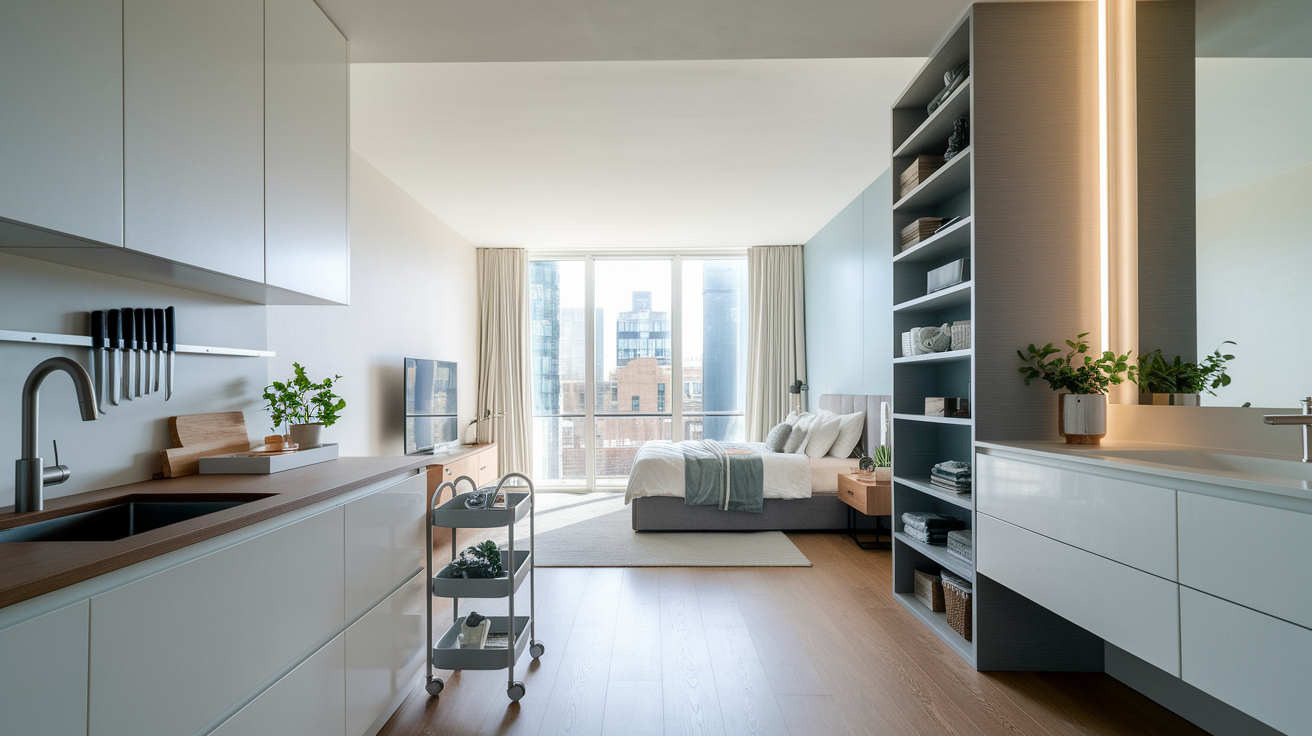
In the kitchen, magnetic knife strips and spice racks mounted on the side of your refrigerator reclaim counter space and keep essentials visible. Stackable wire racks inside cabinets let you layer mugs, plates, or canned goods to double the usable height of each shelf. A slim rolling cart that’s 4 to 6 inches wide fits between your fridge and counter, holding oils, snacks, or dish towels on multiple tiers that roll out when you need access.
Bedrooms gain the most space when you think under and above. Lift up bed frames with gas assist hinges expose a large storage cavity beneath the mattress, perfect for suitcases or bulky bedding. If your bed doesn’t have built in storage, add bed risers to create 8 to 12 inches of clearance and slide flat bins underneath. Swap your nightstand for a small three drawer dresser or a wall mounted shelf to add drawer space without expanding the footprint. Use the top closet shelf for matching bins that hold out of season clothes, and install a second hanging rod 40 to 42 inches below the first to double your hanging capacity for shirts and pants.
Bathrooms often waste the vertical zone above the toilet. Install a three tier shelving unit or a simple cabinet that spans the tank without blocking access. A narrow rolling cart parks between the sink and toilet, holding extra toilet paper, toiletries, and cleaning supplies on shelves you can pull out when needed. Stick adhesive corner shelves inside the shower for shampoo and soap, or use a tension rod caddy that doesn’t require drilling.
Entryways work harder with wall mounted coat hooks or a slim console table that’s only 8 to 10 inches deep. Add a low shoe cabinet or a bench with cubbies underneath to keep footwear tidy and out of the main walking path. If wall space allows, hang a pegboard to hold keys, sunglasses, dog leashes, and lightweight bags on interchangeable hooks.
DIY Storage Hacks Using Affordable Materials

Wooden crates from craft stores or hardware shops stack into modular shelving units that cost $30 to $80 for four crates. Screw them together at the corners to create a stable grid, then use the cubbies for books, folded clothes, or decorative bins. Pegboard panels mounted above a desk or along a kitchen wall give you customizable storage. Hooks and baskets rearrange as your needs change, and a 2 by 4 foot panel runs $15 to $40 with another $10 to $20 for hooks and accessories.
Adhesive hooks rated for 3 to 7 pounds each let you hang dish towels, oven mitts, or lightweight baskets without drilling holes. PVC pipe cut into short segments and mounted horizontally makes a simple holder for rolled up yoga mats, wrapping paper, or extension cords. If you’re comfortable with a drill, tension shelves inside cabinets or closets add a second layer for folded sweaters or shoes.
Simple crate shelf assembly in four steps:
- Gather four wooden crates (12 x 12 x 12 inches each), eight 1.5 inch wood screws, a drill, and a level.
- Arrange two crates side by side, open faces forward, and drill one screw through the side of the first crate into the adjoining side of the second crate. Repeat on the opposite side to secure the pair.
- Stack the second pair on top, aligning edges, and drill screws down through the top crates into the bottom crates at each corner.
- Use a level to check alignment, then anchor the entire unit to the wall with L brackets if it feels tipsy or if you’re stacking higher than two rows.
Hidden and Overlooked Storage Spots
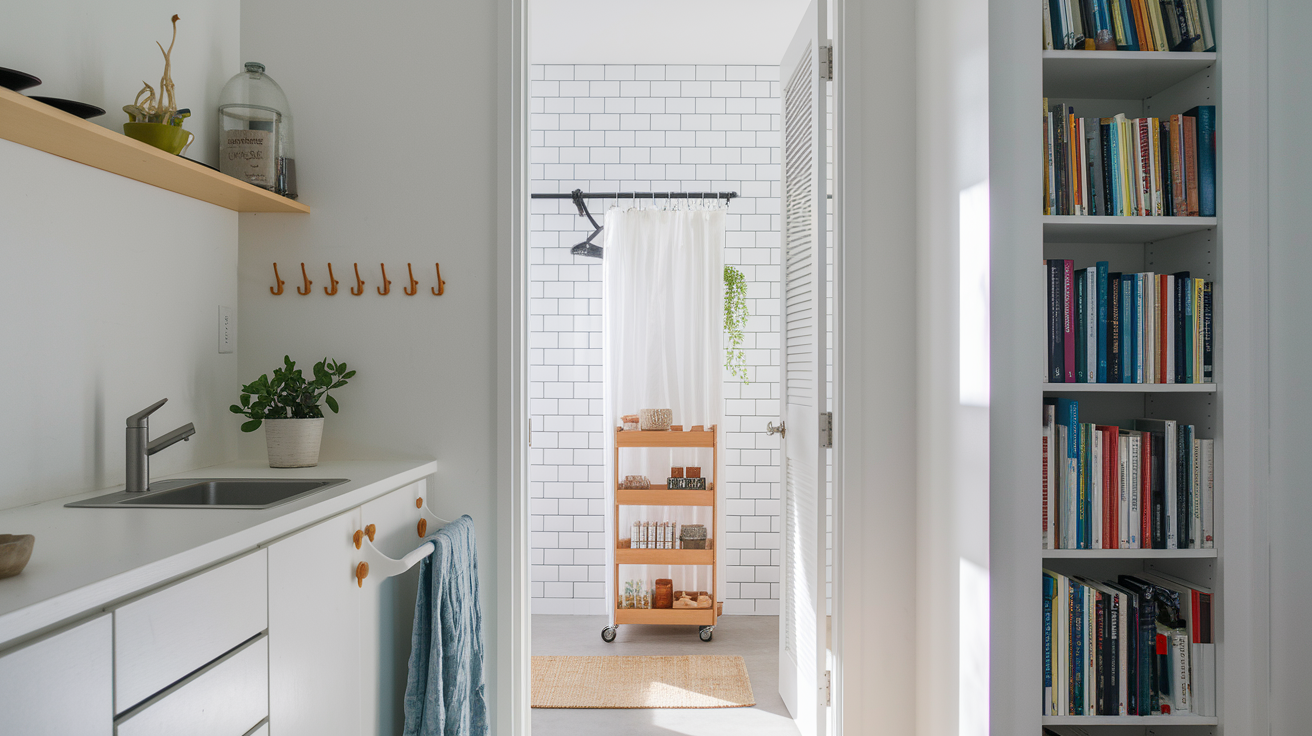
Most apartments have gaps people never think to fill. The space above a door can hold a narrow shelf for books or decorative items. The inside of cabinet doors accepts adhesive hooks or small racks for measuring cups, pot lids, or cleaning gloves. The gap under a sofa often provides 4 to 6 inches of clearance for flat bins holding magazines, board games, or craft supplies.
Long hallways or the wall behind a curtain can accommodate a shallow bookcase or a row of floating shelves without blocking movement. A slim rolling cart parks in the 6 inch gap between your washer and dryer, holding detergent and stain removers on pull out shelves. If you have a loft bed or bunk setup, the vertical column beneath the mattress becomes a mini closet or desk nook.
Overlooked spaces that add storage:
- The 6 to 12 inches above interior door frames. Mount a shallow shelf for rarely used items or seasonal decor.
- Inside kitchen cabinet doors. Stick adhesive hooks for oven mitts, pot holders, or spice packets.
- Under low sofas or couches. Slide flat storage boxes (4 to 6 inches tall) for magazines, chargers, or board games.
- Behind shower curtains. Hang a second tension rod to drape extra towels or hold a mesh caddy for bath toys.
- Along narrow hallways. Install a 10 inch deep bookcase or picture ledge for keys, mail, and small plants.
Product Recommendations and Space Saving Tools
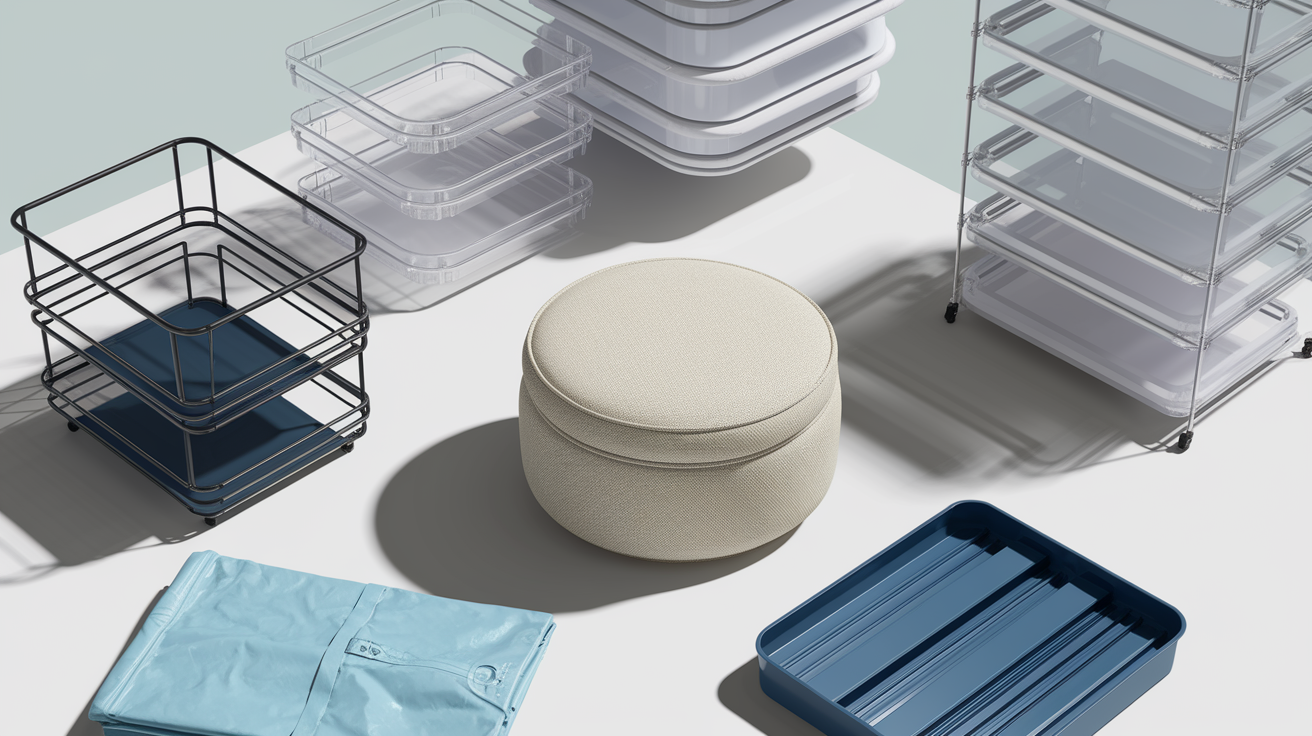
Stackable clear bins let you see what’s inside without opening lids, making them ideal for pantry staples, craft supplies, or bathroom products. Sizes between 4 and 8 quarts stack two or three high inside cabinets or on closet shelves, and cost $5 to $20 each depending on brand and material.
Foldable storage ottomans offer a place to sit and a hidden compartment for throws, pillows, or kids’ toys. Budget models start around $30, while larger upholstered versions run $80 to $150. Telescoping drawer dividers adjust to fit any drawer width and keep utensils, socks, or office supplies from sliding into a jumbled pile. Corner shelves turn unused 90 degree angles into display zones or extra storage for plants, books, or toiletries. You’ll find floating or tension pole styles depending on your setup. Vacuum storage bags compress bulky coats and bedding by 60 to 80 percent, making them easy to tuck under a bed or on a high closet shelf. A pack of four bags typically costs $15 to $35.
When choosing products, prioritize items that match your actual clearance measurements and weight needs. Measure closet depth, under bed height, and cabinet width before ordering. Check load ratings on wall anchors and removable hooks to avoid sagging shelves or fallen racks. Pick materials that clean easily. Wipeable plastic bins, metal shelving, or sealed wood all work well, so maintenance stays simple.
Visual Planning Tips to Reduce Clutter

Clear containers reduce visual noise by showing contents at a glance and creating uniform shapes on shelves. Consistent labels help everyone in the household return items to the right spot and prevent mystery bins from piling up. Printed on a label maker or handwritten on adhesive tags, either approach works.
Color coding can simplify routines. Use blue bins for winter gear, green for cleaning supplies, and white for pantry overflow. Before you buy or install anything, sketch a rough grid of your wall or closet on graph paper, marking stud locations and existing furniture. Measure twice to confirm shelves won’t block light switches, door swings, or air vents, and leave at least 28 to 36 inches of clear walkway in main traffic paths.
Visual planning tips for better organization:
- Use uniform bin sizes and colors on open shelves to create a tidy, cohesive look.
- Label every container with contents and date if storing seasonal items or pantry goods.
- Assign one color per category. Blue for linens, gray for tools, clear for food, so you can spot what you need instantly.
- Draw a simple floor plan or wall elevation on paper, noting measurements and existing outlets, to avoid buying shelves that don’t fit.
Final Words
We jumped straight into high-impact fixes: vertical shelving, multifunctional furniture, over-door organizers and under-bed bins for fast wins.
We mapped room-by-room ideas, shared budget DIY crate and pegboard hacks, pointed out hidden spots like above doors and behind curtains, and picked simple tools to keep things tidy.
Try a couple of quick changes this weekend. Use these smart storage ideas for small apartments to make your place feel bigger and work better.
FAQ
Q: What are the most effective storage solutions for small apartments?
A: The most effective storage solutions for small apartments are vertical shelving, multifunctional furniture, over-door organizers, under-bed bins, wall hooks, and tension rods that free floor space and add instant organization.
Q: How do I maximize storage in each room?
A: To maximize storage room by room, use magnetic strips and stackable racks in kitchens; lift-up beds and bedside caddies in bedrooms; floating shelves and narrow carts in bathrooms; wall-mounted racks and slim shoe cabinets in entryways.
Q: What are the best DIY storage hacks on a budget?
A: The best DIY storage hacks on a budget are stacked crates for modular shelves, pegboards for tools and kitchen gear, adhesive hooks for hanging, and PVC tubes for corralling cables or tools.
Q: Where are hidden storage spots I can use in a small flat?
A: Hidden storage spots in a small flat include above doors, inside cabinet doors, under sofas, behind curtains, along hallways, and the slim gaps between appliances for rolling carts.
Q: What small-space products should I buy first?
A: The small-space products to buy first are stackable clear bins, a foldable ottoman with hidden storage, telescoping drawer dividers, and corner shelves for quick visibility, seating, and better drawer use.
Q: How do I choose the right storage items for a small apartment?
A: To choose storage items, measure your space, pick durable and stackable pieces, prefer clear bins for visibility, match dimensions to gaps, and choose renter-friendly options when drilling isn’t allowed.
Q: Are these storage solutions renter-friendly or will they damage walls?
A: Many solutions are renter-friendly: adhesive hooks, over-door organizers, tension rods, freestanding shelves, and under-bed bins avoid drilling; heavy or permanent shelves may need landlord permission or anchors.
Q: How can I plan visually so clutter stays under control?
A: To plan visually, use clear containers, consistent labels, simple color-coding, and quick grid sketches to map vertical placement so everything has a visible, easy-to-reach home.
Q: How long do these quick storage upgrades usually take?
A: Quick storage upgrades like adding hooks, bins, or an over-door organizer take 10–60 minutes; installing shelves or building DIY units can take a few hours to a weekend depending on scale.