

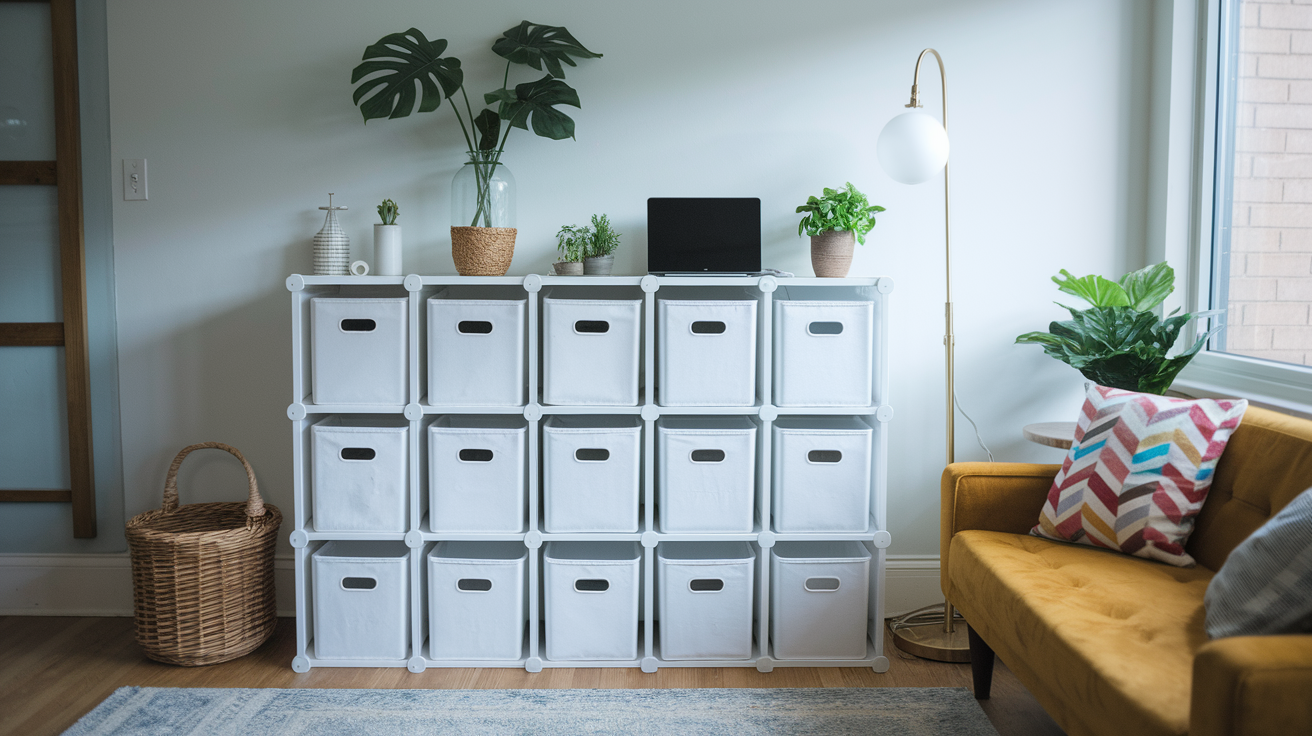

What if your clutter isn’t laziness but the wrong storage?
Smart storage that pulls double duty can clear floors, calm your counters, and make rooms work smarter, fast.
Think a storage ottoman that hides blankets and gives extra seating, a bed with drawers instead of a dresser, or slim rolling carts that vanish into gaps.
This post shows practical, budget-friendly ideas you can fit into rentals and small homes so you reclaim space today, not someday.
High‑Impact Smart Storage Ideas and Modern Space‑Saving Innovations
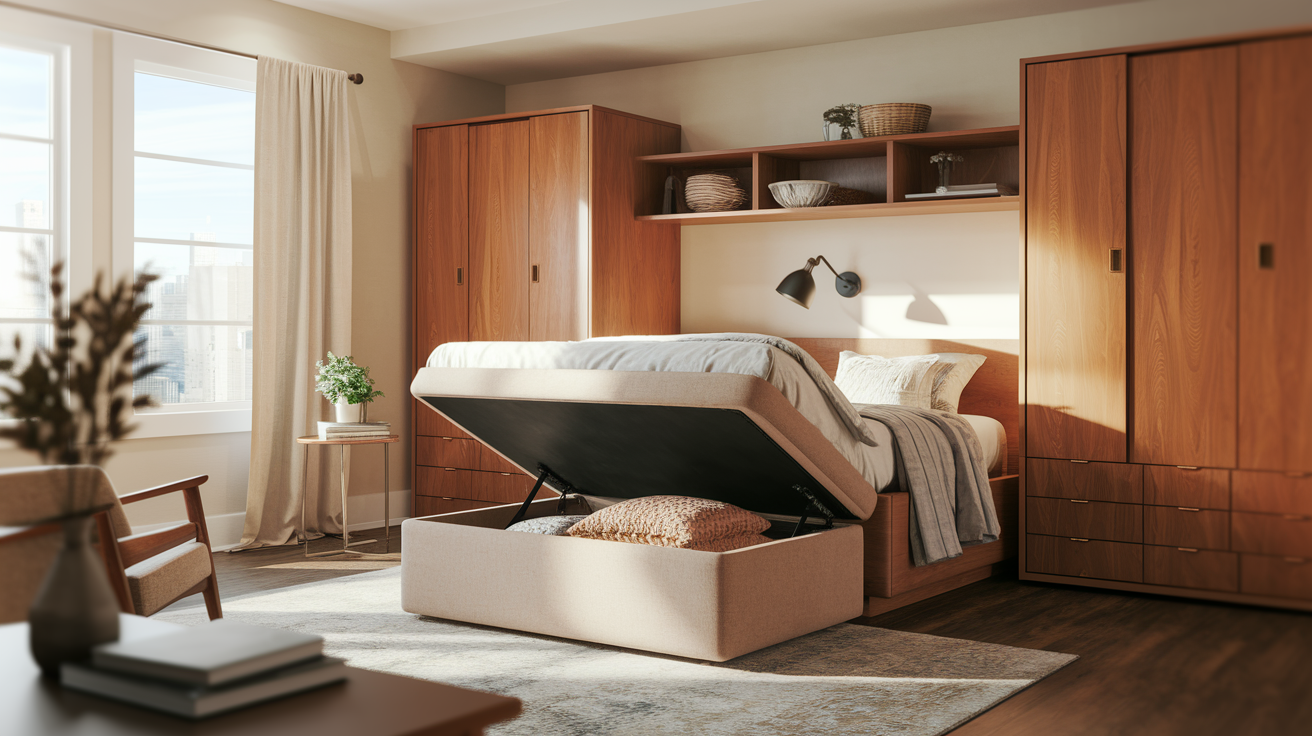
The fastest way to reclaim floor space? Pick storage that pulls double duty. A storage ottoman holds blankets and gives you extra seating. A bed frame with built‑in drawers means you don’t need a separate dresser. A fold‑down desk mounts to the wall and tucks away when you’re done. These pieces turn dead corners and awkward alcoves into real storage without eating up your room.
Modular shelving systems let you move shelf heights around, add cubes, or rearrange things when life changes. You’re not buying a whole new unit every time you move or bring home more stuff. Just swap a section or stack another layer. Vertical wall options like pegboards, floating shelves, and slat panels with adjustable hooks get storage off your floor and onto walls that normally just sit there. Under‑bed rolling bins, collapsible fabric cubes, and hanging organizers that hook onto closet rods or doors all squeeze into spaces you’d usually ignore.
Here are ten specific solutions worth trying:
Murphy beds with shelving or a fold‑down desk built in so your bedroom flips to a home office or guest room in seconds.
Rolling kitchen carts with cutting‑board tops that give you more prep surface and hold pots, utensils, or pantry overflow.
Ceiling‑mounted overhead racks in garages for bulky seasonal gear like camping equipment and holiday bins.
Wall‑mounted bike racks or vertical sports‑equipment holders that clear your garage floor and protect what you own.
Stackable, clear plastic bins with labels for sorting toys, craft supplies, or off‑season clothes in closets and attics.
Floating corner shelves that turn wasted wall angles into display spots or everyday storage.
Ottoman benches with hinged lids for entryway shoe storage or living‑room blanket stash.
Tech‑enabled inventory apps paired with barcode labels so you can track what’s in each bin without opening it.
Slim rolling carts (6 to 8 inches wide) that slide into bathroom or pantry gaps and pull out when you need them.
Hanging closet organizers with pockets that work as charger stations or tool holders in laundries and utility rooms.
These work because they fit real constraints. Rental rules, tight budgets, shifting schedules, homes that never have enough closet space. When storage bends to your life and looks clean, you’ll actually use it instead of piling things on counters or shoving them under the couch.
Room‑by‑Room Smart Storage Strategies
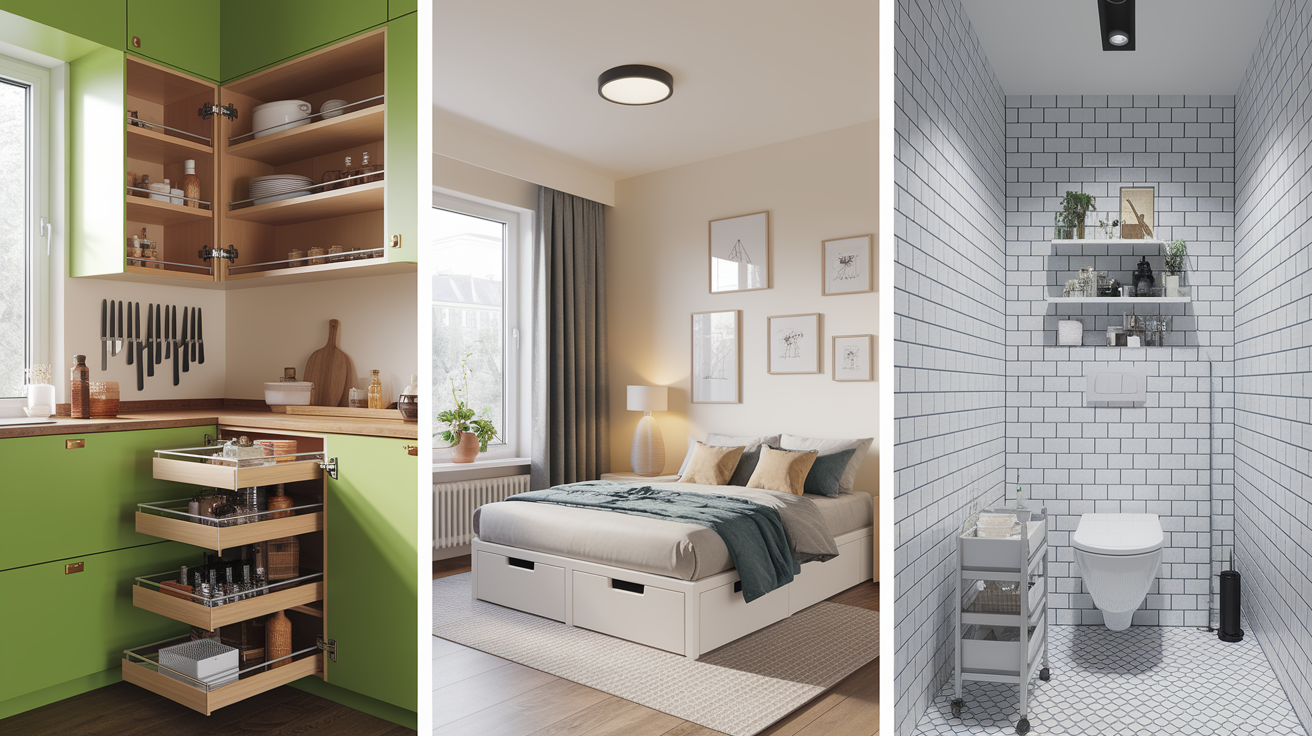
Kitchens get messy when counters become dumping grounds for mail, keys, and snack boxes. Pull‑out cabinet organizers (wire racks that slide forward on rails) bring items at the back into easy reach. Magnetic knife strips or spice‑jar strips on walls free up drawer space. Drawer dividers for utensils, measuring cups, and charging cords keep junk drawers from becoming junk piles. Got high cabinets? Use the top shelves for serving platters and seasonal items, then keep a small step stool nearby. A narrow rolling cart can hold oils, vinegars, and baking supplies and tuck next to the fridge when you’re not using it.
Bedrooms benefit most from vertical thinking and hidden compartments. A platform bed with drawers in the base holds off‑season clothes, extra bedding, or shoes without taking up closet rod space. Can’t swap the bed? Slide shallow rolling bins underneath. Wall‑mounted shelves above the headboard or along one side create display and book storage without needing a nightstand footprint. Built‑in wardrobes or freestanding closet systems with adjustable rods and cubbies let you customize heights for dresses, folded sweaters, and tall boots. Measure your tallest heels (often 8 to 10 inches) and plan shelf spacing so you’re not jamming things in or wasting vertical inches.
Bathrooms are small and damp, so smart storage here means using walls and the area over the toilet. An over‑toilet shelving unit or a narrow ladder shelf adds three to five tiers for towels, toiletries, and baskets. Slim rolling carts (the kind that fit in a 6‑inch gap) slide between the vanity and wall and hold cleaning supplies, extra toilet paper, or hair tools. Drawer organizers and small acrylic trays corral makeup, cotton swabs, and medicine so nothing rolls to the back of a cabinet. Hooks on the back of the door hold robes, towels, or a hanging organizer with pockets for flat irons and brushes.
Living rooms need storage that doesn’t scream “storage.” A coffee table with a lift‑top or lower shelf holds remotes, coasters, and magazines. A console table behind the sofa can hold baskets for throws and books. Floating shelves flanking a TV create display space and hide streaming boxes or gaming controllers in closed cabinets below. If your living room doubles as a home office or guest space, look for ottomans with hidden compartments or a sofa with pull‑out drawers underneath the seat cushions. One example holds deep drawers that slide out and convert into a queen guest bed with added boards and cushions.
Product‑Focused Guide to the Best Smart Storage Purchases

When you shop for storage, start by measuring the exact space you want to fill. Height, width, and depth. Bring a tape measure or note the dimensions on your phone. Modular systems let you buy a starter set and add cubes, bins, or shelves later without replacing the whole thing. Stackable bins in clear plastic make it easy to see what’s inside, and coordinating sizes let you mix and match as needs shift. Look for adjustable shelving inside cabinets so you can fit tall bottles one month and short jars the next.
Convertible furniture saves the most space in studios, small bedrooms, and multipurpose rooms. A fold‑down wall desk mounts with hinges and a support leg, then folds flat when you’re done. A bench with a hinged lid stores shoes, dog leashes, or winter hats right by the door. Sliding organizers (pull‑out pantry racks, under‑sink caddies, or wire shelves that glide on tracks) bring items at the back into reach without emptying the whole cabinet. Tech‑enhanced options, like drawer organizers with built‑in charging ports or bins tagged with inventory apps, help you track what you own and where it lives.
Here’s a quick guide to the most versatile storage products and where they work best:
| Product Type | Ideal Use | Key Benefit |
|---|---|---|
| Modular cube shelving | Living rooms, bedrooms, home offices | Reconfigure cubes as needs change; add or remove units |
| Under‑bed rolling bins | Bedrooms, guest rooms | Use wasted space beneath bed frame; easy pull‑out access |
| Over‑toilet shelving units | Bathrooms | Vertical storage in tight spaces; freestanding or wall‑mount options |
| Pull‑out cabinet organizers | Kitchens, bathrooms, laundry rooms | Reach items at back of deep cabinets without digging |
| Slim rolling carts (6–8″ wide) | Kitchens, bathrooms, closets | Fit in narrow gaps; roll out for easy access to supplies |
| Hanging closet organizers (fabric or wire) | Closets, laundry rooms, mudrooms | Add vertical storage without drilling; holds shoes, accessories, cords |
DIY Smart Storage Upgrades for Budget‑Friendly Organization

If you’d rather build than buy, a few simple projects can give you custom storage that fits your exact space and budget. Floating shelves are the easiest place to start. You’ll need a wooden board (pine, plywood, or reclaimed wood), L‑brackets or hidden floating‑shelf hardware, a level, a drill, and wall anchors if you’re not hitting studs. Sand and paint or stain the board, mark where the brackets go, drill pilot holes, and mount the hardware to the wall. Slide the shelf onto the brackets and check it’s level before loading it with books or plants.
Repurposed wooden crates make modular, stackable storage for entryways, closets, or kids’ rooms. Buy or find crates at thrift stores, clean them, sand any rough edges, and paint or leave them natural. Stack them on their sides to create cubbies, or mount them to the wall with screws through the back slats. Use them for shoes, toys, craft supplies, or rolled towels. You can rearrange the stack as your needs shift.
Custom closet inserts give you adjustable storage without the cost of a built‑in system. Measure your closet width and height, then build a simple frame from 1×2 or 1×3 lumber. Add dowels or tension rods at different heights for hanging clothes, and screw in small shelves cut from plywood for folded items or bins. Paint the frame to match your walls so it blends in. This works especially well in rentals where you can’t alter walls but need better organization than a single rod and shelf.
Pegboard walls turn vertical space into flexible, visual storage for tools, kitchen utensils, office supplies, or craft gear. Here’s how to install a simple pegboard organizer:
- Measure and cut a pegboard panel to fit your wall space, leaving room for the frame or furring strips that create clearance for the pegs.
- Attach 1×2 furring strips to the wall studs (or use heavy‑duty anchors) so the pegboard sits about half an inch off the wall, allowing pegs and hooks to fit through the holes.
- Mount the pegboard to the furring strips with screws, checking it’s level before driving screws all the way in.
- Paint the pegboard to coordinate with your room (a bold color like orange or a neutral like white or gray both work well).
- Add pegs, hooks, and baskets to hold the items you use most, and rearrange them whenever your routine changes.
Decluttering Methods That Enhance Smart Storage Efficiency
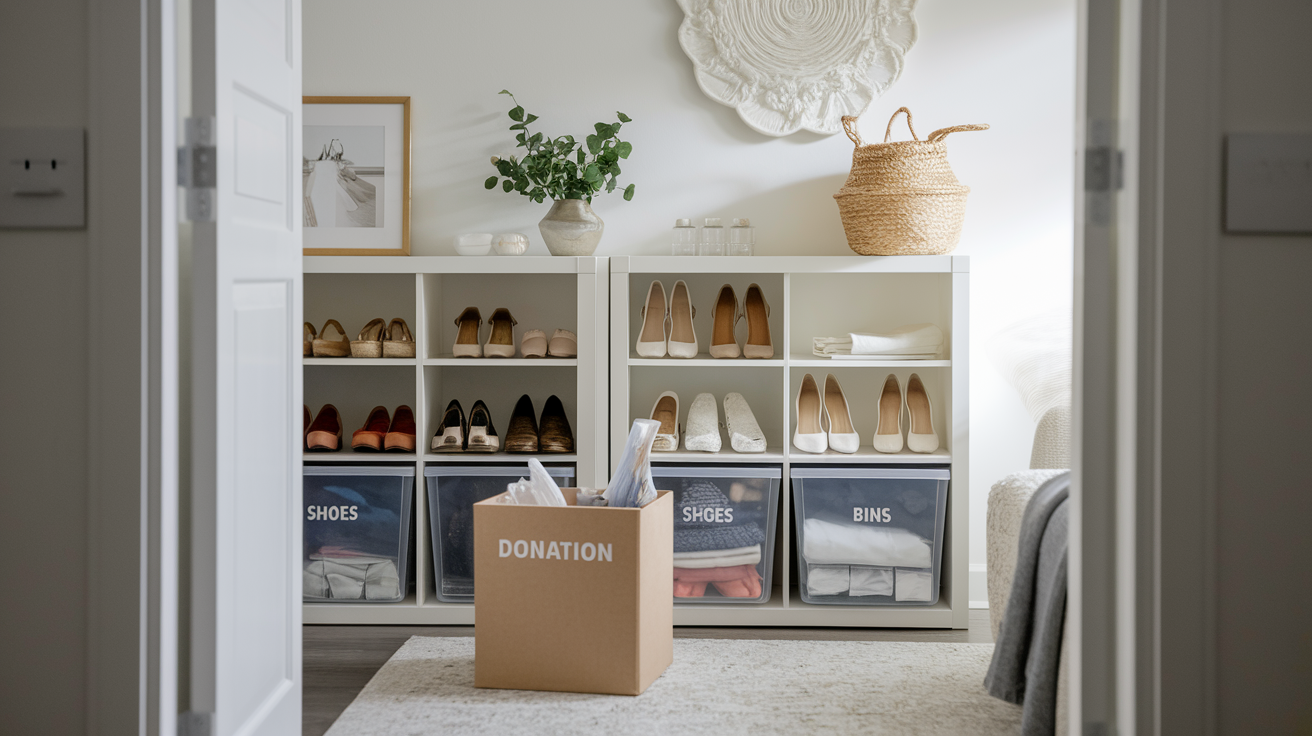
Smart storage only works when you’re storing things you actually use. Before you buy bins or build shelves, sort through what you own and decide what stays. The one‑touch rule says handle each item once. Pick it up, decide if you’re keeping it, and put it where it belongs or into a donation box. No piles, no “I’ll deal with this later” stacks.
Category‑based sorting (also called the “like with like” method) groups similar items together. All shoes, all kitchen gadgets, all toiletries. This way you can see how many you have and spot duplicates. If you discover you own six wooden spoons or three half‑empty shampoo bottles, it’s easier to let go of extras. Once you’ve narrowed each category, assign it a home (a specific drawer, shelf, or bin) and return items there after every use. This prevents the gradual creep of clutter back onto counters and floors.
Routine resets keep storage systems from collapsing under daily use. Pick a time each week to do a quick sweep. Return items to their homes, toss expired food or empty packaging, and straighten bins and baskets. Minimalist decision‑making helps here. Ask yourself if the item serves a current purpose, if you’d buy it again today, or if it’s worth the space it takes up. If the answer is no, pass it along. When your storage holds only what you use and care about, every shelf, drawer, and basket works harder and stays tidy longer.
Final Words
Packed with ready-to-use ideas, this post laid out high-impact smart storage ideas, room-by-room strategies, top product picks, hands-on DIY upgrades, and decluttering methods.
Use the 10-item list and the room tips to pick one small change, like under-bed bins, a pull-out cabinet, or a hidden ottoman, then install it in an hour or over a weekend.
These smart storage solutions help busy homes feel calmer, work better, and stay organized. Start small and enjoy the extra space.
FAQ
Q: What are the most effective high‑impact smart storage ideas and innovations?
A: The most effective high-impact smart storage ideas are multifunctional furniture, modular shelving, under-bed systems, vertical wall solutions, collapsible products, and tech-enhanced organizers that squeeze more usable space from small or busy homes.
Q: What smart storage solutions work best room‑by‑room?
A: The best room-by-room smart storage solutions include pull-out cabinets and magnetic mounts for kitchens; built-in wardrobes and under-bed drawers for bedrooms; over-toilet shelving and slim rolling carts for bathrooms; hidden-ottoman storage for living rooms.
Q: What should I look for when buying smart storage products?
A: When buying smart storage products look for modular, adjustable pieces, durable materials, easy installation, correct dimensions, smooth sliding mechanisms, and convertible functions to match your room size, chores, and long-term flexibility.
Q: Which affordable DIY smart storage upgrades can I try?
A: Affordable DIY smart storage upgrades include floating shelves, repurposed crates, simple custom closet inserts, pegboard walls, and under-bed drawers—projects that use basic tools, cost little, and can be completed in a weekend.
Q: How do decluttering methods improve storage efficiency?
A: Decluttering boosts storage efficiency by using one-touch rules, category sorting, and routine resets to reduce items, surface decision fatigue, and make each storage solution work for fewer, well-used things.
Q: How can tech‑enabled organizers help and are they worth it?
A: Tech-enabled organizers help by automating inventory tracking, smart labels, and app reminders; they’re worth it if you manage many small items, a busy pantry, or want simpler restocking and less wasted time.
Q: What are the best space‑saving furniture types for small homes?
A: The best space-saving furniture types include sofa beds, lift-top coffee tables, storage beds, fold-down tables, and modular cubes—pieces that serve two functions and cut clutter in small footprints.
Q: How should I measure and plan before buying storage?
A: To measure and plan before buying storage, measure door swings, clear floor area, interior shelf and drawer depths, ceiling height, and note how you use the space to ensure a correct fit and function.
Q: What are quick smart storage wins for renters or temporary spaces?
A: Quick renter-friendly smart storage wins are adhesive hooks, tension rods, over-door organizers, under-bed bins, and collapsible baskets that add storage without drilling or permanent changes.