

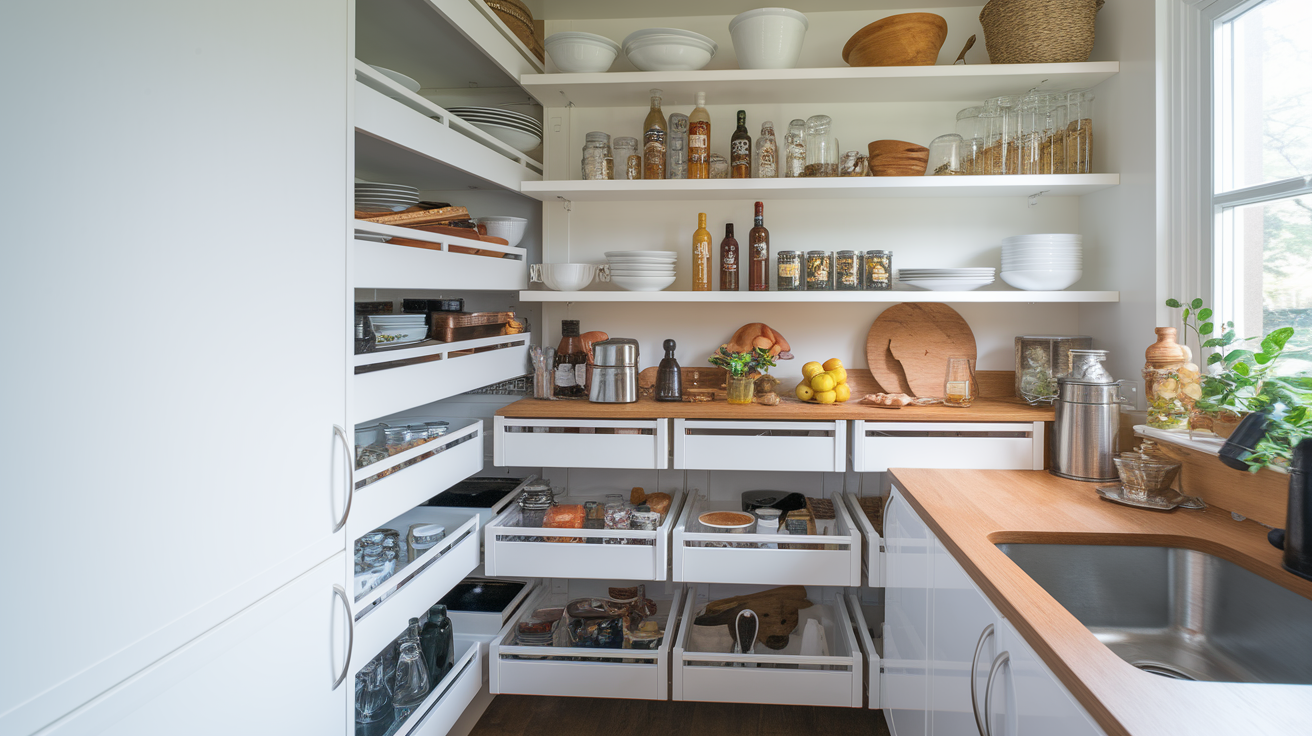

Think a small kitchen dooms you to pantry chaos?
It doesn’t have to.
The right smart pantry organizers, like stackable clear bins, lazy Susans, slim pull-out trays, and under-shelf baskets, turn deep, wasted shelves into usable, visible storage you can actually reach in about 10 minutes.
They stack up, spin things forward, or slide out so nothing hides in the back.
This guide shows the best picks that fit standard 12 to 16 inch shelves, install fast, and free up real space.
Top Smart Pantry Organizers That Immediately Maximize Small Kitchen Space

The best pantry organizers for cramped kitchens turn wasted vertical space, forgotten corners, and that chaos in the back row into storage you can actually see and grab in about 10 minutes. Most small kitchen shelves sit 12 to 16 inches deep, which means anything shoved past eight inches back becomes invisible. You forget it exists. Space savers fix this by stacking up, rotating stuff forward, or sliding out so you don’t need to move three cans just to grab one.
Over the door racks run $15 to $45, stick out just three to six inches, and give you six to eight pockets without stealing shelf space. Pull out shelves fit openings nine to 30 inches wide, hold 30 to 110 pounds, and let you see straight to the back without crouching or digging through layers. Stackable airtight containers, from half a quart for snacks up to six quarts for flour, swap bulky cardboard for neat towers that double your shelf height. Lazy Susans between 10 and 18 inches across convert awkward corners into one spin access for oils and vinegars. Under shelf baskets hang right off the lip of what you’ve already got, adding a second tier nine to 14 inches wide and four to six inches tall.
Small pantry setups work best when you can see everything and grab it fast. Clear materials, spinning platforms, and slide out designs beat deep static bins every time.
Top rated organizers for tiny kitchens do three things: they fit standard 12 to 16 inch depths without wasting the front, they show every label at a glance, and they install in under five minutes with no holes or carpentry.
Six organizers that make an instant difference:
- Over the door multi pocket racks – grabs wasted door space for snacks, spice packets, or single serve items without blocking shelves.
- Two tier lazy Susans – spins corner or deep shelf stuff to the front in one motion, no more black hole.
- Stackable clear airtight containers – builds uniform vertical towers, keeps food fresh, shows what’s left.
- Under shelf hanging baskets – creates a hidden second tier below existing shelves for foil, parchment, or overflow snacks.
- Slim pull out trays on ball bearing slides – brings heavy bottles and appliances forward with one tug, uses full depth without crouching.
- Expandable tiered risers – adds six to 10 inches of vertical visibility for cans and jars, doubles front facing inventory.
Smart Pantry Systems That Enhance Visibility and Access in Small Kitchens

Items vanish in small pantries not because there’s too little room but because deep shelves hide anything past the first row and fixed heights leave dark gaps where cans tip or slide back into shadows. Smart systems fix the visibility problem by rotating, tiering, or pulling every item forward so nothing lives permanently out of sight.
Lazy Susans from 10 to 18 inches across turn dead corner space into accessible storage by bringing the back half of oils, sauces, or snack jars to the front with one spin. Modular bins six to 14 inches wide, stackable two to three tiers high, compartmentalize loose packets and stop avalanche spills when you grab one box. Adjustable shelf organizers and tiered risers, usually 10 to 12 inches wide and six to 10 inches deep, create stadium style visibility so every label faces forward like a grocery aisle.
Clear containers and front labels stop the expensive habit of buying duplicates because you forgot the backup pasta was shoved to the back in March. Rotating units work especially well when corner cabinets or L shaped pantry shelves create zones your hand can’t comfortably reach. Inventory tracking systems built around uniform stacking bins let you count what’s left at a glance instead of excavating three layers to check.
If you’ve ever moved six items to grab one can of beans, a tiered riser or a two tier lazy Susan ends that completely.
Four organizer types that stop items from hiding:
- Tiered shelf risers for cans and jars, creating front to back stadium rows
- Two tier rotating lazy Susans for corner shelves and deep cabinets
- Clear stackable bins with front pull handles so you see contents and slide forward without lifting
- Under shelf baskets that drop a second visible tier into the six inches of air beneath existing shelves
Stackable and Airtight Smart Containers for Tiny Pantry Shelves
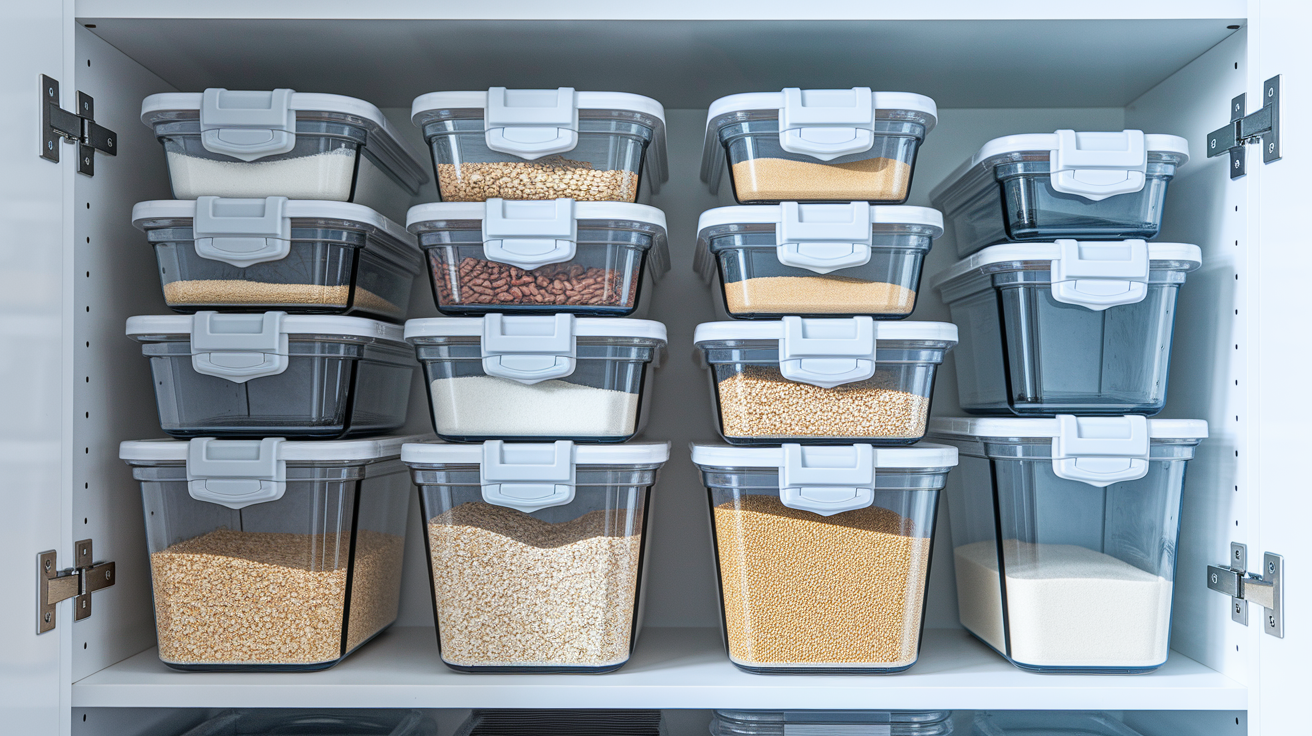
Stackable food containers with airtight seals turn loose bags of flour, rice, oats, and snacks into uniform vertical columns that double or triple usable height on cramped shelves. Sets range from $20 for basic four piece plastic kits to $120 for glass modular systems with 12 graduated sizes. Common volumes run from half a quart for trail mix up to six quarts for five pound flour bags.
Rectangular footprints typically measure six to 10 inches wide and eight to 12 inches deep, so they nestle into standard 12 to 16 inch pantry shelves without wasting the front or blocking sight lines. Clear containers let you see exactly how much quinoa or granola remains without opening lids. That visibility alone prevents buying duplicates and ending up with three half empty bags of the same thing clogging your small pantry.
Airtight containers preserve freshness for grains and flours far longer than torn paper bags or clipped corners. Stacking identical footprints up to three containers high creates clean vertical towers that don’t topple when you pull out the middle tier. Modular bins designed for dry goods often include measurement markers molded into the sidewalls, which speeds up baking prep and eliminates guessing whether that bin holds two cups or two pounds.
BPA free plastic containers weigh less and survive drops better than glass, but glass stays stain free and doesn’t absorb smells from turmeric or cinnamon over years of use.
The trick with stackable systems is decanting only your everyday staples and items that actually save space when removed from bulky boxes. If you use oats daily, pour the canister into a two quart square container that stacks cleanly. If you buy specialty couscous twice a year, leave it in the box and tuck it on a top shelf.
Slim Pull Out Drawers, Under Shelf Baskets, and Other Narrow Space Organizers
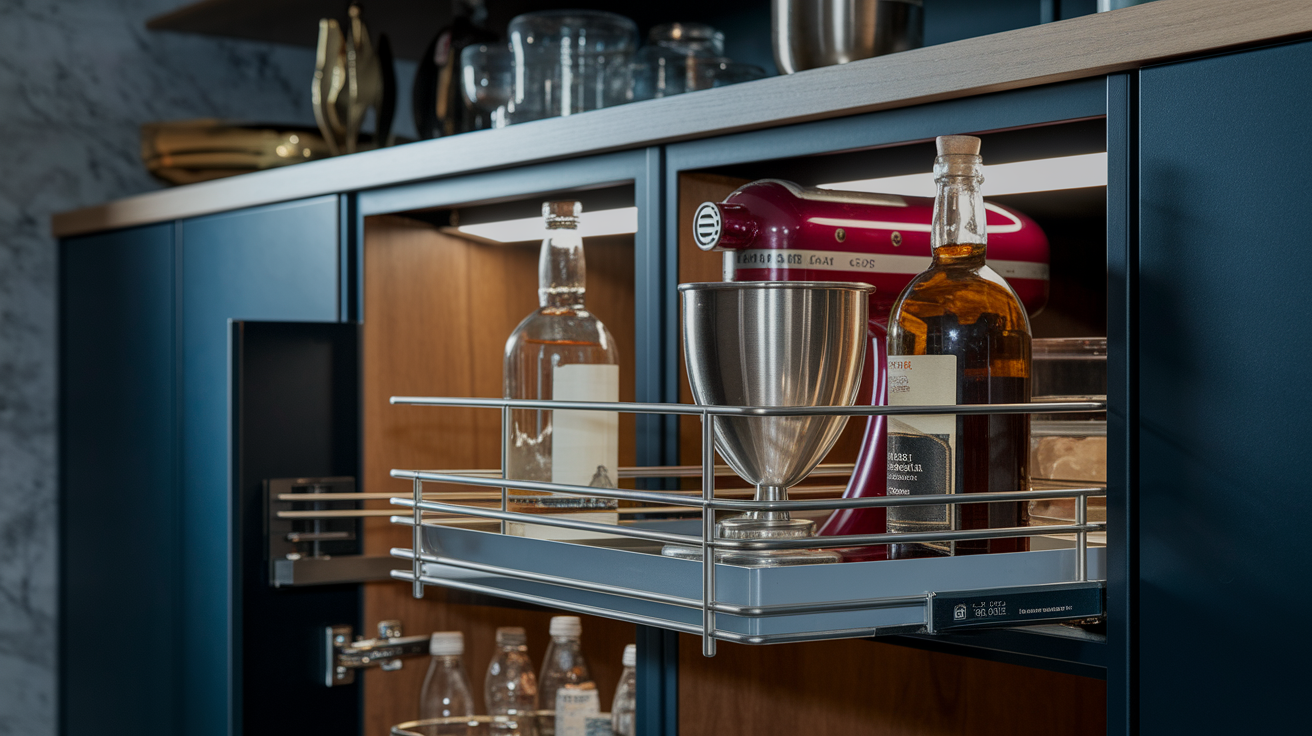
Slim pull out pantry drawers on ball bearing slides bring the entire depth of a 12 to 22 inch shelf forward with one smooth tug. Heavy bottles, small appliances, or overflow canned goods stored at the back become as accessible as the front row. Pull out systems designed for cabinet openings nine to 30 inches wide typically support 30 to 110 pounds depending on slide quality and mounting hardware. They work especially well on lower shelves where crouching to dig through static bins becomes a daily annoyance.
Installation requires screws into cabinet sides or floor panels. For loads over 50 pounds you’ll want three quarter inch cabinet construction or added reinforcement to prevent sagging over time.
Under shelf baskets measuring nine to 14 inches wide and four to six inches tall hook directly onto the lip of existing shelves without tools, creating an instant second tier for foil rolls, parchment paper, snack bars, or anything lightweight that doesn’t need a full shelf. Weight limits hover around five to 15 pounds per basket depending on shelf lip thickness. The hidden storage they provide keeps counters clear while using vertical air that otherwise sits empty.
Narrow organization tips often overlook the four to six inch gaps beside refrigerators or between cabinets, but slim rolling carts designed for exactly those widths turn dead space into pull out storage for oils, spices, or cleaning supplies that would otherwise crowd main shelves.
| Organizer Type | Best Fit Space | Typical Dimensions |
|---|---|---|
| Pull out drawer on slides | Deep shelves 12″+ depth, lower cabinets with heavy items | 9–30″ wide, 12–22″ deep, 30–110 lb capacity |
| Under shelf hanging basket | Beneath any existing shelf with accessible lip | 9–14″ wide, 4–6″ tall, 5–15 lb weight limit |
| Slim rolling cart | Gaps 4–6″ wide beside fridge or between cabinets | 4–6″ wide, 12–24″ deep, 3–5 tiers |
| Vertical divider rack | Inside cabinets for baking sheets, cutting boards, lids | 10–14″ wide, adjustable slot spacing 1–2″ |
| Pull out wire basket set | Cabinet interiors, pantry closets with fixed shelves | 12–18″ wide, 14–20″ deep, stackable 2–3 baskets |
Over the Door, Wall Mounted, and Vertical Smart Organizers for Small Kitchens

Over the door pantry racks deliver prime real estate by transforming the back of any standard pantry door into six to eight pockets of vertical storage without sacrificing a single shelf inch inside. These racks cost between $15 and $45, measure three to six inches deep, and fit doors one and a half to two inches thick with either over the top hooks or screw mount brackets for heavier loads.
The trade off is slightly reduced door swing clearance and per pocket weight limits between two and eight pounds, which makes them great for snack bags, spice jars, single serve oatmeal packets, or boxed broth. Not for 28 ounce canned tomatoes or glass olive oil bottles. Adhesive no drill organizers using command style hooks safely hold five to 10 pounds per hook and work perfectly in rentals where permanent holes aren’t allowed. You’ll want to apply them to clean, dry surfaces and let the adhesive cure for 24 hours before loading.
Wall mounted pantry shelves installed above counters or in empty wall corners add display and storage for cookbooks, recipe boxes, or grab and go breakfast items without consuming floor or counter footprint. Maximizing vertical space means looking up. The 12 to 18 inches of wall between the top shelf and the ceiling often sits unused, but floating shelves, magnetic spice strips, or shallow wire racks mounted there create landing zones for items you use weekly but not daily.
Renter friendly upgrades prioritize removable adhesive mounts, tension rods, and over the door systems that leave no marks and move with you when the lease ends.
If your pantry door already holds coats or bags on the outside, consider adding an over the door rack to the inside face, or mount a narrow wire basket on the interior pantry wall using adhesive hooks rated for the combined weight of your most used spices. Vertical organizers turn overlooked planes into working storage. In kitchens where every shelf is spoken for, that unused vertical real estate is the easiest win.
Budget vs Midrange vs Premium Smart Pantry Organizers for Small Kitchens
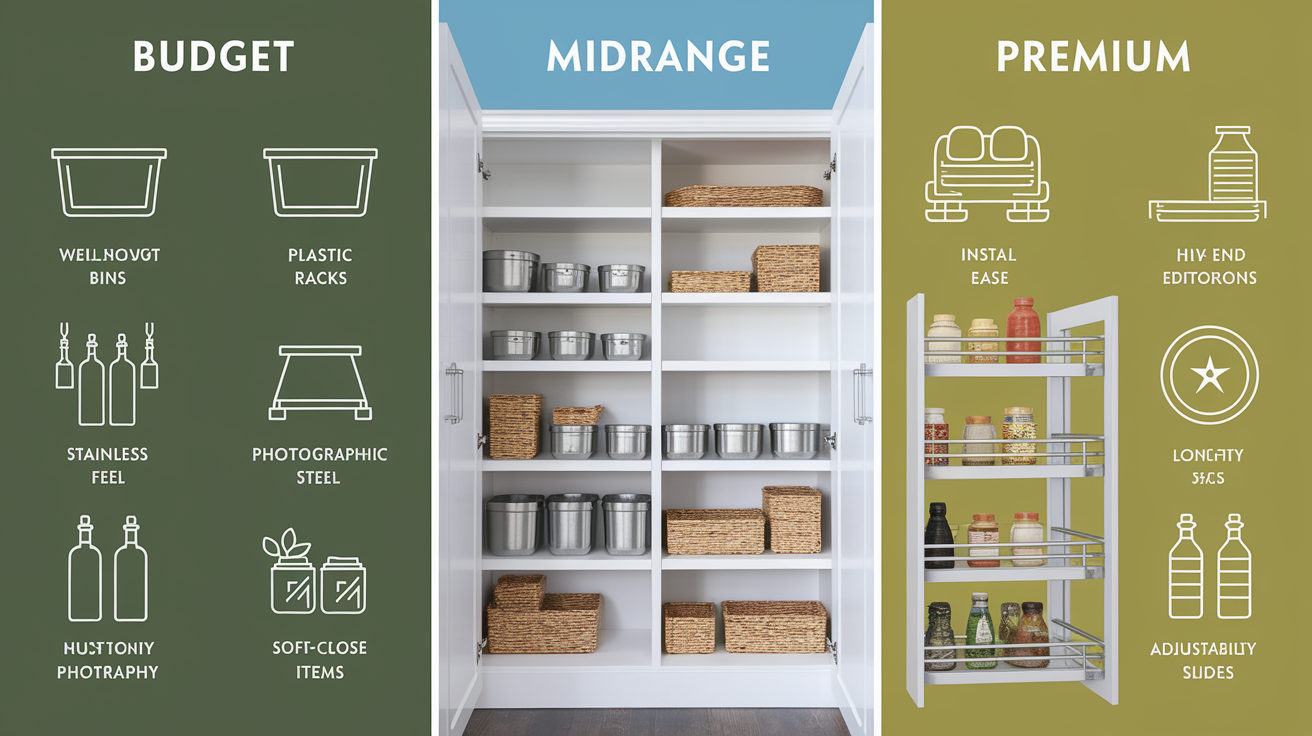
Budget picks under $50 include over the door racks priced $15 to $35, tiered shelf risers and under shelf baskets at $8 to $25, and stackable plastic bins in the same range. These organizers install in minutes without tools, fit renters and homeowners equally well, and deliver immediate capacity gains even if materials are lighter weight and longevity tops out around two to four years of daily use. Adhesive hooks rated for five to 10 pounds anchor the low end of the budget tier and work reliably for snacks, foil, and lightweight bins as long as surfaces stay dry and loads don’t exceed the rating.
Midrange organizers priced $50 to $200 bring airtight modular container sets with gasket sealed lids, two tier lazy Susans in bamboo or stainless steel, sturdy drawer style bins, and basic pull out trays with smooth glide slides. Materials upgrade to BPA free copolymer plastics, powder coated steel, or sustainably sourced bamboo. Installation becomes slightly more involved with screw in brackets or adhesive plus screw hybrid mounts that support 30 to 50 pounds.
Eco friendly bamboo organizers in this tier resist moisture better than particleboard and add a finished look that doesn’t scream “temporary fix.” Durable stainless steel organizers handle high humidity and frequent washing without rusting or warping over five to 10 years.
Premium systems over $200 deliver full width custom pull out vertical racks, soft close ball bearing slides rated for 110 pounds or more, and modular kits designed to retrofit entire closet pantries with professional grade hardware. These systems often require measuring, drilling into cabinet walls or floors, and sometimes contractor installation. But they transform deep or awkward pantries into showroom level organization that lasts decades.
Five key differences between budget, midrange, and premium tiers:
- Weight capacity – budget handles 5 to 15 lb per unit, midrange supports 30 to 50 lb, premium manages 110+ lb on reinforced slides.
- Materials and finish – budget uses basic plastic and thin wire, midrange upgrades to bamboo, coated steel, thicker plastic, premium features stainless, custom wood, soft close mechanisms.
- Installation complexity – budget hangs or hooks in under five minutes, midrange may need screws and a drill, premium often requires precise measurements and professional help.
- Longevity – budget lasts two to four years, midrange holds up five to 10 years, premium systems run 15+ years with minimal wear.
- Adjustability – budget is mostly fixed size, midrange offers some expansion or stacking, premium includes modular, reconfigurable components that adapt as needs change.
Planning, Measuring, and Installing Smart Pantry Organizers in Tight Spaces
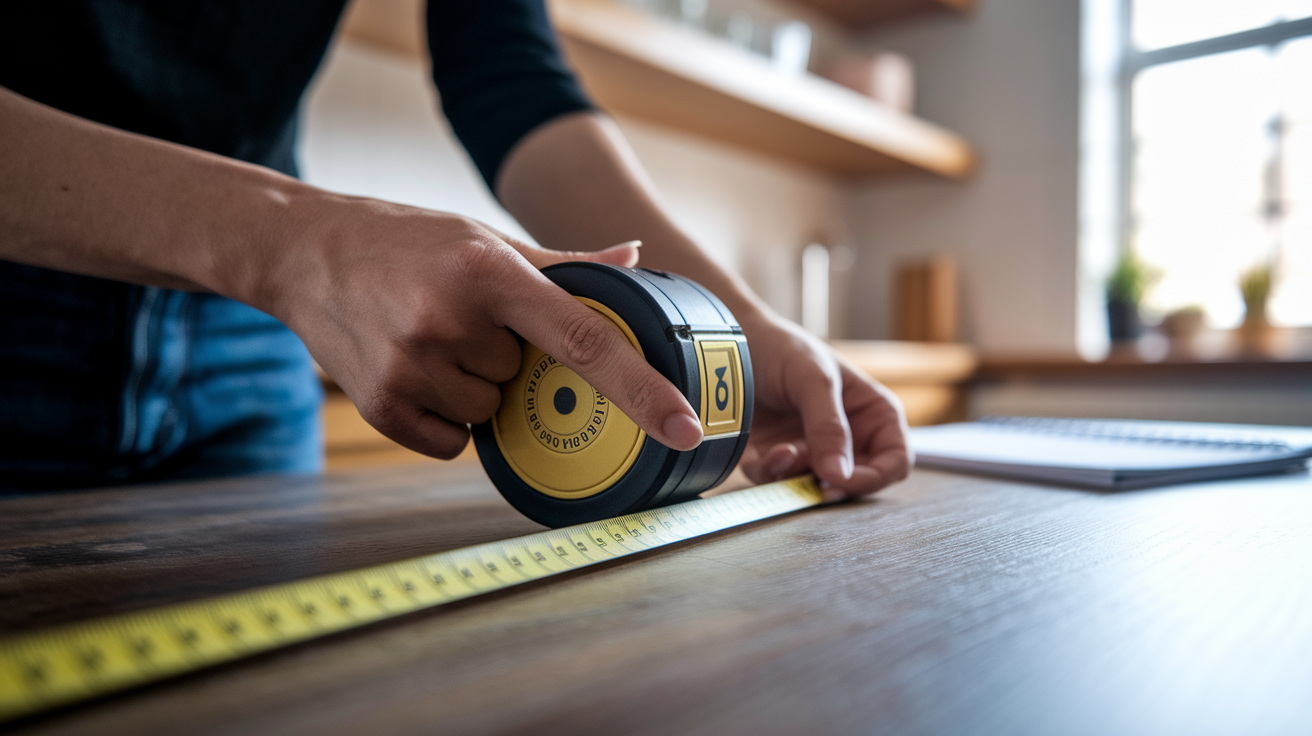
Measuring small pantry dimensions with precision prevents expensive returns and wasted installation time, so start by recording shelf width, depth, and height in one inch increments using a metal tape measure held taut and level. Standard shelf depths in compact kitchens run 12 to 16 inches. Many organizers assume a 14 inch depth, which means a 16 inch pull out tray will hit the back wall before it slides all the way in unless you account for door clearance and hinge swing.
Adjustability in shelf pin holes typically comes in one to two inch increments. Ideal vertical clearances depend on what you’re storing: four inches works for single layer spice jars, eight to 12 inches accommodates stacked canned goods, and 12 to 16 inches fits cereal boxes or small appliances standing upright. Measure the interior cabinet or closet width between walls, not the door opening, because pull out trays and slide out bins need side wall clearance for mounting brackets.
Check whether your shelves are fixed or adjustable before buying stackable risers or under shelf baskets. Fixed shelves limit height customization and some organizers require removing a shelf entirely to install drawer slides underneath. For small space buying guide purposes, note any obstacles like electrical outlets, light fixtures, or protruding hinges that shrink usable depth by an inch or two.
Maximizing vertical space means using every inch from floor to ceiling, so measure the distance from the top shelf to the ceiling and consider adding a final narrow shelf or wall mounted basket in that gap for items used only occasionally.
Installation tips vary by type, but always dry fit before drilling or adhering anything permanent. Hold the pull out tray or over the door rack in place, open and close the door, and make sure clearance works in all positions. For pull out trays recommended for loads of 50 pounds or more, confirm your cabinet construction uses three quarter inch plywood or solid wood sides. Particleboard and half inch panels may need reinforcement blocks glued and screwed behind the mounting area to prevent pull through over time.
Four installation considerations to check before buying:
- Door swing and hinge type – over the door racks add three to six inches of door thickness and may block full swing. European hidden hinges sometimes prevent hook style racks from seating properly.
- Wall stud location for wall mounted shelves – floating shelves holding more than 10 pounds should anchor into studs, not drywall alone. Use a stud finder and mark center lines before drilling.
- Shelf lip thickness for under shelf baskets – basket hooks fit lips between half an inch and one inch thick. Measure your shelf edge to confirm compatibility.
- Slide extension type for pull outs – three quarter extension slides are cheaper but leave the back six inches inaccessible. Full extension slides cost more and let you pull the entire tray past the cabinet face for complete access.
Final Words
Tackle your pantry by focusing on vertical space, visibility, and slim solutions. Over-the-door racks, pull-out drawers, lazy Susans, and stackable airtight containers give the quickest wins for tiny shelves.
Measure shelves (12–16 inches deep), mind weight limits, and pick the right price tier so organizers actually fit and hold what you need. Start with visibility-first pieces so nothing hides in the back.
With the best smart pantry organizers for small kitchens you’ll free up space, cut clutter, and make mornings easier. One small change goes a long way.
FAQ
Q: What are the best smart pantry organizers for small kitchens?
A: The best smart pantry organizers for small kitchens are over-the-door racks (3–6 in deep, $15–$45), pull-out shelves (9–30 in wide, 30–110 lb), stackable airtight containers (0.5–6 qt), lazy Susans (10–18 in) and under-shelf baskets (9–14 in).
Q: Which organizers provide the biggest immediate space gains?
A: The organizers that provide the biggest immediate space gains are over-the-door racks, vertical risers, stackable airtight containers, and slim pull-outs—especially on 12–16 inch deep shelves where vertical stacking and door space free up shelf depth.
Q: How do I improve visibility and access in a tiny pantry?
A: You improve visibility and access in a tiny pantry by using lazy Susans (10–18 in), clear modular bins (6–14 in), risers and labels so items aren’t hidden at the back and you stop buying duplicates.
Q: What measurements matter when fitting organizers in a small kitchen pantry?
A: The measurements that matter when fitting organizers are shelf depth (usually 12–16 in), door thickness (1.5–2 in), and clearances for spices (about 4 in), cans (8–12 in) and cereals (12–16 in).
Q: Are stackable airtight containers worth it for tiny pantry shelves?
A: Stackable airtight containers are worth it for tiny pantry shelves because they come in 0.5–6 qt sizes, usually cost $20–$120 for sets, and their 6–10 by 8–12 inch footprints maximize vertical space and visibility.
Q: Where do slim pull-out drawers and under-shelf baskets work best?
A: Slim pull-out drawers work best in cabinet depths of 12–22 in and widths 9–30 in (30–110 lb capacity); under-shelf baskets fit 9–14 in wide shelves, add 4–6 in usable height, and hold about 5–15 lb.
Q: Can over-the-door and wall-mounted organizers work in rental kitchens?
A: Over-the-door and wall-mounted organizers can work in rental kitchens: over-the-door racks fit 1.5–2 in doors and cost $15–$45, while adhesive no-drill options and light-duty hooks hold 5–10 lb safely.
Q: How should I choose between budget, midrange, and premium pantry organizers?
A: Choose budget (under $50) for simple racks and baskets, midrange ($30–$150) for airtight sets and two-tier lazy Susans, and premium ($150+) for full pull-out systems—expect better materials, load capacity, and longevity as price rises.
Q: What weight limits should I expect for common small-kitchen organizers?
A: Expect pull-outs to support 30–110 lb, under-shelf baskets about 5–15 lb, and over-the-door shelves or hooks roughly 5–10 lb each; use screw-in or reinforced mounting for heavier loads.
Q: What quick measuring and installation tips help avoid buying the wrong organizer?
A: Measure shelf depth (12–16 in), check adjustable increments (1–2 in), verify door thickness and clearance, reinforce cabinets for heavy pull-outs, and leave 1–2 in front clearance so drawers and lids open easily.