

Think you can cut down the old oak to make room for that patio?
Not so fast.
Many towns have tree removal rules that surprise homeowners.
These ordinances can add weeks of permits, require replacement trees, or force you to redesign hardscapes and utilities.
Read on to learn how local tree rules shape what you can build, how long it takes, and how much it will cost so you don’t start a project you can’t finish.
How Local Tree Ordinances Shape Landscaping Decisions and Project Feasibility

Tree removal ordinances draw legal lines around what you can and can’t do with trees on your own property. Those lines end up reshaping entire landscaping projects. Most towns use ordinances to protect native species, keep canopy coverage intact, control root-zone disturbance during construction, and require permits before you touch mature or designated trees. Some laws only apply to public rights-of-way. But plenty extend into private backyards, especially for trees near conservation areas, water bodies, or anything tagged as a historic specimen. If your property sits inside a conservation jurisdiction, expect stricter review and more denials.
Ordinances mess with project feasibility by limiting where you can build, plant, or grade. That mature oak near your planned patio? It might have a protected root zone stretching fifteen feet in every direction. You’ll either move the patio or redesign the whole thing. Canopy-preservation rules may force you to keep a fixed percentage of existing tree cover, which can kill your plans for a new driveway or outdoor kitchen. Some ordinances even protect standing dead trees for wildlife habitat. So you can’t remove a hollow trunk just because you think it’s ugly.
Local rules swing wildly from one town to the next. A tree you can legally remove in one municipality might need a lengthy permit process and replacement plantings just across the border. Before you sketch a single hardscape plan or order landscape materials, verify your local code. Check whether your property touches a conservation zone and figure out which trees carry protected status. What feels like a straightforward landscaping update can turn into a months-long approval process if you skip that first step.
Common Types of Tree Removal Ordinances Affecting Residential Landscaping

Four primary ordinance categories control how you manage trees during landscaping work. Street Tree Ordinances regulate planting and removal inside public rights-of-way. They often extend to private trees that create hazards for pedestrians, streets, or utilities. Tree Protection Ordinances require permits before you remove, prune, or encroach on native, historic, or environmentally sensitive trees. View Ordinances settle disputes when a tree blocks a neighbor’s sightline or sunlight, and they usually tie into zoning codes. Landscape Ordinances set minimum planting requirements. You might have to plant a certain number of shade trees in parking areas or along property lines.
Each type restricts different aspects of your project. Street Tree Ordinances might prevent you from removing a sidewalk maple even if it’s lifting your front walk. Tree Protection Ordinances can force you to shift your deck footprint to avoid a designated heritage oak. View Ordinances may let a neighbor petition for removal of your tree if it blocks their view. Or they might protect your tree and deny the neighbor’s request. Landscape Ordinances can require you to plant additional trees to meet quotas, which bumps up costs and maintenance.
| Ordinance Type | How It Affects Landscaping Projects |
|---|---|
| Street Tree Ordinance | Restricts removal or pruning of trees in rights-of-way. May require permits for private trees that pose public hazards or interfere with sidewalks and utilities. |
| Tree Protection Ordinance | Protects native, historic, or environmentally sensitive trees. Triggers permit requirements for removal, pruning, or root-zone encroachment. Often includes diameter-based thresholds. |
| View Ordinance | Governs neighbor disputes over blocked views or sunlight. Can mandate pruning or prevent removal depending on zoning priority. Often tied to property-line setbacks. |
| Landscape Ordinance | Sets minimum tree counts, species requirements, and placement rules for new construction or major site changes. May require you to plant more trees to meet canopy targets. |
Permit Requirements for Tree Removal and Their Impact on Project Timelines

Most towns require a permit before you remove a protected tree, and the application process can delay your landscaping schedule by weeks or months. Typical documentation includes a site plan showing tree locations, an inventory with diameter measurements (usually taken at breast height, or DBH), an arborist report documenting tree health or hazards, and a replacement or mitigation planting plan. Standing dead trees still trigger review because of their value to insects and cavity-nesting birds. Environmentally sensitive specimens (think trees in wetland buffers or along stream banks) may require additional environmental impact statements or consultations with conservation commissions.
The review process involves multiple steps and parties. Local administrators accept applications and route them to inspectors or consulting arborists who evaluate the evidence. Inspectors may visit your property to confirm measurements, assess hazards, and verify that no alternatives to removal exist. If the tree’s protected by a conservation commission, expect a default “No” unless you can prove imminent danger to a structure or a clear ecological benefit from replacement. Approvals hinge on the strength of your arborist report and how well your mitigation plan addresses long-term canopy and habitat goals.
Permit timelines can stretch your project schedule. A straightforward backyard patio addition might need to wait three months if you have to remove a mature tree for proper drainage or sun exposure. Typical permit steps include:
- Verify property lines and confirm tree ownership to make sure you’re not cutting a public or neighbor tree without authorization.
- Measure and document all trees above the diameter threshold specified in your local ordinance, usually six inches DBH or larger.
- Hire a certified arborist to assess tree health, identify hazards, and prepare a written report describing risks and recommendations.
- Submit the permit application with site plan, tree inventory, arborist report, and proposed replacement planting details.
- Schedule an on-site inspection with the municipal tree warden or inspector to walk the property and review conditions.
- Wait for approval or denial, which can include conditions such as planting multiple replacement trees, installing root barriers, or adjusting construction timelines to avoid nesting season.
Penalties, Fines, and Enforcement for Unauthorized Tree Removal

Removing a tree without a permit or damaging a protected root zone during construction can trigger significant fines and expensive recompense requirements. Many ordinances require violators to plant an equal number of diameter inches to replace what was removed. That 30-inch oak might mean planting six five-inch saplings or three ten-inch trees. Fines vary by town but commonly start at several hundred dollars per tree and escalate for repeat violations or intentional noncompliance. Some codes impose daily penalties until the violation’s corrected, and enforcement can include stop-work orders that halt your entire landscaping project.
Enforcement happens through local administrators, tree wardens, and inspectors who respond to complaints, conduct routine inspections, or review construction-permit applications for compliance. If a neighbor reports an illegal removal or an inspector spots unpermitted work during a site visit, you’ll receive a notice of violation and a deadline to fix the issue. Noncompliance can reduce your future flexibility. Municipalities may flag your property for closer scrutiny on any subsequent permits. In some cases, illegal removal of a heritage or environmentally sensitive tree can result in liens against the property or mandatory restoration plans that require ongoing monitoring and maintenance for years.
Landscaping Design Adjustments Required by Tree Ordinances

Ordinances reshape landscaping layouts by restricting where you can build, grade, and plant. A protected tree’s root zone, typically extending to the edge of the canopy drip line or a fixed radius from the trunk, becomes an exclusion area for hardscape, heavy equipment, and soil compaction. If you planned a new deck under a mature maple, the ordinance may require shifting the entire structure ten feet away or redesigning it to include tree-well openings that protect the root flare. Conservation-area restrictions can prevent grading changes that alter drainage or expose roots, forcing you to work with existing contours even when they complicate patio installation or lawn leveling.
Canopy-preservation mandates add another layer of constraint. If your town requires maintaining 40 percent tree canopy and your existing coverage barely meets that threshold, removing even one mid-sized tree may require planting several new specimens elsewhere on the property to keep your total canopy above the minimum. Specimen trees, such as heritage oaks or native walnuts, often carry individual protection that makes them immovable anchors in your design. They’ll dictate the placement of walkways, garden beds, and outdoor living spaces around their footprint.
Common design adjustments required by tree ordinances include:
Shifting driveways, patios, or walkways to avoid root protection zones, often adding length or curves to the hardscape path.
Relocating utility trenches and irrigation lines to stay outside designated root radii, sometimes requiring shallow routing or above-ground solutions.
Adding root barriers or structural soil to protect existing trees while allowing construction nearby, increasing material and installation costs.
Redesigning grading plans to preserve natural drainage and avoid root exposure, which can limit the usable footprint of new lawns or planting beds.
Increasing planting quantities to meet landscape ordinance quotas or offset removals, often requiring multiple small trees to replace one mature specimen.
Alternatives to Tree Removal: Options That Keep Your Project Compliant
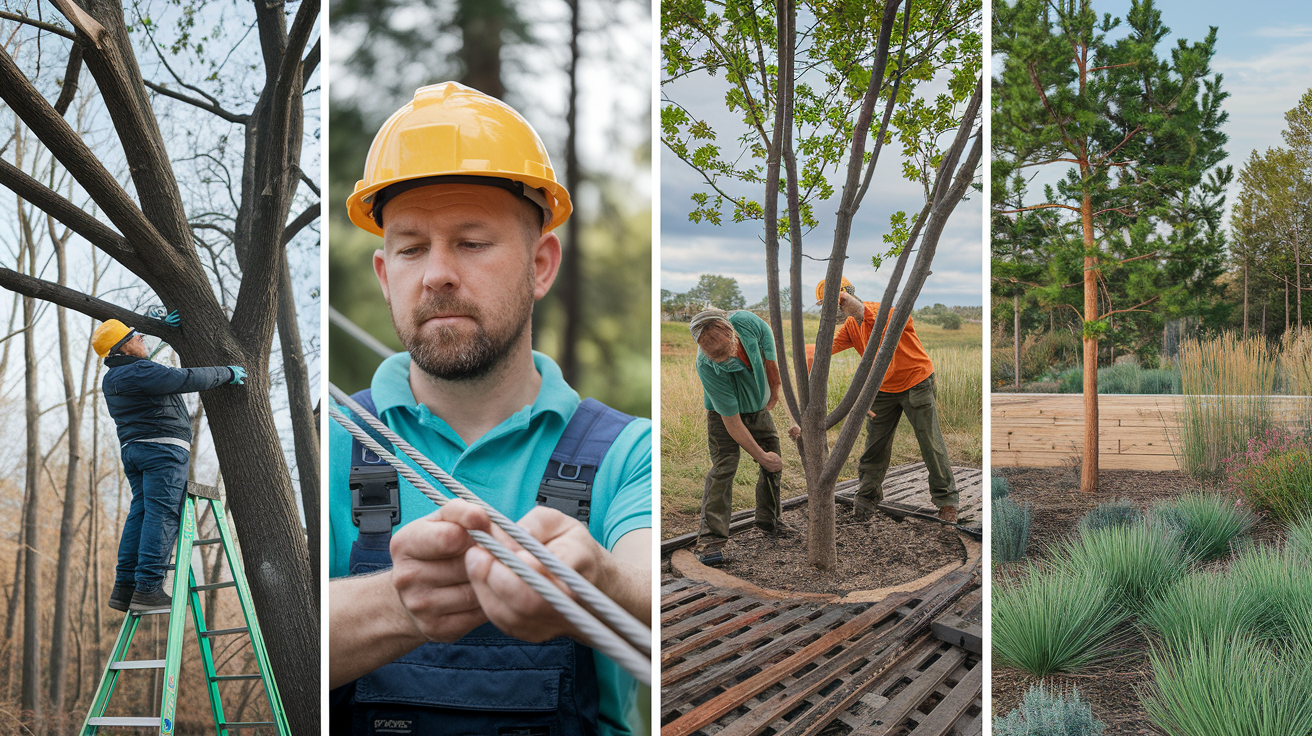
Cities and conservation commissions prefer alternatives that preserve canopy and habitat, so exploring non-removal options can speed approvals and reduce replanting obligations. Pruning can open sightlines, reduce hazards from overhanging limbs, and improve light penetration without triggering full removal permits. Structural supports (like cabling or bracing) stabilize trees with weak branch unions or split trunks, letting them remain in place near patios or play areas. Root-zone stabilization, using mulch layers and avoiding soil compaction, protects tree health during construction without requiring removal or relocation.
Transplanting moves a tree to a different location on your property. You’ll preserve canopy credit and avoid replacement mandates while freeing up space for your landscaping project. Not all trees tolerate transplanting well. Mature specimens with deep taproots can struggle. But younger trees and certain species can be relocated successfully if the work’s done during dormancy and with proper root-ball preparation. Arborist assessments help determine whether a tree poses a verifiable hazard to structures or has salvageable ecological value, and those reports provide the documentation needed to justify removal or to show that an alternative will adequately protect both the tree and your project.
Common alternatives municipalities accept include:
Selective pruning to reduce canopy weight, remove dead wood, or clear views without full removal.
Installing root barriers to redirect growth away from foundations, driveways, or utility lines.
Transplanting smaller or mid-sized trees to less obstructive locations on the property.
Habitat enhancement plans that add understory plantings, native shrubs, or layered vegetation to offset minor tree loss or disturbance.
Replacement, Mitigation, and Replanting Rules After a Tree Is Removed
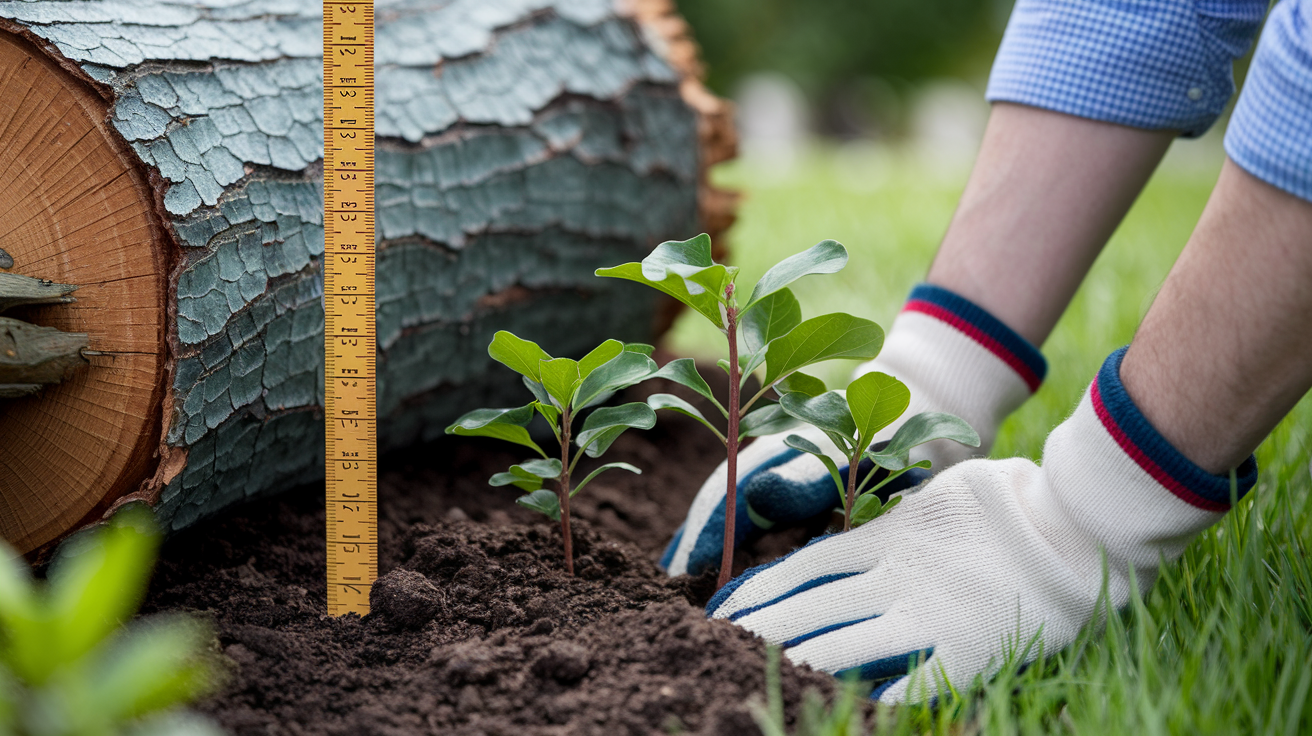
Many towns mandate planting one or more new trees for every mature tree removed, and the replacement rules can be specific about species, size, and placement. Some ordinances require matching the species of the removed tree to maintain ecological continuity. Others allow substitution with equivalent native species that provide similar canopy and habitat benefits. Because a new sapling is much smaller than a mature tree, replacement formulas often require multiple new plantings to compensate for the lost diameter and canopy coverage. A 20-inch oak might require four five-inch replacements or a habitat-improvement plan that layers shade trees, understory species, and shrubs to create a more diverse planting.
Replacement trees typically must meet minimum caliper standards, such as two inches DBH at planting. Some ordinances require ongoing survival monitoring for one to three years after installation. If a replacement tree dies or fails to thrive, the property owner may be required to replant until the survival rate meets the town’s standard. Documentation of replacement plantings (photos, receipts, and planting-plan diagrams) becomes part of the permanent permit record and may be reviewed during future property transactions or permit applications.
Mitigation plans offer flexibility when replacement on-site isn’t feasible (small lots or properties with limited planting space). Some towns accept off-site mitigation, such as contributing to a municipal tree fund or planting trees in a public park. Others allow clustered replacement plantings that concentrate new trees in a single area to create a mini-forest or pollinator corridor. Mitigation requirements affect landscaping budgets by adding plant costs, installation labor, and ongoing maintenance obligations. Factor those expenses into your project estimate before finalizing plans.
Practical Steps and Checklists for Homeowners Planning Landscaping Projects

Starting a landscaping project without understanding local tree ordinances can lead to redesigns, fines, and months of delays. Early planning reduces approval conflicts and helps avoid expensive mistakes. Your first task is confirming property boundaries. Removing a tree that straddles the property line or sits on a neighbor’s lot without permission triggers liability and potential legal disputes. Next, identify whether your property falls within a conservation jurisdiction (wetland buffer, watershed protection area, or historic district). Those designations impose stricter review and often default to denying removal requests unless you can prove imminent hazard.
Coordinate with your local tree warden or municipal forester early in the design process. Introduce yourself, describe your project goals, and ask for guidance on which trees are protected and what documentation will be required. Hiring a certified arborist before you finalize landscaping plans provides the assessments and written reports needed to support permit applications. An arborist can identify alternatives to removal that keep your project compliant. Document species, health, and diameter for every tree above the local threshold, and map root zones on your site plan to avoid conflicts during hardscape or planting installation.
Homeowner checklist before starting landscaping work:
- Verify property lines using a survey or GIS parcel map to confirm tree ownership.
- Check local ordinances for tree protection rules, permit thresholds, and replacement requirements.
- Identify conservation zones and wetland buffers that may restrict tree work or grading.
- Locate and contact the tree warden to discuss project scope and permit process.
- Hire a certified arborist to assess tree health, identify protected species, and prepare hazard documentation.
- Document all trees with measurements (DBH), species identification, and health notes.
- Map root protection zones on your site plan and adjust hardscape or planting locations accordingly.
- Prepare a replacement or mitigation plan detailing new tree species, quantities, and planting locations before submitting your permit application.
Case Studies Showing How Ordinances Change Real Landscaping Projects
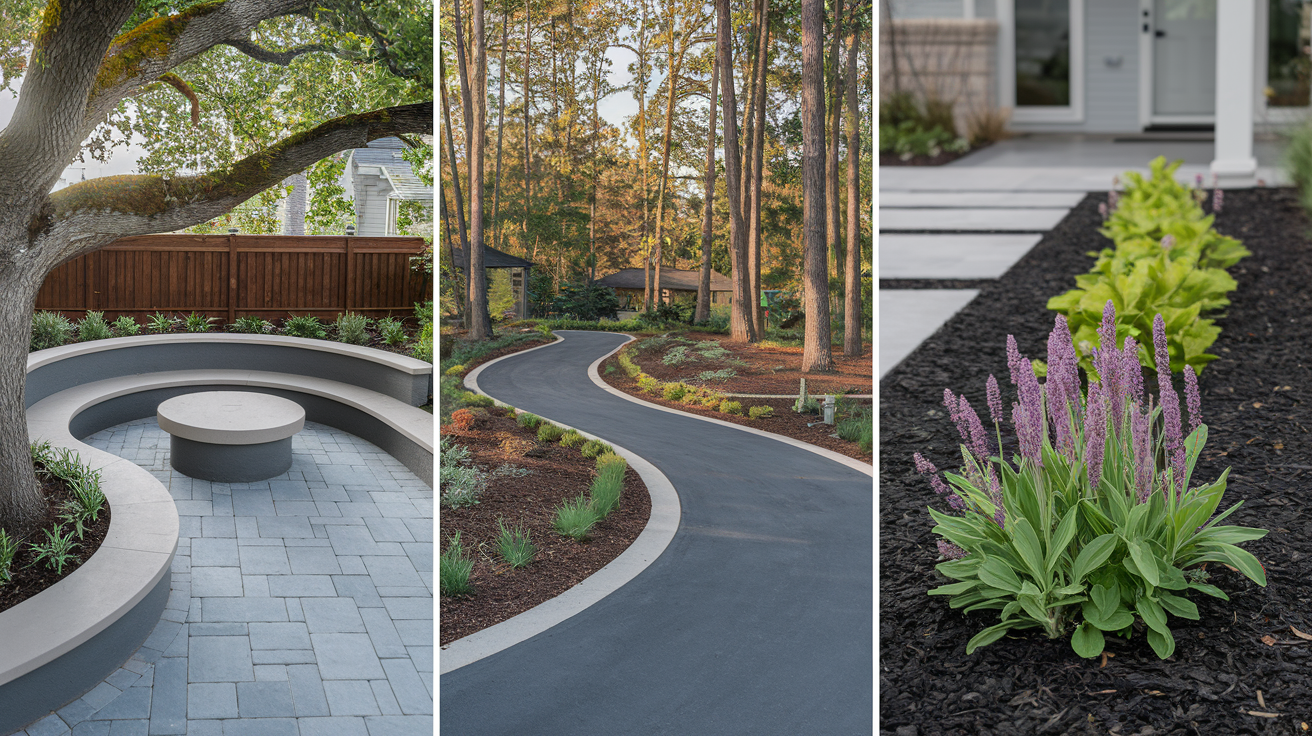
A homeowner planning a backyard patio and fire pit discovered that a 25-inch red maple sat directly in the center of the proposed hardscape footprint. The local tree protection ordinance required a permit for any tree over 12 inches DBH, and the town mandated preserving root zones extending to the canopy drip line. Rather than abandon the patio, the homeowner redesigned the layout to curve around the tree. They created a built-in shade zone and added a circular tree well with a stone border. The revised plan required an extra 40 square feet of pavers and a custom layout, but it avoided the cost of removing the maple and planting three replacement trees.
In another project, a family wanted to install a driveway extension to reach a new garage. The planned route passed through the root zone of a heritage oak protected by the town’s landscape ordinance. The arborist report confirmed the oak was healthy and not a hazard, so removal was denied. The family shifted the driveway path 12 feet to the east and added a gentle curve that avoided the critical root area. To meet the landscape ordinance’s canopy-preservation target after minor grading work, they planted two additional shade trees along the property line. That increased the total tree count and fulfilled the mitigation requirement.
A third homeowner needed to remove a diseased ash tree that posed a hazard to the house. The permit was approved with the condition that two native saplings be planted as replacements. The town specified that the replacements must be native species contributing to local habitat, so the homeowner selected a tulip poplar and a black gum. Both support pollinators and provide fall color. The permit required photographic documentation of the new plantings and a one-year survival check. This compliance-focused approach added $600 to the project cost but satisfied the ordinance and avoided further penalties or replanting obligations.
Final Words
As you pull permits or sketch a new patio, this post showed the rules that can limit removal, trigger permits, and force design changes.
We covered common ordinance types, permit steps and timelines, alternatives to removal, replacement rules, and a homeowner checklist. The case studies gave simple fixes you can actually use.
Understanding how tree removal ordinances affect yard landscaping projects makes planning less painful. Check local codes early, talk to an arborist, and you’ll finish a yard that looks good and follows the rules.
FAQ
Q: What is the 10/20/30 rule for trees?
A: The 10/20/30 rule for trees typically refers to local thresholds for removal permits, setback distances, or trunk-diameter cutoffs; its exact meaning varies by town, so check your municipal code or call the tree warden.
Q: Would tree removal be considered landscaping?
A: Tree removal is often considered part of landscaping, but many municipalities regulate trees separately with permits, protected-species lists, or mitigation requirements, so plan landscaping and tree work together and verify local rules.
Q: Are you responsible for tree branches in a neighbor’s yard?
A: You’re generally responsible for branches that grow from your trees into a neighbor’s yard; neighbors may trim back to the property line but should avoid harming the tree and check local nuisance or boundary rules.
Q: Does removing trees decrease property value?
A: Removing trees can lower property value if it cuts mature shade, privacy, or curb appeal, but it can raise value if it fixes hazards, improves sight lines, or enables a usable yard. Replace removed trees with appropriate new plantings.