

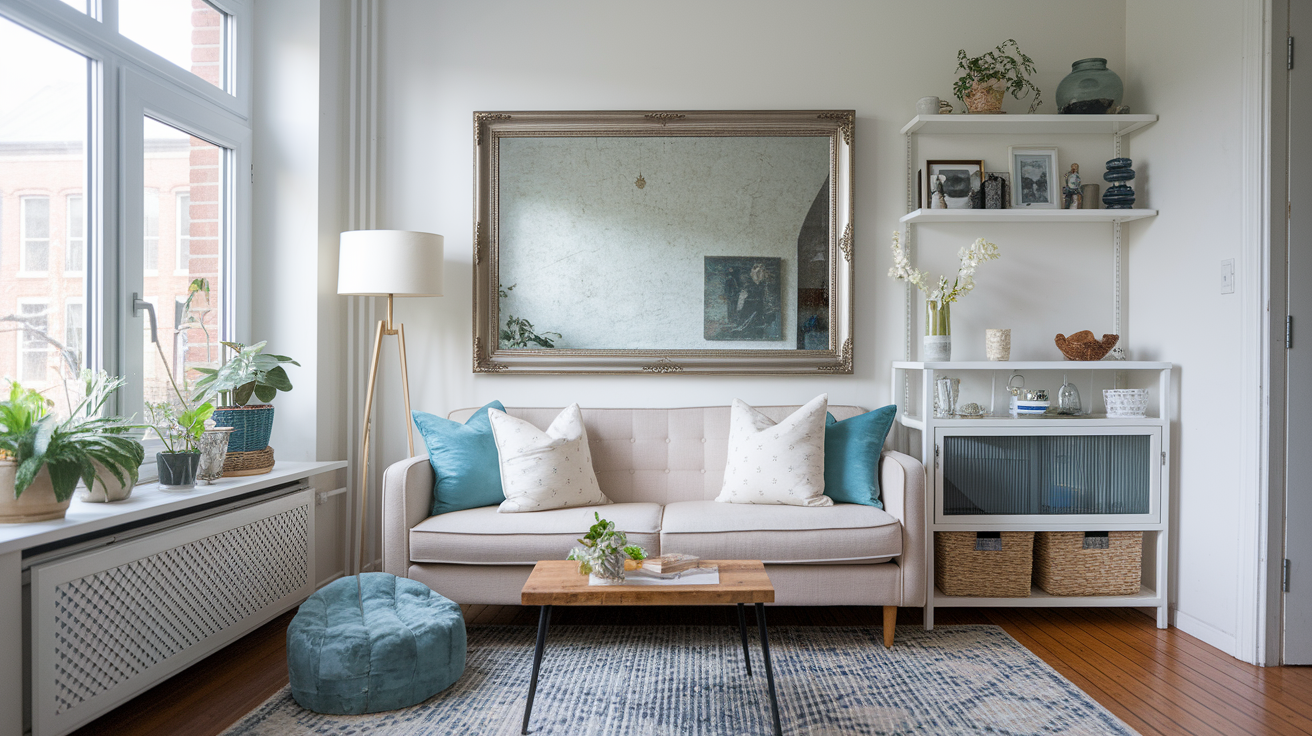

Stop buying tiny furniture for tiny rooms — that’s often why they still feel cramped.
Small spaces can look twice as big with a few smart moves.
This post gives simple, real-home ideas: matching light paint and mirrors to open the view, vertical storage to free the floor, and multifunctional furniture that works harder.
You’ll find quick weekend fixes, renter-friendly swaps, and longer projects that actually make rooms feel roomier and more useful.
Use these tips to make your tiny rooms calm, practical, and ready for living.
Essential Small-Space Decor Principles for Immediate Impact
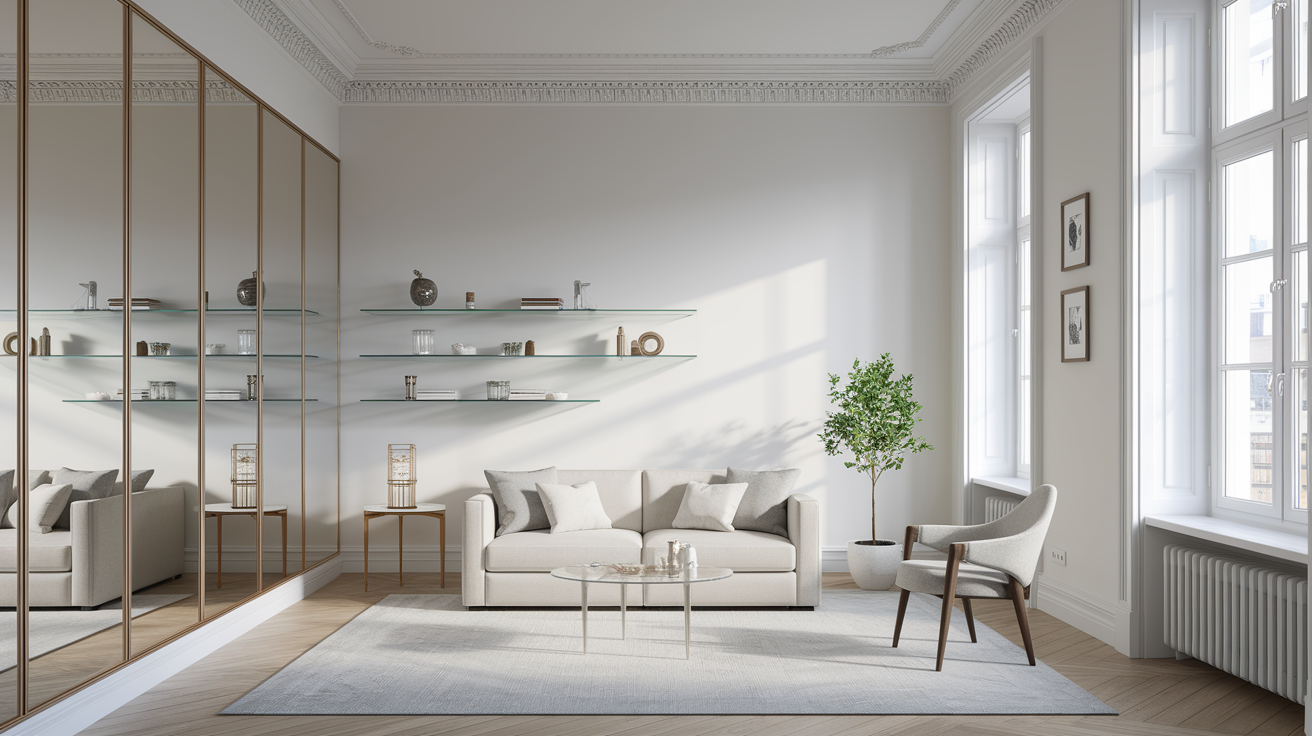
Visual weight, light colors, and reflective materials make small rooms feel double their actual size. Paint walls, ceilings, and trim in the same soft white so your eye moves up and outward instead of stopping at color breaks. Glass shelves let light pass through. Mirrors placed across from windows bounce natural light deeper into the room. When you swap heavy dark furniture for lighter finishes and add a few reflective surfaces, the space starts breathing.
Vertical use gets ignored way too often. High hooks keep coats off the floor. Tall bookcases draw your eye up and store more per square foot than low, wide cabinets. Glass shelving on upper walls holds plants, books, or ceramics without adding clutter, and wall storage keeps walkways open. Simple: if it’s on the floor, it shrinks the room. If it’s up high, it creates space below.
Multifunctional pieces turn one-use furniture into two or three jobs. A fold-up table disappears when you’re not eating. A low coffee table holds drinks without blocking the view across the room. A bench with hidden storage seats guests and stores throw blankets. In a small home, every piece has to work hard, and choosing items that flex between uses is the fastest way to reclaim square footage.
Quick upgrades that make a small room feel instantly larger:
- Paint the ceiling, walls, and trim the same light color to erase boundaries
- Add a large mirror on the wall opposite your brightest window
- Swap bulky cabinets for floating glass shelves
- Hang hooks near the ceiling to store bags, hats, or plants vertically
- Keep decorative objects minimal and group them on one or two surfaces
- Choose furniture with visible legs to preserve sightlines across the floor
Small Space Furniture Ideas That Maximize Function
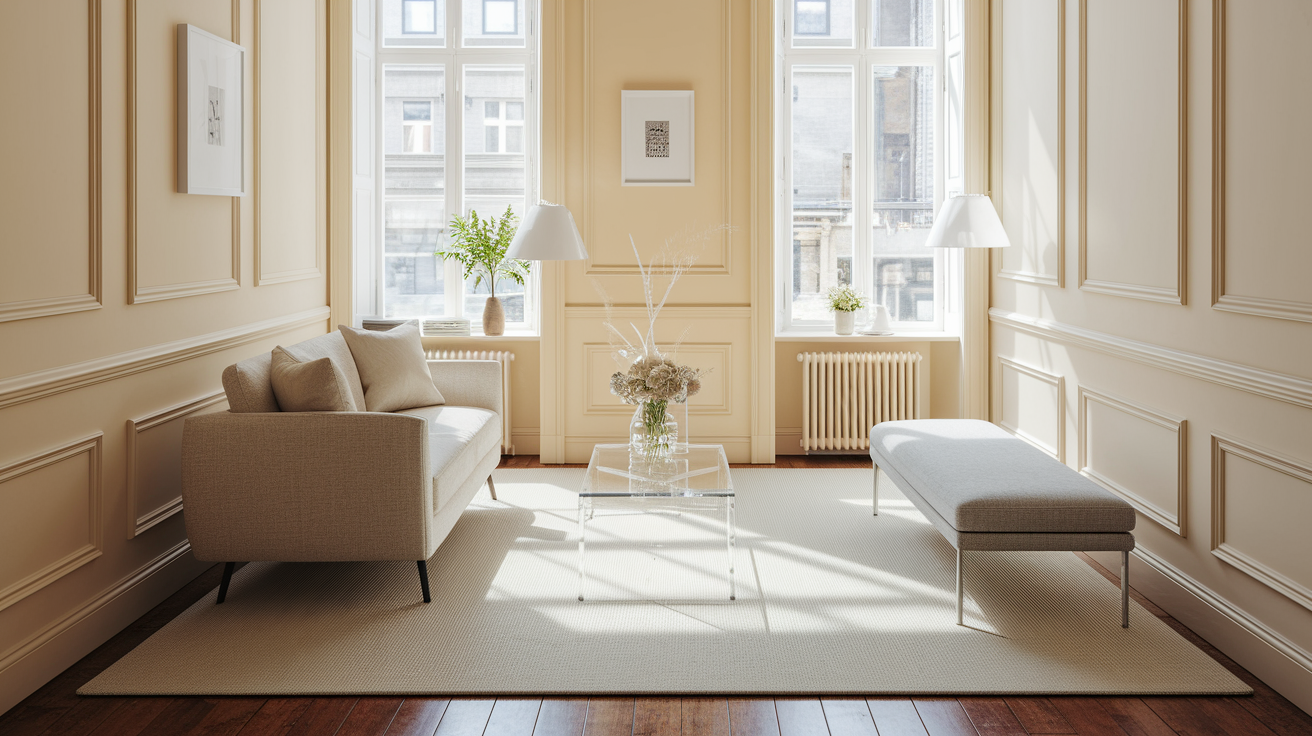
Appropriately sized furniture matters more than cramming in tiny pieces everywhere. A standard sofa that fits the room feels better than three undersized chairs that look lost. The trick is choosing lighter designs: benches instead of chairs with high backs, lucite coffee tables instead of solid wood cubes, and tight-back sofas that sit shallower without losing comfort. Light upholstery and furniture with exposed legs let you see more floor, which makes the whole room register as bigger even when the furniture itself is full size.
Low sectionals work in compact living rooms when they’re properly sized. A 10-by-10-foot sectional can anchor a small space without blocking sightlines if you keep the back height low and the cushions tight. Small round dining tables let you add a third or fourth chair more easily than rectangular ones, and benches tuck all the way under to clear floor space when you’re not eating. Match furniture scale to room dimensions. Don’t automatically downsize everything and end up with a space that feels like a dollhouse.
| Furniture Type | Space-Saving Benefit |
|---|---|
| Benches (no seat backs) | Reduce visual clutter, tuck completely under tables, squeeze in extra seating |
| Lucite or glass coffee tables | Add function without blocking sightlines or adding visual weight |
| Tight-back sofas and club chairs | Less depth than loose-back styles while keeping full comfort |
| Small round dining tables | Allow easier chair placement, seat more people in less square footage |
| Low-profile sectionals (low back height) | Provide ample seating without creating a visual wall across the room |
Multi-Functional Small Space Solutions for Everyday Living
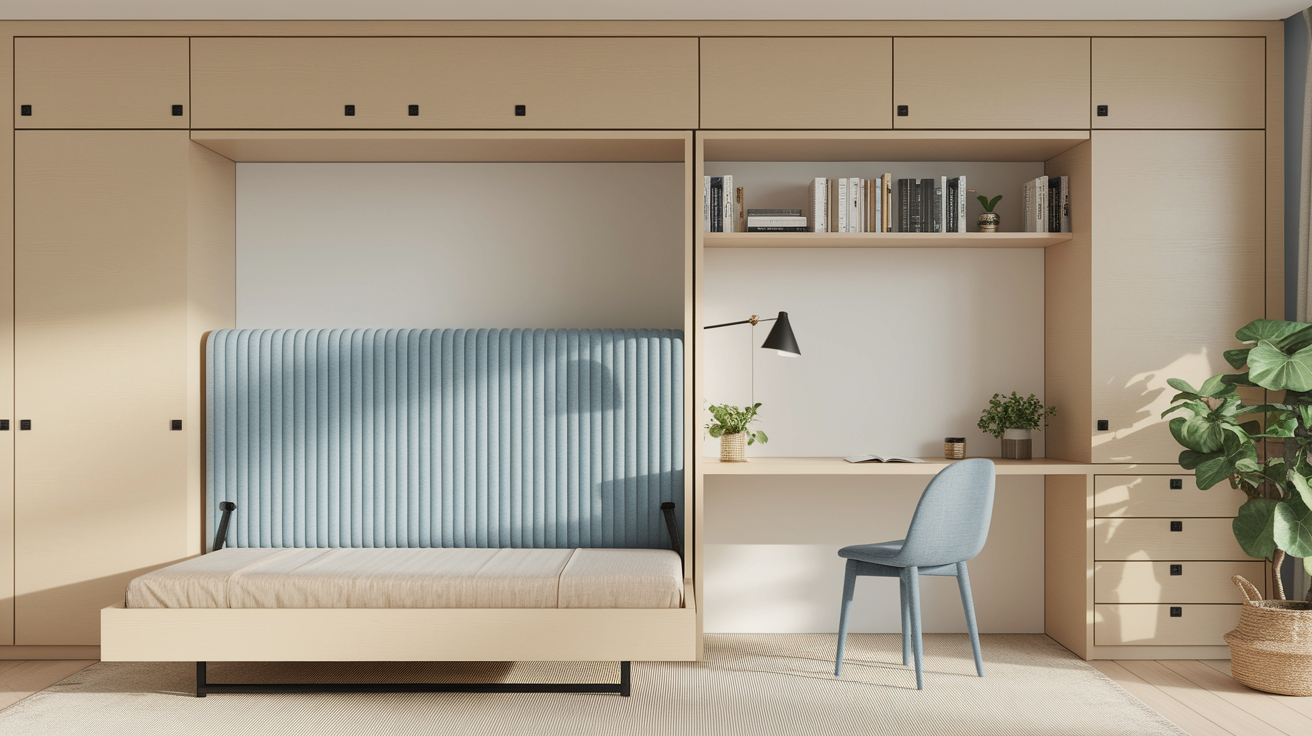
Multifunctional furniture stopped being a novelty and became a requirement when homes started doubling as offices, gyms, guest rooms, and dining rooms all at once. If a piece only does one job in a small apartment, it’s taking up space you can’t afford to waste.
Murphy & Foldaway Beds
Murphy beds reclaim an entire room during the day. Vertical Murphy beds fold up against the wall and work well in narrow rooms, while horizontal Murphy beds tuck a twin or full mattress into a unit that doubles as a desk or credenza when closed. One example placed a ribbed powder-blue Murphy bed on a yacht, where every inch mattered. Another used a horizontal fold-up system in an attic to let a single room serve as a home office, play area, and guest bedroom. When the bed folds away, the room resets to its primary function. Stacked beds also work if you don’t have space for a full guest room. One designer converted a laundry room into built-in bunk beds with curtains, creating a fun sleepover spot for kids without dedicating a permanent bedroom.
Fold-Down Desks & Workstations
Fold-down desks mount to the wall and swing up when you’re not working, leaving zero footprint. Rental options include desks hidden behind a headboard, which work well in studios where the bed sits against the longest wall. In a 172-square-foot apartment, a flip-down table served as both a dining surface and a desk, folding flat against the wall to open the room for movement. Another approach tucks a small desk into an arched alcove with a flush door that hides it completely when closed. If you can’t install hardware, a narrow console with a fold-up leaf does the same thing and moves easily when you rearrange.
Dual-Use Tables & Seating
Round tables paired with benches let you seat extra people without expanding the table’s diameter. One small dining setup used a round table with three bentwood chairs, all of which tucked in close thanks to curved armrests. Benches with lift-top storage replace dining chairs and hold linens, board games, or extra throws. A fold-up chess table demonstrated in a 2024 game room cleared the floor when not in use. Café tables for two can expand to seat four when you pull folding chairs from a closet. These pieces flex to match how many people are home.
Vertical & Corner Storage Ideas for Small Homes
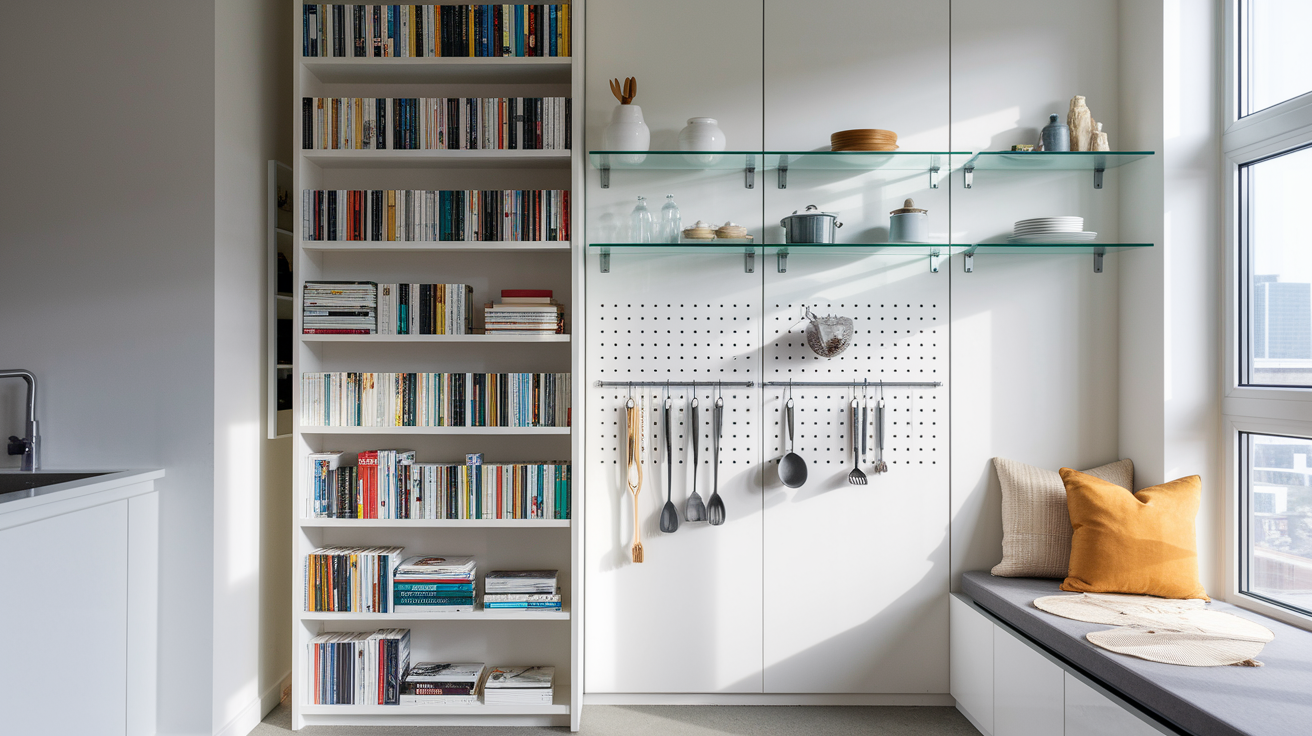
Vertical storage shifts attention and function upward, leaving the floor open for movement and furniture. High hooks in entryways keep coats, bags, and hats off the ground, while a single basket under a slim console catches keys and mail. Glass shelves installed above a window seat add display and book storage without blocking light. Tall bookcases draw the eye up and store more books per square foot than wide, low units. Wall-mounted pot rails in kitchens clear counter space, and peg systems inside drawers organize utensils vertically instead of letting them pile flat. The rule is consistent: if it can go on the wall, it should.
Corners get ignored in most rooms, but they’re perfect for adding function in tight spaces. Corner sinks in powder rooms free up walkway width and create a focal point instead of crowding the center of the room. Corner desks tuck into unused alcoves and give you a work surface without sacrificing floor area. Angled sconces and mirrors placed in a half-bath under the stairs make an awkward space feel elegant and intentional. Pull-out corner organizers in kitchen cabinets bring pots and pans within reach without wasting the deep, hard-to-access space in the back. One attic guest bedroom used a flush storage door across from the bed to hide seasonal items in a sloped-ceiling corner that would have otherwise sat empty.
Top vertical upgrades for reclaiming square footage:
- Install floating shelves above doorways and windows for books, plants, or baskets
- Use tall bookcases (floor to ceiling when possible) instead of multiple short units
- Hang a wall-mounted pot rack or magnetic knife strip to clear kitchen counters
- Add over-door hooks or slim over-door organizers in bedrooms and bathrooms
- Mount high entry hooks near the ceiling and keep only one basket on the floor below
Small-Space Kitchen Decor Ideas and Storage Solutions
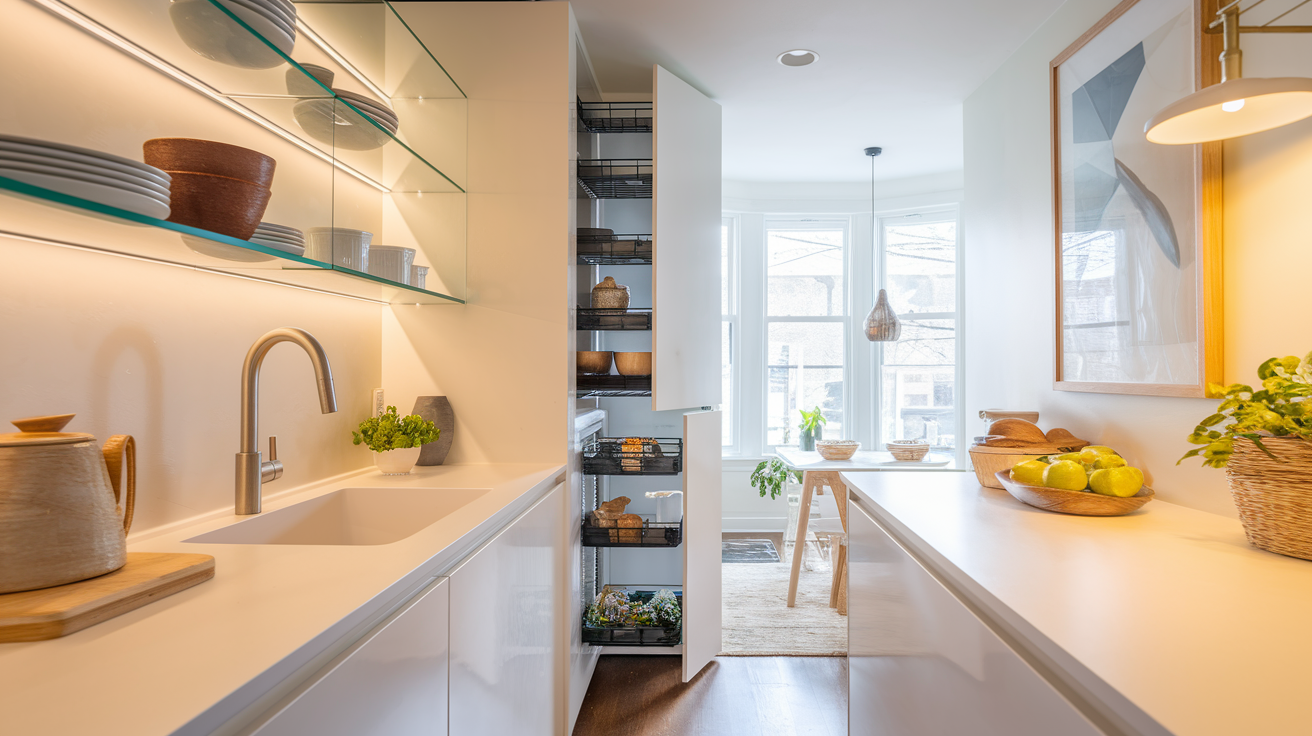
Space-optimizing storage in small kitchens starts inside the cabinets and drawers. Pull-out corner organizers bring pots, pans, and small appliances forward instead of forcing you to dig into deep cabinets on your hands and knees. Peg drawer systems let you arrange plates, bowls, and lids vertically so you can see and grab everything without unstacking. Narrow pull-out pantry cabinets fit between the fridge and the wall, adding storage in a six-inch gap that would otherwise go unused. One 172-square-foot apartment tucked a mini fridge and a washing machine into a compact kitchen nook with a flip-down table, proving that even the smallest footprint can hold full function when you organize vertically and choose appropriately scaled appliances.
Open shelving and glass shelves reduce the visual weight of upper cabinets and make a small kitchen feel less closed in. Solid cabinet doors create a heavy, boxy look, while open shelves let you see the wall behind them and display a few curated dishes or jars. Glass shelves go even lighter, letting light pass through while still holding mugs, spices, or small bowls. If you’re worried about dust or visual clutter, keep open shelving to one wall and use closed cabinets for everyday mess. Pairing light shelving with white or soft-painted walls keeps the space bright and pulls attention up instead of letting it settle on the countertop.
Hidden or compact kitchen setups work well in studio apartments, guest houses, or anywhere a full kitchen footprint isn’t realistic. Folding cabinet doors can conceal an entire kitchenette, as seen in a stone cottage where the cooking zone disappeared behind wooden panels when not in use. Mini appliances like a two-burner cooktop, a small fridge, and a countertop microwave deliver full function in a fraction of the space. If you’re designing a kitchen corner in a multipurpose room, a small round dining table nearby lets the cooking and eating zones share square footage instead of requiring separate areas.
Small Bedroom & Guest Room Decorating Ideas
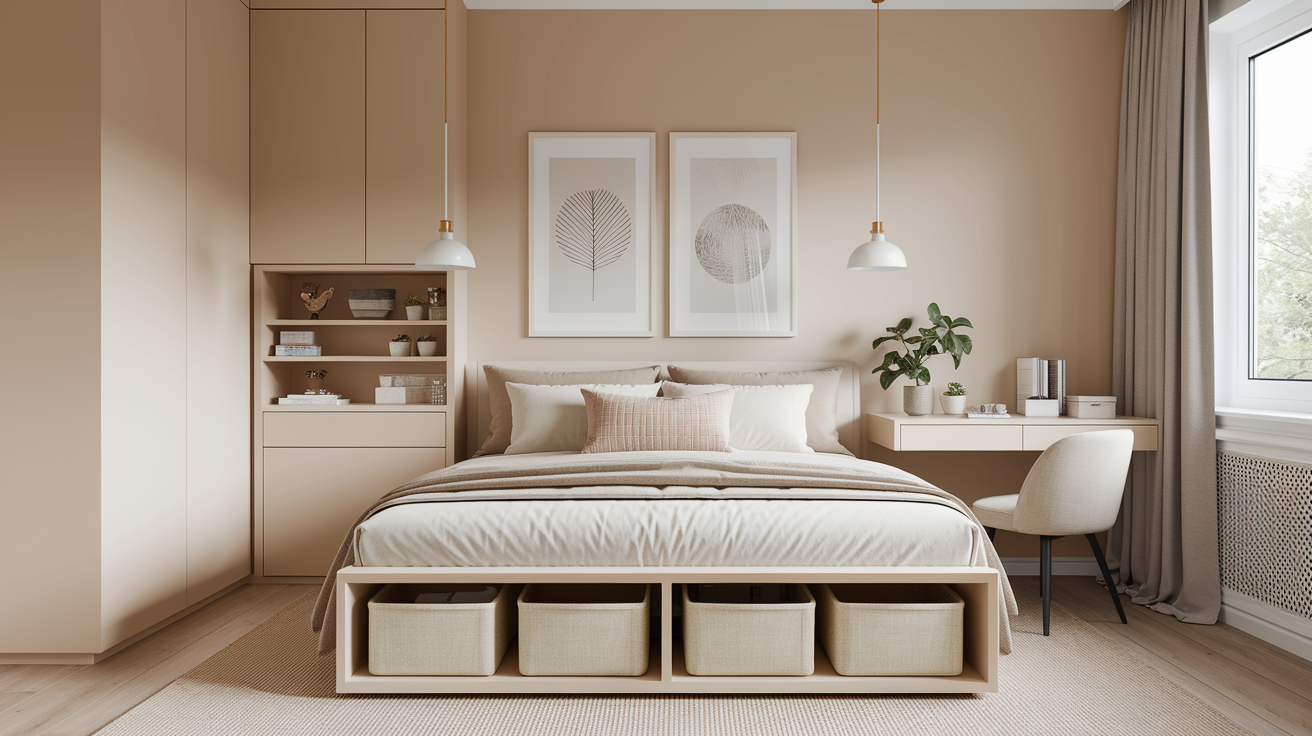
Bed selection and integrated storage set the tone for any small bedroom. Storage beds like the IKEA Malm have drawers built into the base, letting you store linens, off-season clothes, or books without adding a dresser. Bins like Parkla, Kuggis, and Skubb fit underneath platform beds to organize shoes, accessories, or extra bedding. Murphy beds work especially well in guest rooms that double as home offices. A horizontal Murphy bed folds up during the week, leaving the room open for a desk, chair, and shelving, then pulls down when someone visits. One attic renovation used a sliding Murphy-style bed tucked under a desk so the room could serve as a play area, office, and occasional guest space. Built-in stacked beds in a converted laundry room offered bunk-style sleeping for kids without dedicating an entire bedroom, with curtains adding a cozy, camp-like feel.
Dual-use bedroom layouts solve the biggest challenge in small homes: needing rooms to serve multiple people and purposes. Combining an office and a nursery in one room works when you use a neutral palette (beige walls, white furniture) and keep the zones visually connected. An IKEA dresser doubles as a changing table, eliminating the need for separate baby furniture. Another solution places the desk behind the headboard in a hotel-inspired layout, where both pieces share the same wall and the bed acts as a visual divider. Headboard-integrated desks give you a workspace without sacrificing floor area, and they’re especially useful in studios where the bed sits against the longest wall.
Best bedroom upgrades for small footprints:
- Add a horizontal Murphy bed to a guest room so it doubles as an office during the week
- Use a storage bed with built-in drawers or organize bins underneath a platform frame
- Choose a low nightstand or wall-mounted shelf instead of a bulky bedside table
- Install a slim closet organizer or rental curtain system to maximize hanging and folding space
Bathroom Ideas for Tight Footprints
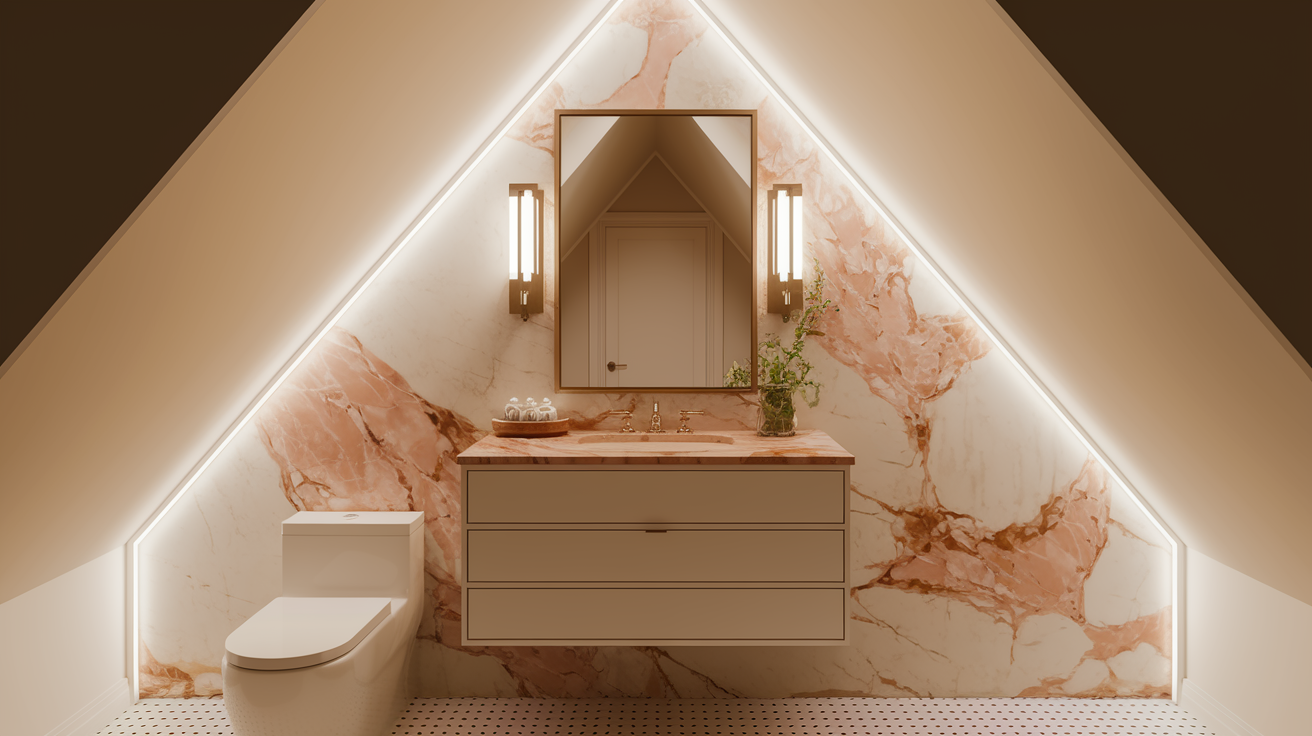
Corner fixtures open up walkway space in tiny bathrooms and powder rooms. A corner sink frees the center of the room for easier movement and adds visual interest by breaking the predictable layout of a standard vanity. In very tight half-baths, especially those tucked under staircases, every inch of clearance matters. Angled placement of the sink, mirror, and sconces makes the room feel intentional instead of awkward, and the angles catch light in unexpected ways that brighten the space.
Angled lighting and mirrors solve the biggest problem in small bathrooms: not enough room to stand comfortably in front of a centered fixture. Placing sconces and mirrors at an angle in a half-bath under stairs avoids dead space in corners and creates a more elegant, thought-through design. Wall-mounted sconces eliminate the need for table or floor lamps, and they provide face-level light that’s warmer and more flattering than overhead recessed bulbs.
Luxe materials and smart fixture placement make even the smallest bathroom feel like a real room instead of a leftover closet. One 1860s cottage attic bathroom was moved to the tallest ceiling point and clad in Calacatta Rosa marble, turning an awkward angled space into a high-end feature. Using stone, zellige tile, or a textured finish on one wall adds depth and makes the room feel more finished. Floating vanities keep the floor visible and make the room look bigger, and slim cabinets mounted above the toilet add storage without eating into walkway width. When you treat a small bathroom like it deserves the same attention as larger rooms, it stops feeling like a compromise.
Color, Lighting, and Materials That Open Up Small Spaces
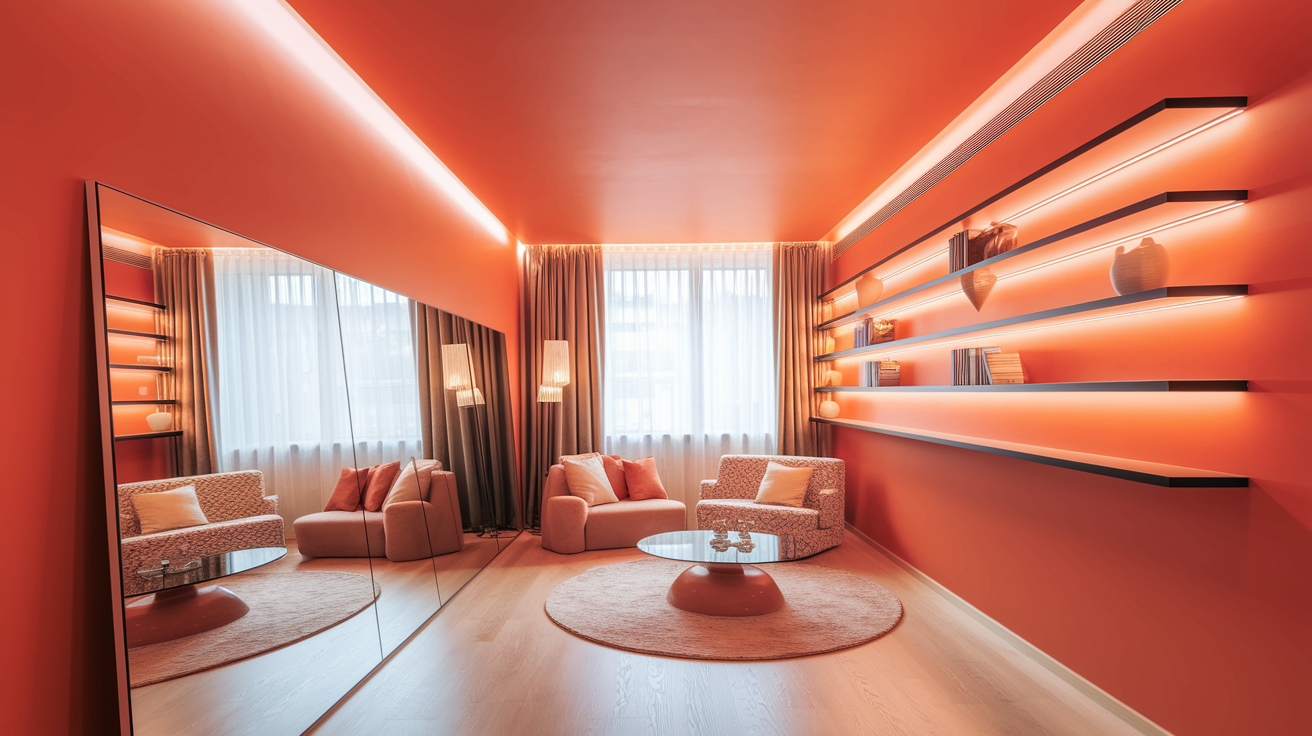
Painting walls, ceilings, and trim the same light color is the fastest way to make a room feel bigger. Color-drenching, where you use one shade across all surfaces including window treatments, erases visual boundaries and pulls the ceiling higher. Benjamin Moore’s Pristine works for a clean, bright effect. Cake Batter adds warmth while still feeling expansive. Tarrytown Green creates a bold accent wall that adds depth instead of closing the room in. Mirrors amplify this effect when placed opposite windows or light sources. A large mirror on the wall across from your brightest window doubles the perceived natural light and reflects the view, making the room feel like it extends beyond its actual walls.
Lighting upgrades for tight spaces:
- Replace overhead recessed lights with wall-mounted sconces to free up visual space and add face-level warmth
- Use warm-temperature bulbs (2700K to 3000K) instead of cool white to make rooms feel cozier and more inviting
- Add a dimmer to every light switch so you can soften harsh lighting and control the mood
- Layer lighting with a mix of task lights, ambient fixtures, and accent lighting instead of relying on one overhead source
- Mount plug-in sconces if you’re renting or don’t want to hardwire, giving you the same effect without construction
Material choices add to the airy feeling when you pick finishes that reflect light or let it pass through. Glass shelves, lucite furniture, and light wood tones keep the room from feeling heavy. Reflective elements like mirrored furniture or polished metal reduce visual clunkiness. Sisal area rugs in lighter tones feel textured and grounded without the visual weight of a dark, thick pile rug. Woven shades like Conrad flat-tape finishes add layering to windows without blocking light the way heavy drapes do. Eight-by-eight unglazed zellige tiles soften fireplace surrounds and bathroom walls with organic texture that catches light instead of absorbing it.
Room-Zoning & Layout Planning for Compact Homes
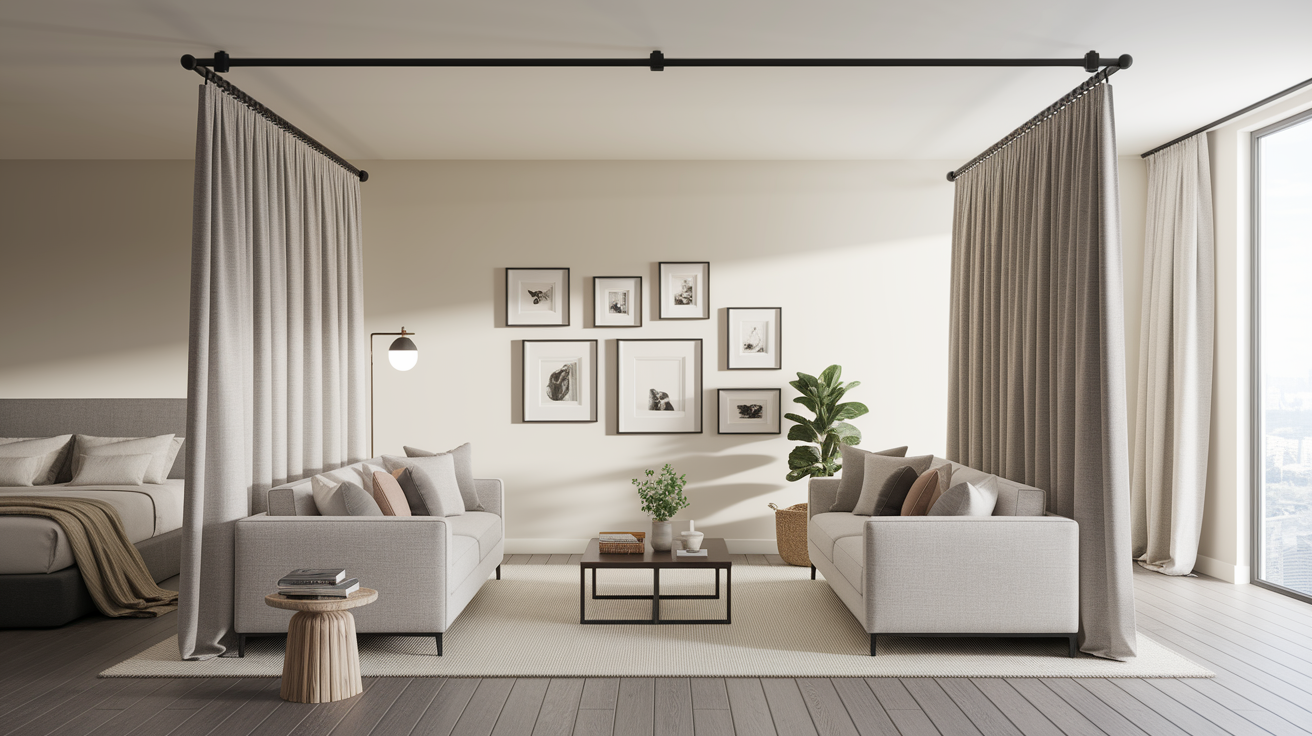
Curtains work as rental doors and room dividers without construction or permanent changes. Ceiling-mounted curtain panels separate a studio’s sleeping area from the living space, hide an open closet, or create a reading nook that feels private without shrinking the room. One solution used a curtain to turn an alcove into a makeshift closet, avoiding the cost and permanence of installing bifold doors. Screens and portable dividers do the same job and move easily when you want to open the space back up. This flexibility matters in small homes where one room has to serve multiple functions depending on the time of day.
Rugs define zones without adding walls or blocking sightlines. A small area rug under a dining table separates the eating area from the living room in an open-plan studio. Another rug anchors a seating vignette near the window, creating a reading corner that feels intentional. The rug edges don’t need to reach the walls. Floating a rug in the center of a space, with furniture partially on and off it, divides the room visually while keeping the layout flexible. Pairing this with a neutral palette helps when one room holds conflicting functions. One example combined an office and a nursery using beige walls and white furniture, letting both uses coexist without visual chaos.
Floating furniture away from walls improves traffic flow and creates better conversation zones. Pushing a sofa into the middle of the room with a narrow console table behind it opens up a walkway and makes the seating area feel more deliberate. Two similarly sized sofas facing each other anchor a living room layout better than one large sectional shoved against the perimeter. In entryways, a drawer tucked under the stairs keeps shoes out of the way and reduces tripping hazards without adding a bulky bench. Gallery walls with black frames act as focal points that organize the eye and prevent small rooms from feeling scattered or unfinished.
Budget-Friendly & DIY Small Space Decor Ideas
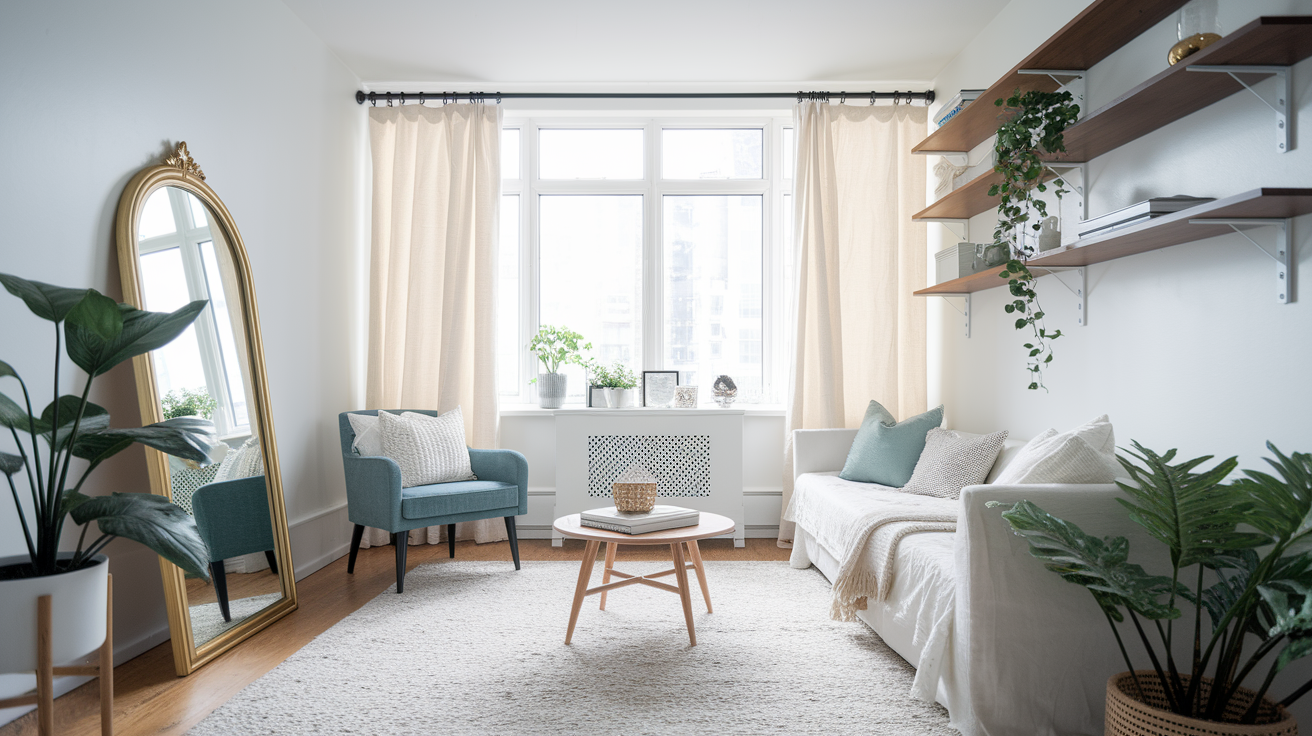
Thrift stores and yard sales turn up the kinds of furniture that work perfectly in small spaces: narrow console tables, vintage bentwood chairs with curved arms that tuck under tables, and small side tables that don’t crowd a room. Custom slipcovers update an old sofa or chair for a fraction of the cost of buying new furniture. One budget approach recommended swapping out throw pillows and adding a slipcover collection instead of replacing a sectional, giving the room a completely different look for under $200.
Paint costs around $50 per gallon and transforms a room faster than any other single upgrade. Painting walls, trim, and ceilings the same light color makes a space feel immediately larger. Peel-and-stick wallpaper offers a rental way to add pattern or texture to one accent wall without damaging the surface underneath. Plates hung as wall art replace the need for expensive framed prints, and they add personality while using up items you already own. Rental curtain rods mounted with tension or adhesive brackets create closet doors, room dividers, or window treatments without drilling holes.
Budget upgrades that deliver the most impact:
- Paint one gallon of soft white and cover walls, ceiling, and trim to erase visual boundaries
- Add a large thrift-store mirror and hang it opposite your brightest window
- Install tension-rod curtains to divide a room or hide an open closet without damaging walls
- Build simple floating shelves with brackets and wood boards from a hardware store
- Use under-bed storage bins to clear floor clutter and organize without buying a dresser
- Swap heavy window treatments for lightweight linen panels or woven shades that let in more light
Final Words
You’ve got a clear set of moves to try now: light colors and mirrors, vertical shelving, multifunctional furniture, and kitchen and bedroom hacks that keep floors open and sightlines clear.
Pick one weekend project – swap paint, hang a mirror, or add a tall shelf – and build from there. Small changes add up fast.
Keep these small space home decor ideas handy. With a few mindful swaps, your place will feel roomier and work better, and you’ll actually enjoy being at home.
FAQ
Q: What is the 3-5-7 rule for decorating?
A: The 3-5-7 rule for decorating is a simple sizing guideline: use three large, five medium, and seven small items or visual points to create balance, depth, and a curated, uncluttered look.
Q: What is the 3 4 5 rule in decoration?
A: The 3-4-5 rule in decoration is a grouping method: three anchors, four supporting pieces, and five small accents to distribute color and texture evenly across a room for cohesive balance.
Q: How do I decorate my small space?
A: To decorate a small space, choose light paint and mirrors, emphasize vertical storage, pick multifunctional furniture, keep floors clear, and edit decor to a few curated pieces for an airy, usable room.
Q: What is the 70 20 10 rule in decorating?
A: The 70-20-10 rule in decorating divides colors: 70 percent dominant (walls and main furniture), 20 percent secondary (rugs and upholstery), and 10 percent accent (pillows and art) for a balanced palette.