



Think covering every inch with tiny frames will make a small room cozy?
It usually does the opposite.
This guide shows simple renter-friendly wall tricks like big art, mirrors, and vertical arrangements that actually make rooms feel larger and calmer.
You don’t need a big budget or power tools.
Use thrifted frames, peel-off decals, floating shelves, or a single large piece to give the eye one place to rest.
Read on for practical layouts, quick wins, and what to avoid so your small space looks roomy and lived-in.
Key Takeaways
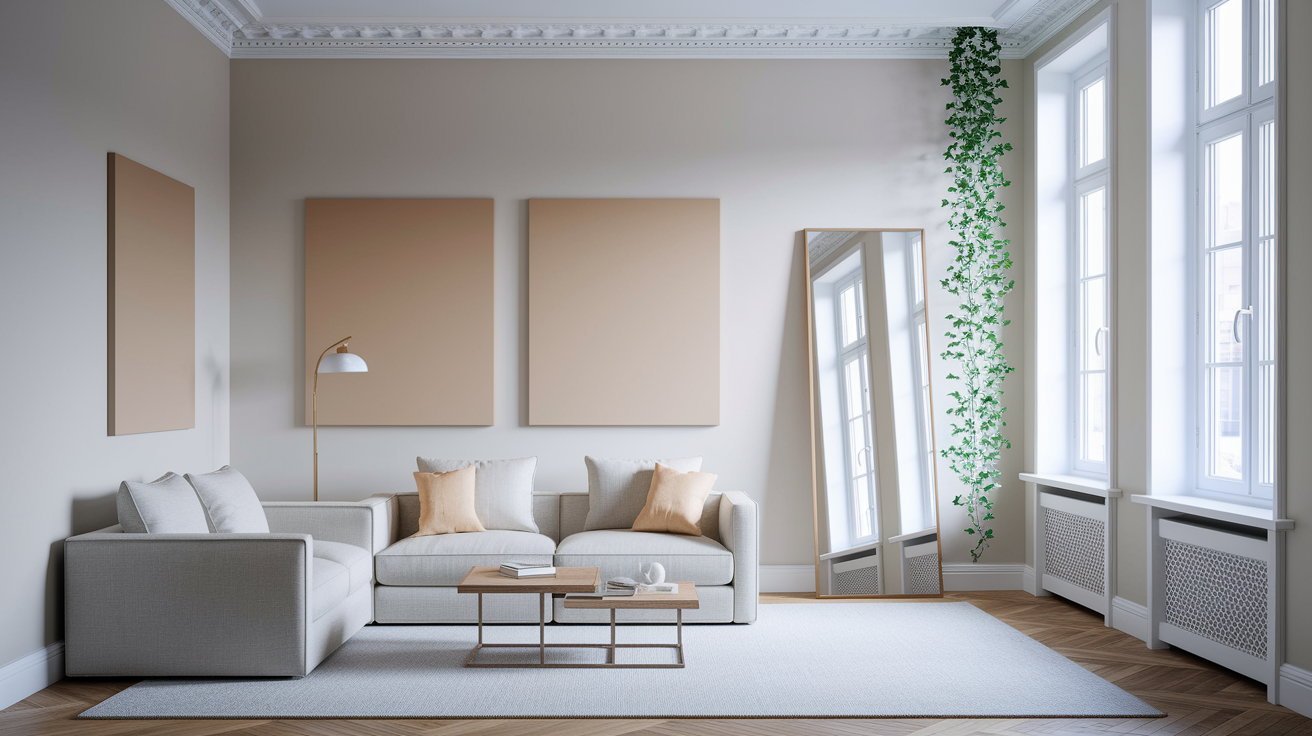
Small spaces don’t need to feel cramped or bare. The right wall decor can open up a room, draw the eye where you want it, and make your home feel intentional instead of cluttered.
Here’s what works: one large piece usually does more than a wall full of small ones. Mirrors placed opposite windows bounce light and add depth. Vertical arrangements (whether it’s tall art, stacked shelves, or climbing plants) pull the eye up and make ceilings feel higher. And keeping floors clear while using walls for storage and display gives you function without the visual weight.
You don’t need a big budget. Thrifted frames, printable art, removable decals, and everyday objects like baskets or textiles all work. The trick is choosing pieces that either blend into the background or become the one thing your eye lands on. Not ten competing things.
Renters can do all of this without losing a deposit. Floating shelves, adhesive strips, and wall-mounted planters let you add personality and utility without drilling a dozen holes or repainting when you leave.
This guide walks through the strategies that actually make small rooms feel bigger, with real examples and practical steps you can start today.
How to Decorate Walls in a Small Space
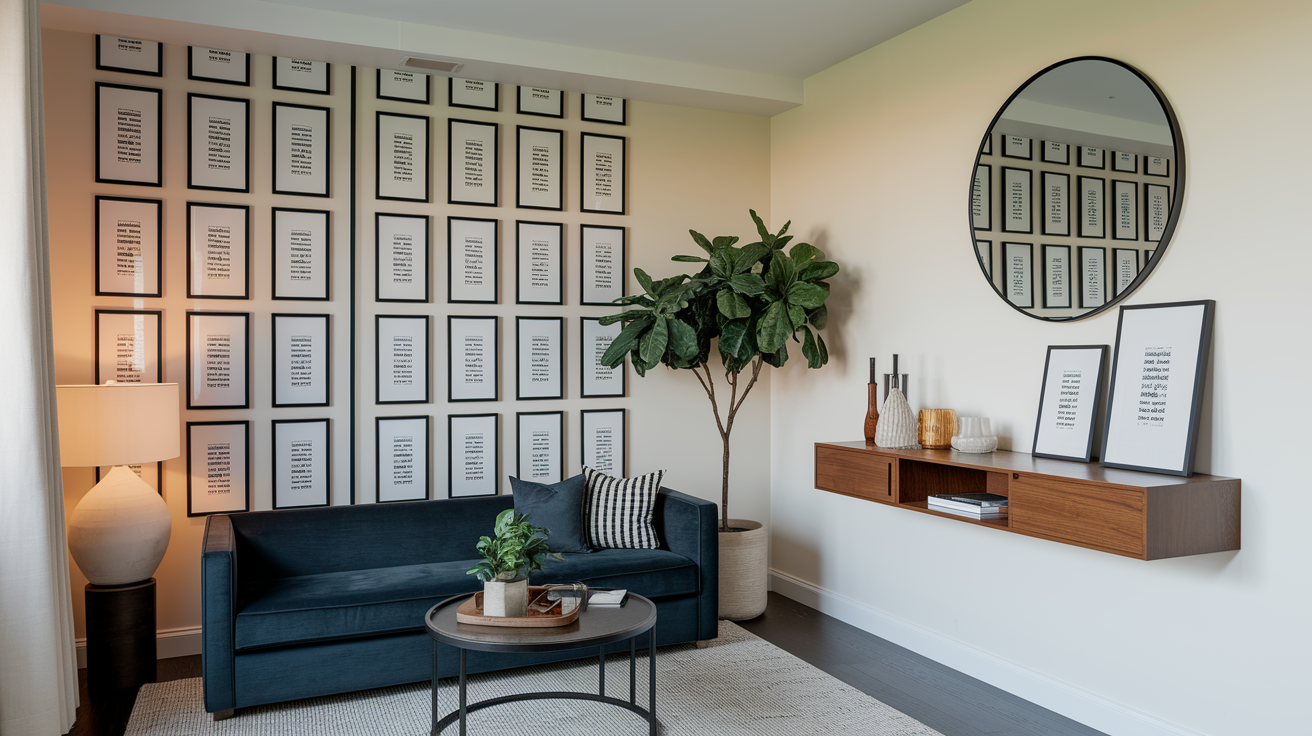
Start with the big art paradox. It sounds backward, but one large piece (something at least two thirds the width of your sofa or bed) can make a small room feel more spacious than a cluster of tiny frames. A single focal point gives your eye a place to rest, which makes the whole room feel calm and organized instead of busy.
If you love the look of a gallery wall, keep it tight and consistent. Use the same frame color or stick to one theme. All black and white photos, all botanical prints, or all abstract shapes. Space the pieces evenly, about two to three inches apart, so the arrangement reads as one intentional block rather than scattered clutter. A grid layout works better in small spaces than a salon style spread.
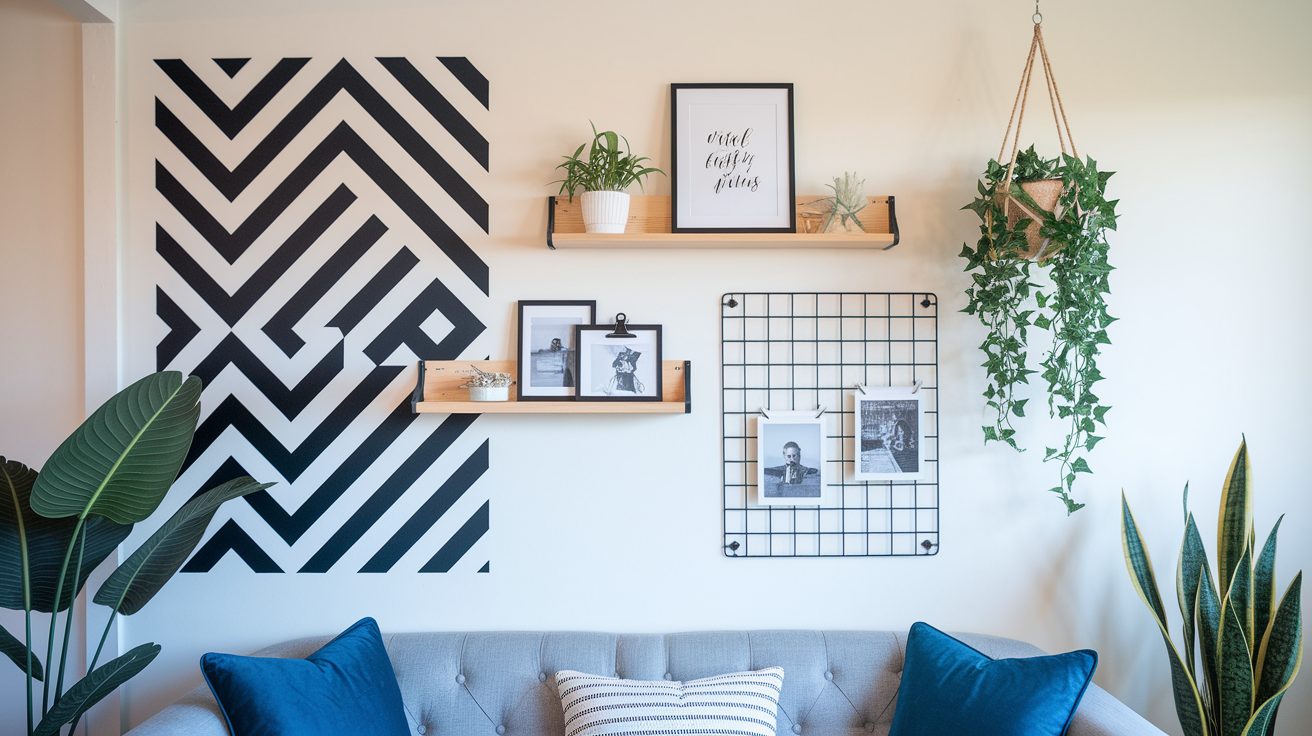
Photo displays work the same way. Instead of magnets all over the fridge or a dozen mismatched frames on a narrow hallway wall, create one dedicated photo zone. Use a floating shelf with a few leaning frames, or hang a simple wire grid where you can clip and swap photos without new nail holes every time.
Mirrors are the fastest way to make a small room feel twice as big. Place one directly across from a window and it’ll reflect daylight back into the space, brightening corners that usually stay dim. If you don’t have a window opposite, hang the mirror where it reflects something you want to see more of. A piece of art, a plant, or even just an open doorway that suggests more space beyond.
Console tables work in tight entryways and hallways where you need a surface but can’t spare floor space for a bulky cabinet. Look for narrow styles, around 10 to 12 inches deep, and use the wall above for one piece of vertical art or a small shelf. Keep the tabletop minimal. A tray for keys, one small plant, maybe a lamp. So it doesn’t add to the visual clutter.
Creating a Focal Point
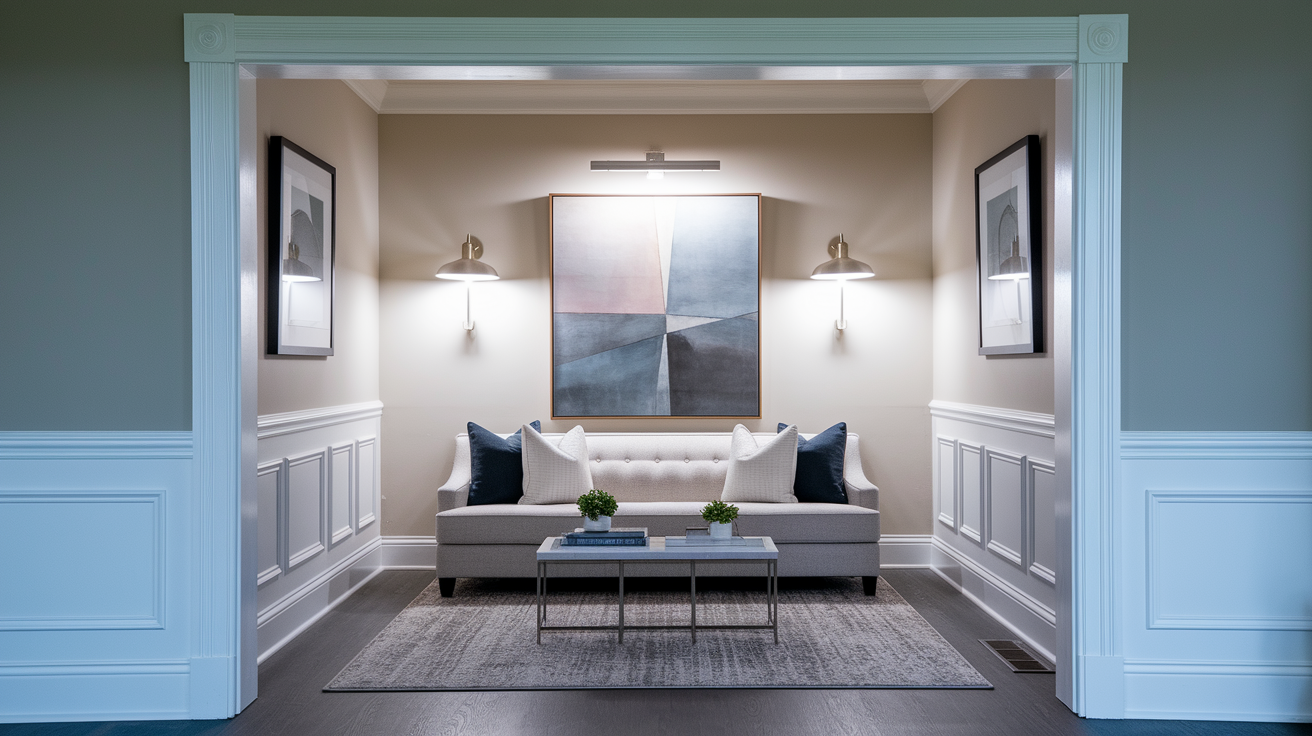
Every room needs one spot that catches your eye first. In a small space, that focal point should be intentional, not accidental. When you walk in, your attention should land on something you chose. Not on a stack of mail or a crowded corner.
Statement art is the simplest way to create a focal point. Pick one piece that’s large enough to anchor the wall (at least 24 inches wide for a small room, or bigger if your wall can handle it). Hang it at eye level, about 57 inches from the floor to the center of the piece. That’s the standard gallery height, and it works in most homes because it puts the art where you naturally look.
If you don’t have wall space for big art, use a rug to create a focal point on the floor. A bold pattern or a contrasting color can define a seating area or pull a narrow room together. In a studio apartment or open plan space, a rug acts like a visual boundary that tells your brain “this is the living area” without needing a physical wall.
Lighting can turn any piece of wall decor into a focal point. A picture light mounted above a framed print, or a pair of sconces flanking a mirror, adds both function and emphasis. In a small room, targeted lighting makes your art look intentional and pulls attention away from less interesting walls. If you’re renting or don’t want to hardwire, battery powered puck lights or plug in sconces do the same job without the electrician.
Avoid creating competing focal points. If you have a bold accent wall, a large piece of art, a bright rug, and a statement light fixture all in one small room, none of them will stand out. Pick one, let it do the work, and keep everything else quieter.
Wall Decor for Small Living Rooms
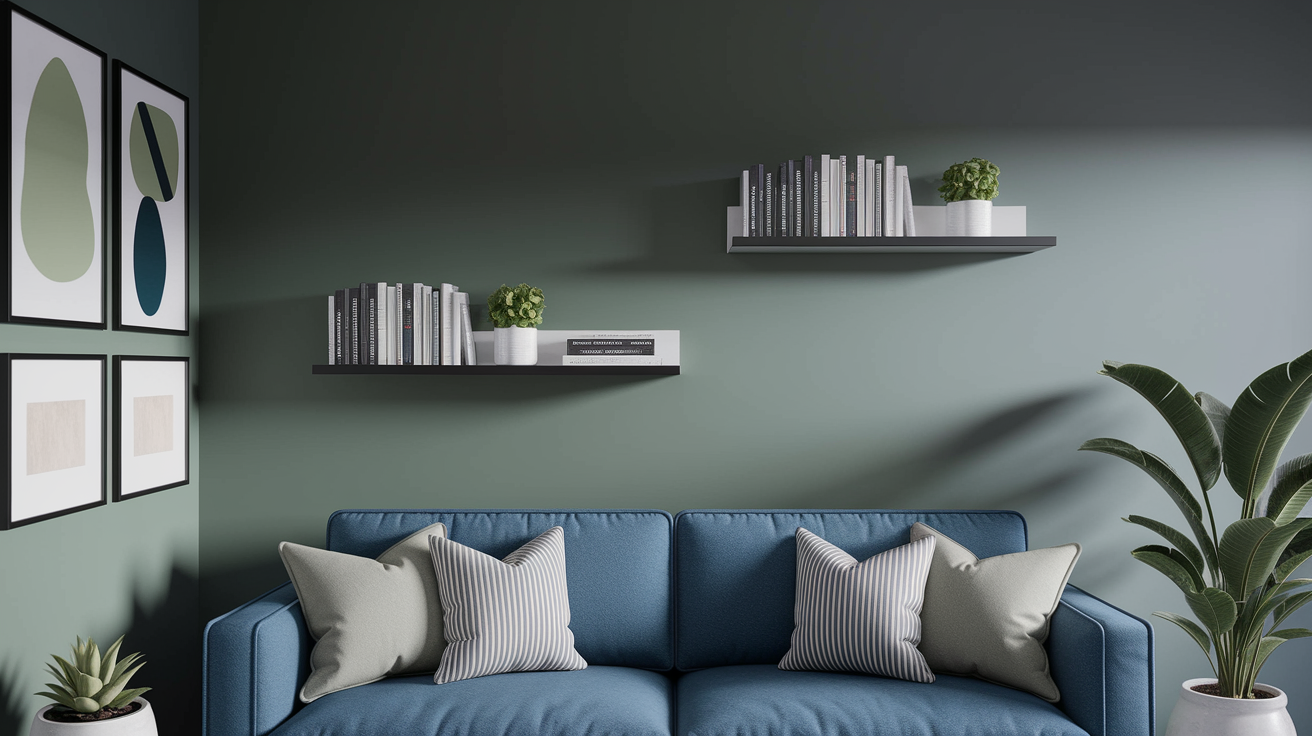
Floating shelves give you display space without eating into your floor plan. Install one or two above a sofa or along a narrow wall, and use them for a few small plants, a couple of books stood upright, or one framed photo. Keep it simple. Three to five items per shelf is enough. If you overload them, they start to look like clutter instead of decor.
Clear floors make rooms feel bigger, even if the walls are covered. That means skipping the floor lamp in favor of a wall mounted sconce, trading a freestanding bookcase for wall shelves, and keeping furniture pulled a few inches away from the walls instead of shoved into every corner. When you can see uninterrupted stretches of floor, your brain reads the space as larger.
Light colored art helps, especially if your walls are already a medium or dark tone. Prints with white, cream, soft gray, or pale blue backgrounds reflect more light and keep the room from feeling closed in. Landscapes with depth (a horizon line, a road disappearing into the distance, or a view through trees) trick the eye into seeing more space than is actually there.
Stick to a cohesive color palette across your art and decor. That doesn’t mean everything has to match, but if your room has a lot of warm wood and beige tones, adding a bright red painting might feel jarring. Instead, layer different shades of the same color family. Rust, terracotta, and blush all play well together. And your space will feel more pulled together without extra effort.
An accent wall can add depth without using any floor space. Paint one wall a darker shade than the others, or use peel and stick wallpaper with a subtle texture or pattern. It creates a sense of layering and makes the room feel more designed, especially if you keep the art on that wall minimal so the wall itself becomes the statement.
| Strategy | Why it works | Example |
|---|---|---|
| Floating shelves | Display without floor clutter | Two shelves above a sofa with a few small plants and books |
| Light colored art | Reflects light, opens up the room | Pale landscape or abstract with white background |
| Cohesive palette | Reduces visual noise | Shades of blue and gray across art, pillows, and throws |
| Accent wall | Adds depth without using floor space | One wall in sage green with minimal framed art |
Unique Wall Decor for Small Spaces
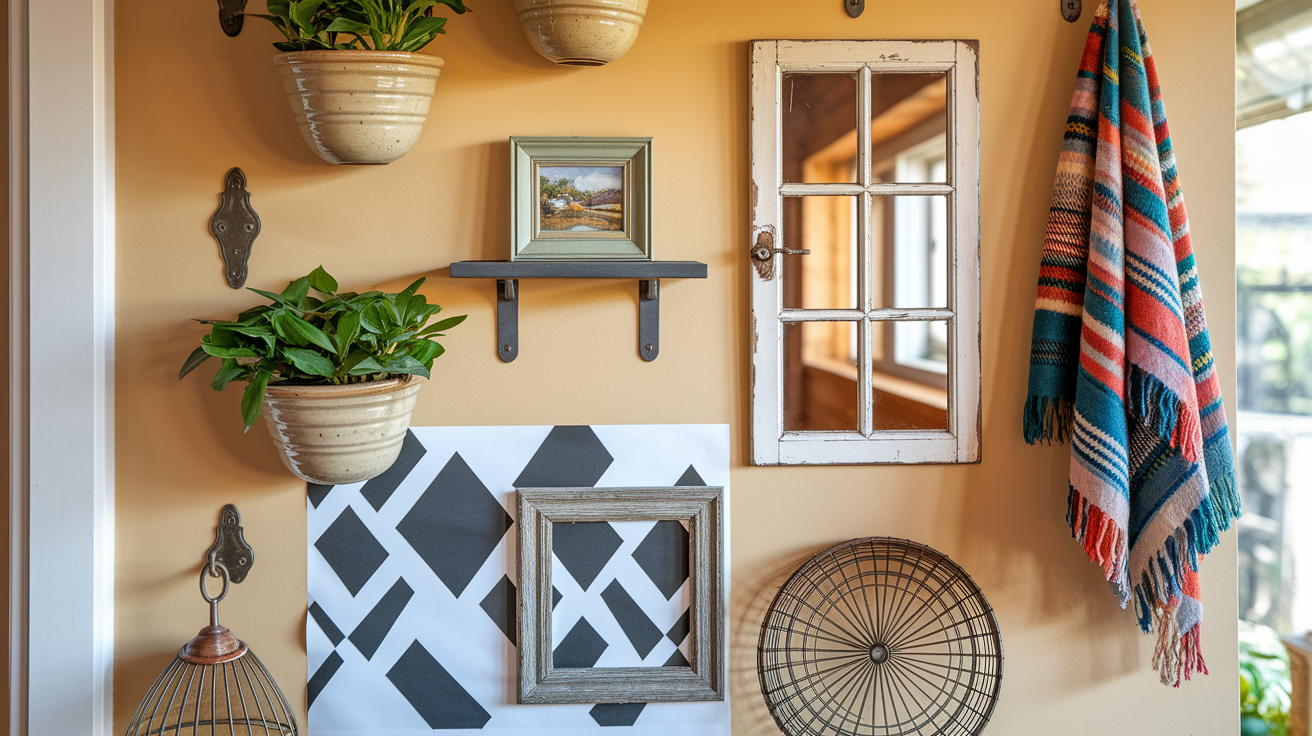
Wall mounted planters let you bring greenery into a room without giving up shelf or counter space. Look for ceramic pockets, metal brackets with glass vases, or even simple hooks that hold small hanging pots. Place them near a window if you’re using real plants, or go with faux if the light isn’t great. Pothos, succulents, and air plants all work in small wall planters, and swapping out plants seasonally keeps the look fresh without a big time investment.
Small original paintings can act as mini focal points in rooms where a large piece would overwhelm. A 6 by 8 inch or 8 by 10 inch canvas propped on a narrow shelf or hung alone on a small wall section adds color and personality without dominating the space. If you’re on a budget, check local art fairs, student shows, or online marketplaces for affordable originals that feel more personal than mass produced prints.
Removable wall decals are a renter’s best friend. They go up in minutes, peel off without damage, and come in everything from geometric patterns to botanical line drawings. Use them to fill an awkward blank space, add visual interest above a bed, or create a feature wall in a bathroom or entryway where you don’t want to commit to paint or wallpaper. Just make sure the wall is clean and dry before you apply them, or they won’t stick properly.
Flea market finds bring character to small spaces without the sameness of catalog decor. A vintage wooden cutting board, an old window frame hung as a mirror, or a repurposed metal basket can all work as wall art. The key is choosing pieces that have a clear shape or color you love, not just buying random stuff because it’s old. If it doesn’t make you happy when you look at it, it’s still clutter.
Textiles add warmth and soften hard walls without taking up any floor space. Hang a small woven rug, a patterned scarf, or a piece of indigo cloth using a simple dowel rod and two nails. This works especially well in bedrooms and entryways where you want to add color and texture but don’t want the formality of framed art. Textiles also absorb sound, which can make a small room with hard floors feel a little cozier.
Using Mirrors to Create the Illusion of Space
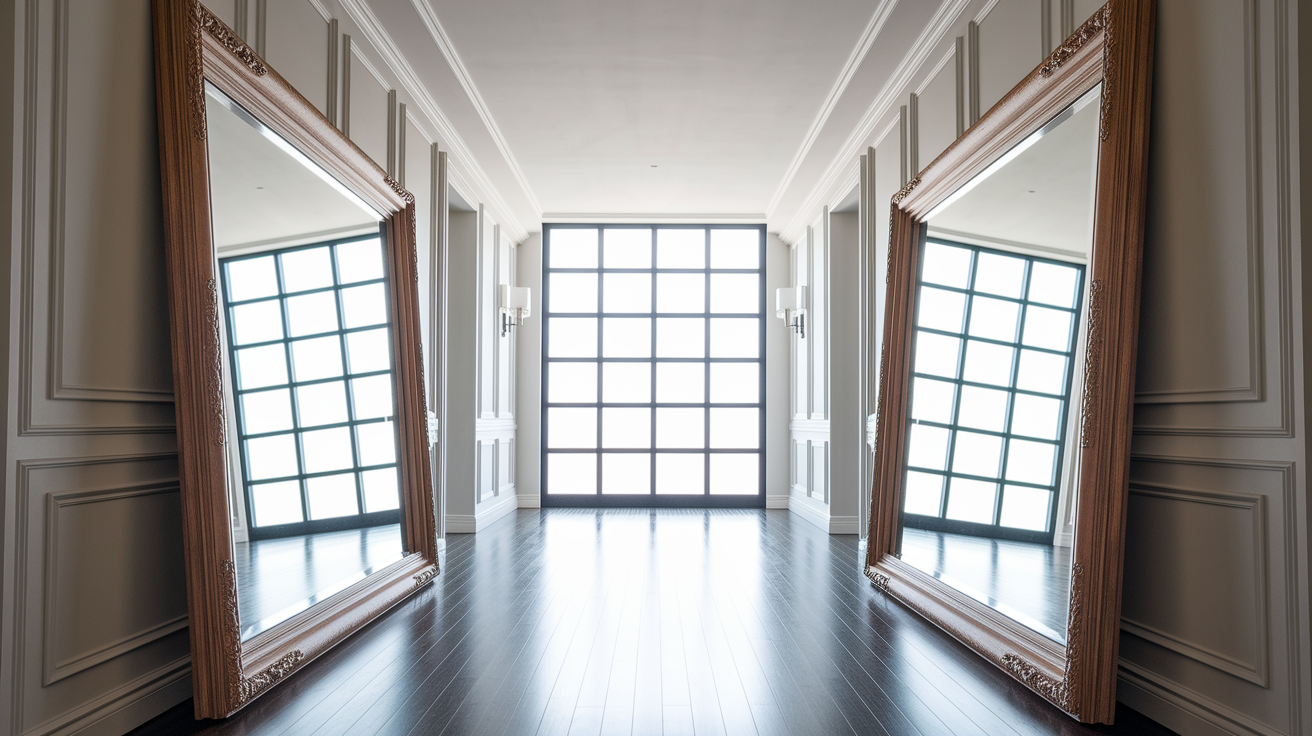
Place a mirror directly opposite a window and it’ll double the amount of natural light in the room. The reflection bounces daylight into corners that would otherwise stay dim, and it creates the sense that there’s another window where the mirror hangs. This works best with a large mirror (at least 24 inches wide) so the reflection feels substantial rather than like a small bright spot on the wall.
Hanging mirrors on opposite walls can create a sense of endless depth, but you have to be careful. If the mirrors are too large or too close together, the repeated reflections can feel disorienting instead of spacious. Use this trick in a narrow hallway or a small entryway where you want to visually widen the space, and keep the mirrors at different heights or slightly offset so they don’t create a perfect infinite loop.
Position a mirror to reflect something interesting. A piece of art, a vase of flowers, a plant on a shelf. And you add perceived space and double the visual impact of that object. This is especially useful in corners or alcoves where you want to make a small zone feel more intentional. Just avoid placing a mirror where it reflects clutter, an awkward doorway, or a blank wall, because that reflection won’t help the room feel bigger.
Oversized mirrors work better in small spaces than collections of small ones. One large mirror creates a clean focal point and reflects a bigger section of the room, which makes the space feel open. A cluster of small mirrors can look busy and doesn’t reflect enough to change how the room feels. If you love the layered look, limit yourself to two or three mirrors in the same frame style and hang them as a tight group rather than spreading them across the wall.
Rattan, metal, and wood framed mirrors all add texture while serving the same light reflecting function. If your room feels cold or minimal, a warm wood frame softens the look. If you want a more modern feel, go with a thin metal frame or a frameless mirror mounted with simple clips. The frame won’t change how much light the mirror reflects, but it will change how the mirror fits into the rest of your decor.
Best Wall Decor for Small Spaces
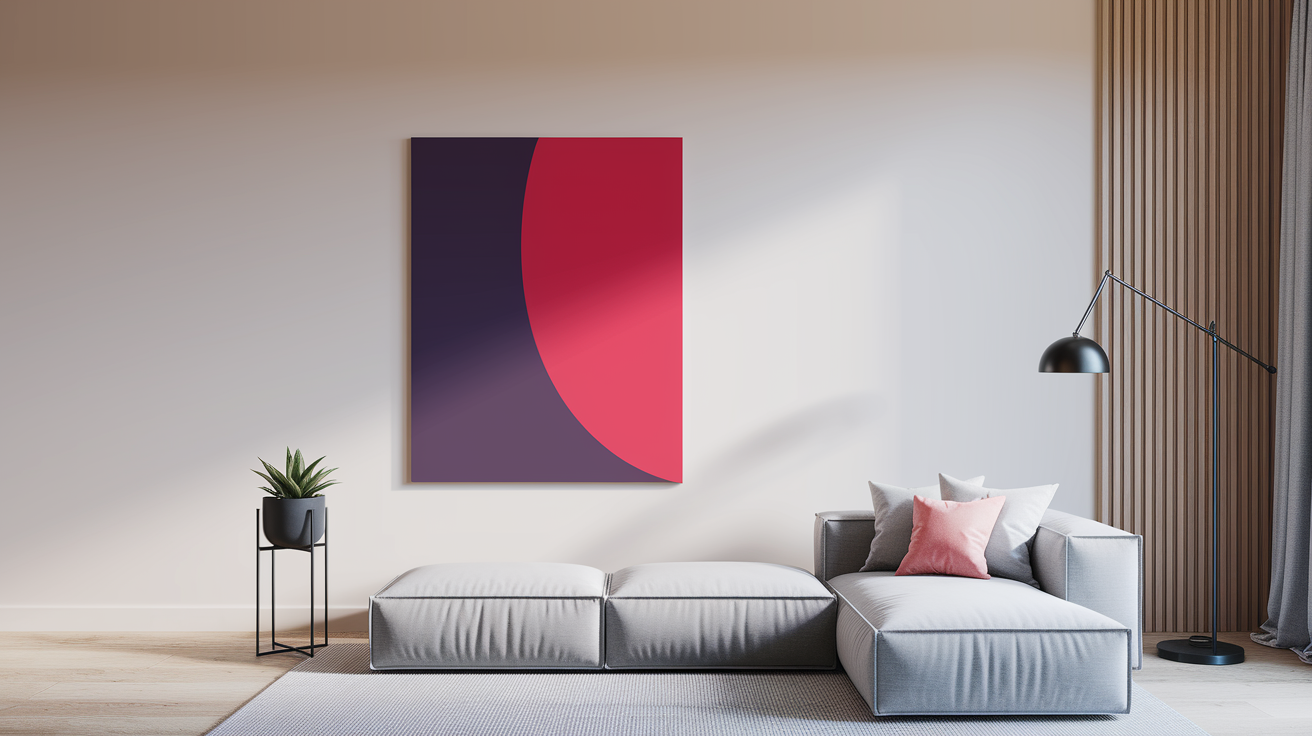
Simplicity beats complexity in a small room. One well chosen piece of art will always make a bigger impact than a wall crowded with frames, shelves, and objects. If you’re not sure what to hang, start with less. You can always add more later, but it’s harder to edit down once the wall is full.
Vertical decor draws the eye up and makes ceilings feel higher, which makes the whole room feel more spacious. Tall narrow frames, a vertical gallery wall, or even a single piece of art oriented vertically all work. Pair this with vertical elements like a tall plant stand, a floor to ceiling curtain, or a narrow bookshelf, and the effect multiplies.
Functional art does double duty in small spaces. A wall mounted coat rack that looks like a piece of sculpture, a decorative mirror that also checks your outfit before you leave, or floating shelves that hold both books and small decor all save space while adding personality. When everything has to work harder in a small home, choose pieces that serve more than one purpose.
Professional design help is worth considering if you’re stuck or if you’ve tried several layouts and nothing feels right. An interior designer or even a single consultation can give you a clear plan, help you avoid expensive mistakes, and show you how to make the most of the space you have. Many designers now offer virtual services, so you don’t need to be in a big city or have a huge budget to get useful advice.
Avoid over decorating. Small spaces need breathing room. If every wall is covered, every shelf is full, and every surface has something on it, the room will feel chaotic no matter how carefully you’ve chosen each piece. Aim to leave at least one wall mostly bare, or keep one section of your main wall open. That negative space is just as important as the art itself.
Decorating Small Spaces with Texture
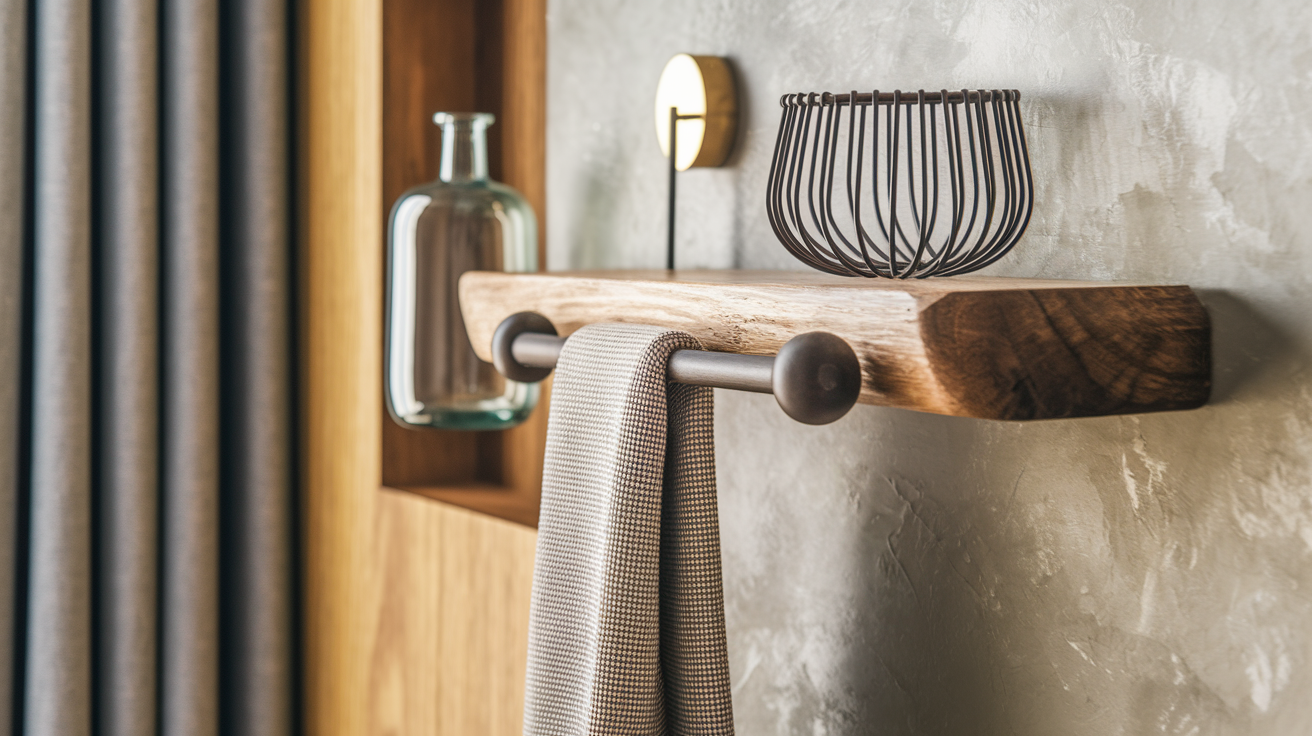
Wood adds warmth and breaks up flat walls without adding visual clutter. Floating wood shelves, a wooden dowel holding a textile, or even a small wooden sculpture on a shelf all bring natural texture into a space. If your room feels cold or too modern, wood is the easiest material to introduce to soften the look.
Metal works well in small spaces because it’s strong but visually light. A thin metal shelf, a wire basket hung on the wall, or a metal framed mirror all take up minimal visual weight while adding structure and interest. Black metal gives a modern industrial feel. Brass or copper adds warmth. And white or light gray metal blends into the background.
Glass reflects light and keeps things feeling open. A glass shelf seems to float on the wall, glass vases or beakers tacked to the wall add dimension without blocking sightlines, and a mirrored tray on a console table reflects whatever is around it. Glass is especially useful in very small rooms where you want utility but can’t afford to block any light or views.
Textiles layer in softness and color without taking up any floor space. Throw pillows, a small woven wall hanging, a scarf hung on a hook, or a blanket draped over a chair all add texture and make hard surfaces feel more livable. In a small room, keep textile colors in the same family so the space feels cohesive rather than busy.
Mixing materials creates depth. A wood shelf holding a metal basket with a glass vase inside, or a framed print above a textile hanging next to a small plant, all add layers that make the wall interesting without overwhelming it. The trick is to keep the color palette simple (two or three main colors) so the variety of textures doesn’t turn into visual chaos.
FAQ
How do I keep wall decor from making a small space feel cluttered?
Limit yourself to a few statement pieces or one small gallery wall with consistent spacing. Use floating shelves instead of piling small items on the floor, and leave at least one section of wall mostly empty so the room has breathing room. If it starts to feel busy, remove one thing at a time until it feels calm again.
What’s the best art to make a small room look bigger?
Large scale art with a single focal point, light colored prints, mirrors, vertical arrangements, and landscapes with depth all help. Avoid dark, heavy frames and busy patterns that pull the eye in multiple directions. If you’re using a gallery wall, keep the frames and matting consistent so it reads as one block rather than a scattered collection.
How can I personalize my walls on a budget?
DIY gallery walls using printable designs and inexpensive frames, thrifted art from flea markets or online marketplaces, and removable decals all work. You can also frame fabric, scarves, or pages from old books. If you have photos you love, print them yourself and use simple clip frames or a wire grid to display them without spending much.
What’s the 57 inch rule?
Hang art so the center of the piece is 57 inches from the floor. That’s average eye level and the standard height used in galleries. It works in most homes, but if everyone in your household is tall or short, adjust up or down a few inches so it feels right when you walk into the room.
What’s the 2/3 rule for wall art?
Your art should be about two thirds the width of the furniture below it. So if your sofa is 90 inches wide, aim for a piece of art or a gallery wall arrangement that’s around 60 inches wide. This keeps everything proportional and prevents the art from looking too small or too large for the space.
Can I do a gallery wall in a small space?
Yes, but keep it tight and consistent. Use the same frame color, the same mat size, or a single theme (like all black and white photos or all botanical prints). Space the pieces two to three inches apart in a grid or simple arrangement, and treat the whole wall as one focal point rather than a collection of separate pieces.
What are the best renter friendly wall decor options?
Removable decals, adhesive hooks and strips, floating shelves that mount with minimal hardware, printable art in clip frames, and lightweight items like textiles or small mirrors. Wall mounted planters, wire grids for photos, and freestanding easels also work. Always test adhesive strips on a small hidden area first to make sure they won’t pull paint when you remove them.
Final Words
Start by measuring and mapping your wall, pick one focal piece, and hang at eye level so it reads right from the door. Use slim shelves, mirrors, vertical art, and hooks to add storage and interest without crowding the room.
Try layouts on the floor first, use removable anchors for rentals, and mix textures so things feel lived-in, not showroom-perfect.
Do the easy swaps this weekend. With a few small choices, you’ll have practical, cozy small space wall decor that actually makes your room feel bigger.
FAQ
Q: How to decorate walls in a small space?
A: Decorating walls in a small space is best done by using a few large-scale pieces, light colors, mirrors, and vertical arrangements to keep the room feeling open and balanced.
Q: What is the 2 3 rule for walls?
A: The 2-3 rule for walls means covering two-thirds of a wall area with dominant elements and leaving one-third negative space; it creates balance and avoids clutter.
Q: How to fill dead space in a room or what to put on a small empty wall?
A: Filling dead space or styling a small empty wall works well with narrow furniture, vertical shelving, tall plants, gallery strips, or a statement mirror to add function and interest.