

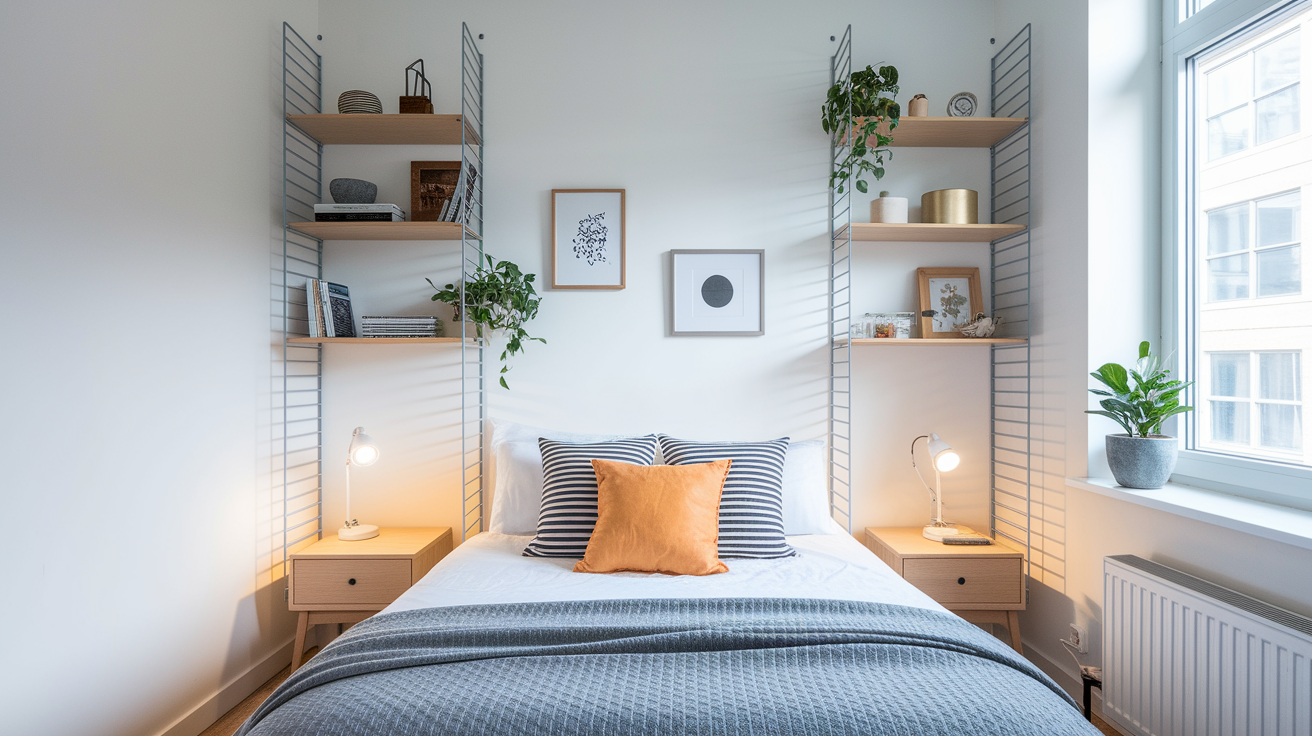

Think a tiny bedroom means giving up comfort and style?
You don’t have to squeeze your life into a shoebox or gut the room.
With a few layout swaps, smart storage moves, and brighter lighting and color choices you can free real floor space and make the room feel calm and usable.
This post shows simple, budget-friendly fixes, what to move, what to mount, and which furniture sizes actually work, so you can maximize every inch this weekend.
Quick Space-Maximizing Strategies for Small Bedrooms
Small bedrooms force you to get creative. And honestly? A few targeted adjustments can completely change how your space functions.
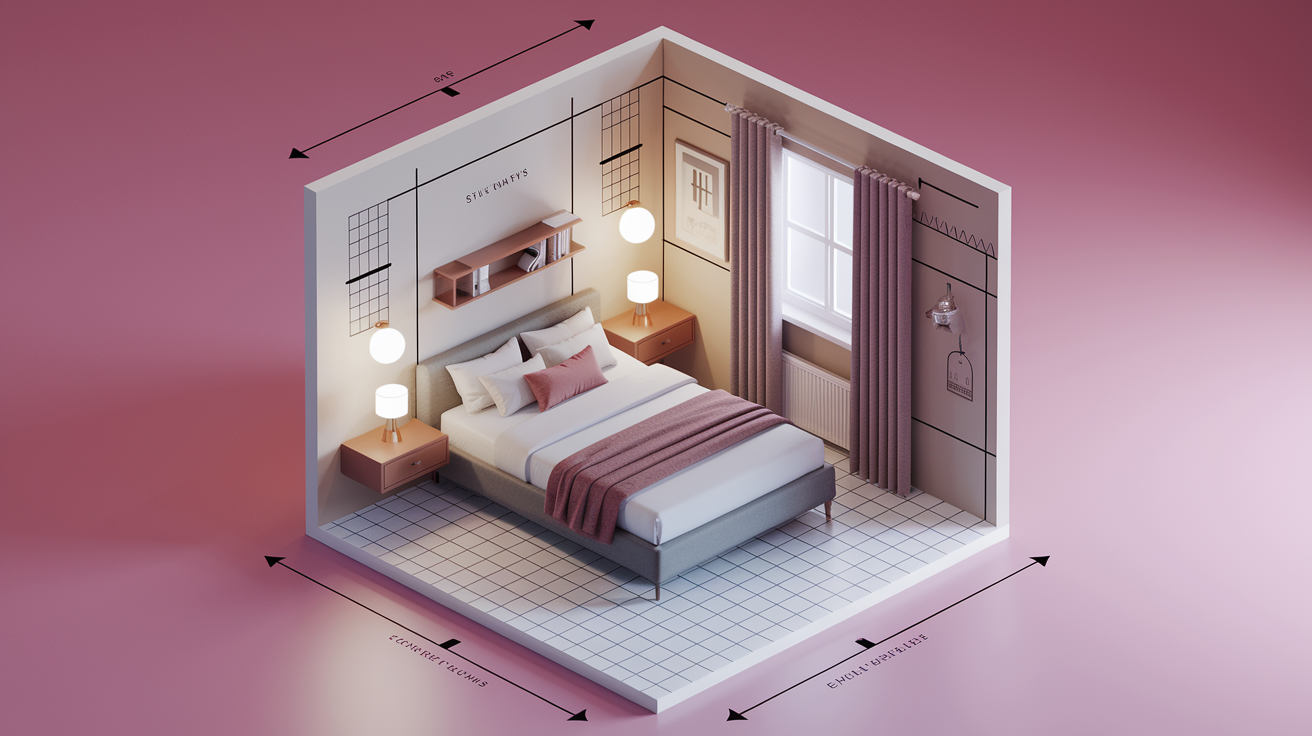
The fastest wins come from rethinking your layout to keep walking paths open and getting stuff off the floor. In most small bedrooms, you need at least 24 to 30 inches of clear space beside the bed to move without bumping into things. If you’re tripping over furniture or can’t open drawers all the way, your layout needs a reset.
Start by measuring your room and mapping where your bed sits. Then look for opportunities to shift storage off the floor and onto walls. Wall-mounted lighting, floating nightstands, and shelves above headboards keep surfaces clear. Once you’ve identified the bottlenecks, you can tackle tactical fixes that don’t require a contractor or serious money.
Here are six fast improvements that work in nearly every small bedroom:
Add under-bed storage bins or drawers. Rolling bins typically hold 30 to 60 liters each. Two to four bins can reclaim 10 to 20 cubic feet of otherwise wasted space.
Swap table lamps for wall-mounted sconces. This frees up at least 12 inches of bedside surface and makes the room feel less cluttered.
Choose compact nightstands or floating shelves. A floating shelf 8 to 12 inches deep costs $20 to $60 and saves all the floor space a traditional nightstand takes up.
Hang a full-length mirror. A mirror with at least 14 to 20 square feet of surface area can visually expand the room by up to 30 percent, especially if placed opposite or next to a window.
Paint walls in light neutrals. Choose colors with a light reflectance value (LRV) of 60 to 85 to make the space feel bigger.
Work your corners. Corner shelves, angled furniture placement, or even a corner sink in an attached powder room keeps the center of the room open.
These adjustments create noticeable breathing room without demolition. Most people see immediate improvements in how much floor they can actually use and how much easier it is to keep the room tidy. If you’ve been living around piles of shoes or can’t close your closet door all the way, start with one or two of these fixes. You’ll feel the difference in a weekend.
Choosing Furniture That Maximizes Space
Scale matters more in a small bedroom than in any other room. Furniture that’s too large blocks pathways and overwhelms everything. Pieces that are too small can make the room feel disjointed.
In an 8-by-10-foot bedroom (80 square feet), a twin or full mattress is usually the right choice. In a 9-by-11-foot room (99 square feet), a full or small queen can work. Forcing a king bed into a room sized for a queen is one of the most common small-bedroom mistakes. It leaves you with no space for anything else.
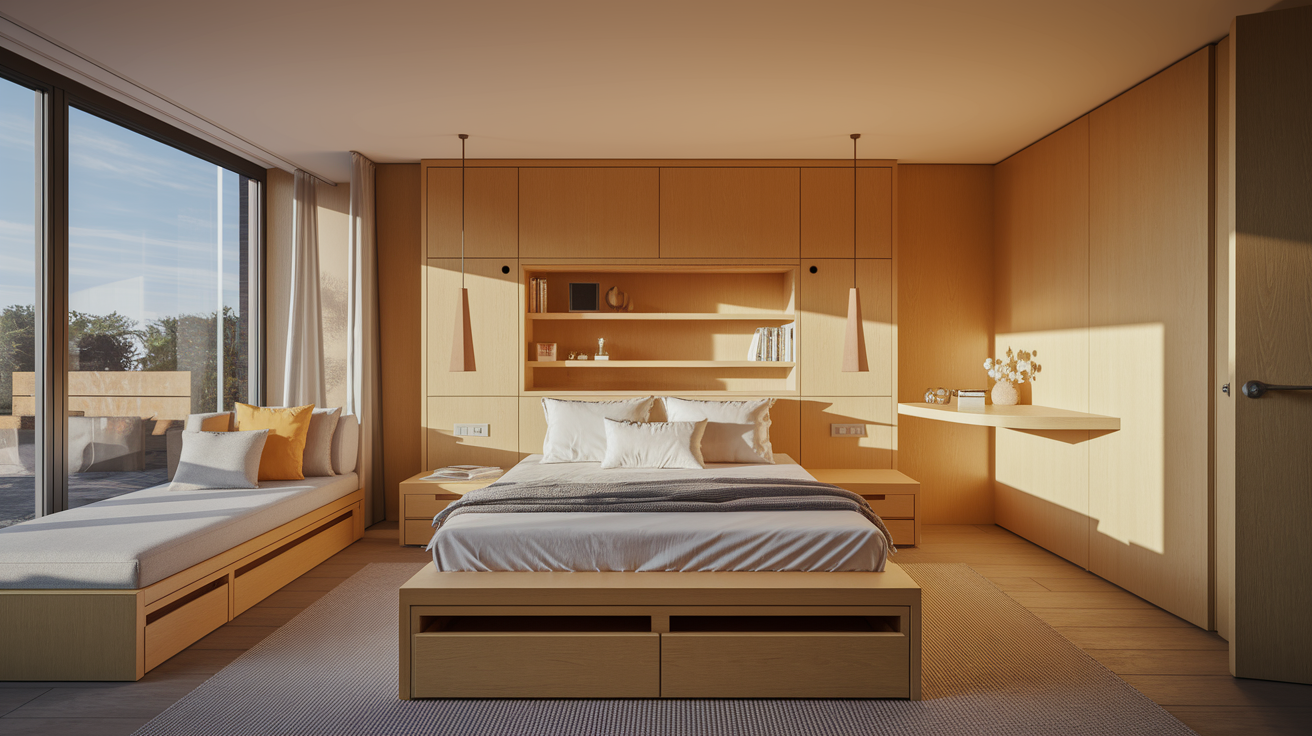
Multifunctional furniture is where small bedrooms really shine. A platform bed with built-in drawers adds 2 to 6 drawers (roughly 10 to 30 cubic feet of storage) and costs $250 to $900, depending on materials and finish. A fold-down desk mounted to the wall saves 60 to 80 percent of the footprint of a traditional desk and runs $40 to $300. A daybed or sofa bed keeps your floor clear during the day and provides seating, then converts to a sleeping surface at night. Modern sofa-bed mechanisms add only 6 to 10 inches of depth when used as a couch, so they don’t crowd tight rooms.
Avoid overcrowding by keeping furniture appropriately scaled and leaving clear pathways. If you’re bumping into corners or can’t open drawers fully, the room has too much in it. Use low-profile pieces, choose furniture with legs (which creates visual lightness), and skip bulky armchairs or oversized sectionals. A dresser can double as a nightstand. A bench with storage underneath can replace both a chair and a closet overflow spot.
Smart Storage Solutions for Tight Bedrooms
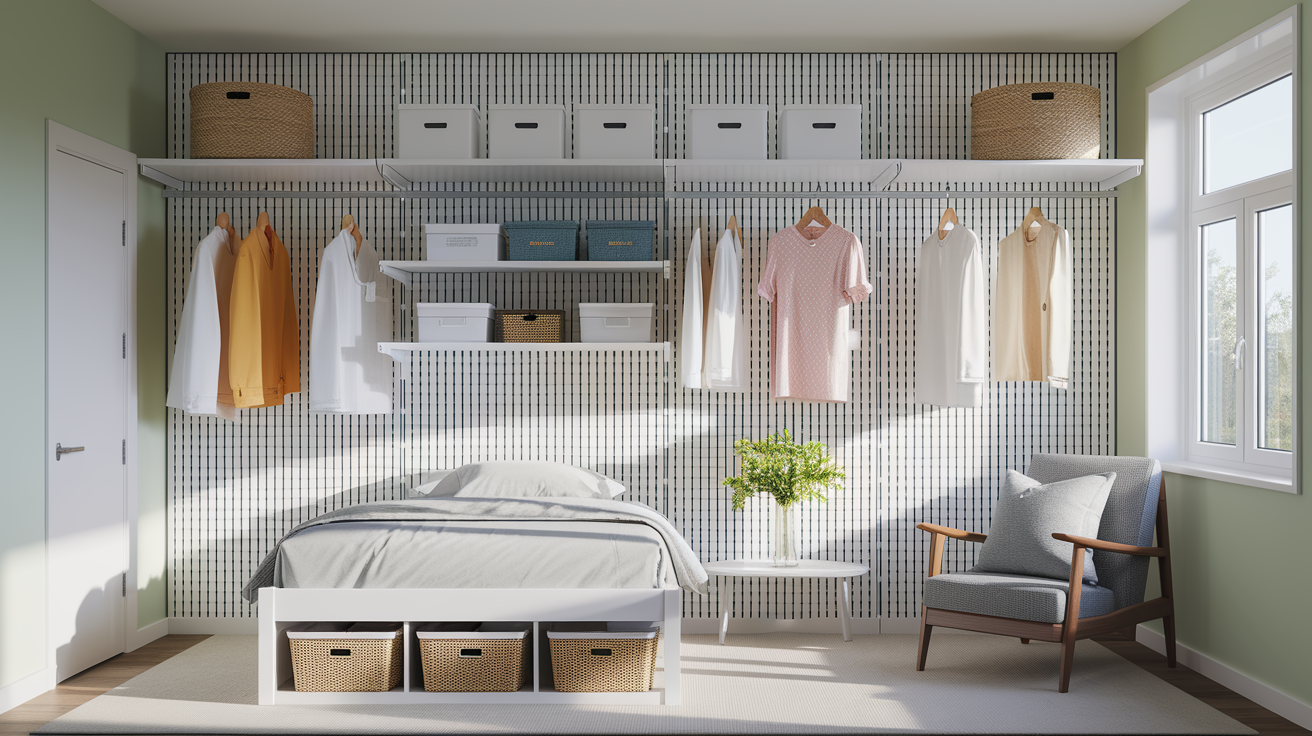
Vertical storage is the backbone of a functional small bedroom. When floor space is limited, the walls become your most valuable asset.
Install shelving that reaches up toward the ceiling. Most ceilings are 8 to 9 feet tall, and spacing shelves 12 to 16 inches apart gives you room for folded clothes, bins, and boxes. Use the upper shelves for items you need fewer than four times a year, like seasonal bedding or archived paperwork. Floating shelves 6 to 12 inches deep are perfect for décor and small books, while 10 to 14-inch shelves handle larger books and storage baskets.
Hidden storage keeps clutter out of sight and maintains a calm visual baseline. Under-bed storage is one of the easiest wins. Use 2 to 4 rolling bins or shallow drawers under your bed and you’ll reclaim 10 to 20 cubic feet versus no under-bed use at all. Platform beds with lift-up mattresses (like the West Elm Myla Pop-Up Storage Bed) reveal a deep storage cavity underneath. Built-in closet systems with two levels of hanging rods can double your hanging capacity. Adding a second rod typically creates 12 to 24 linear feet of extra hanging space per closet run, and modular closet kits cost $100 to $600.
Creative storage ideas that work in real bedrooms:
Modular cube organizers. 12-by-12-by-12-inch cubes cost $15 to $40 each. Stack three or four high against a wall for 2 to 3 feet of vertical storage.
Over-door organizers and hooks. Hang high on doors and walls to keep bags, scarves, and accessories off the floor.
Peg systems in closet drawers. Adjustable pegs keep cookware, accessories, or folded clothes organized and accessible.
Pull-out corner organizers. Deep corner cabinets or closets often waste space. Pull-out units bring items to you.
Labeled baskets and bins. Use 3 to 6 labeled bins to rotate seasonal items and reduce visual clutter.
Using Color and Lighting to Make a Room Feel Larger
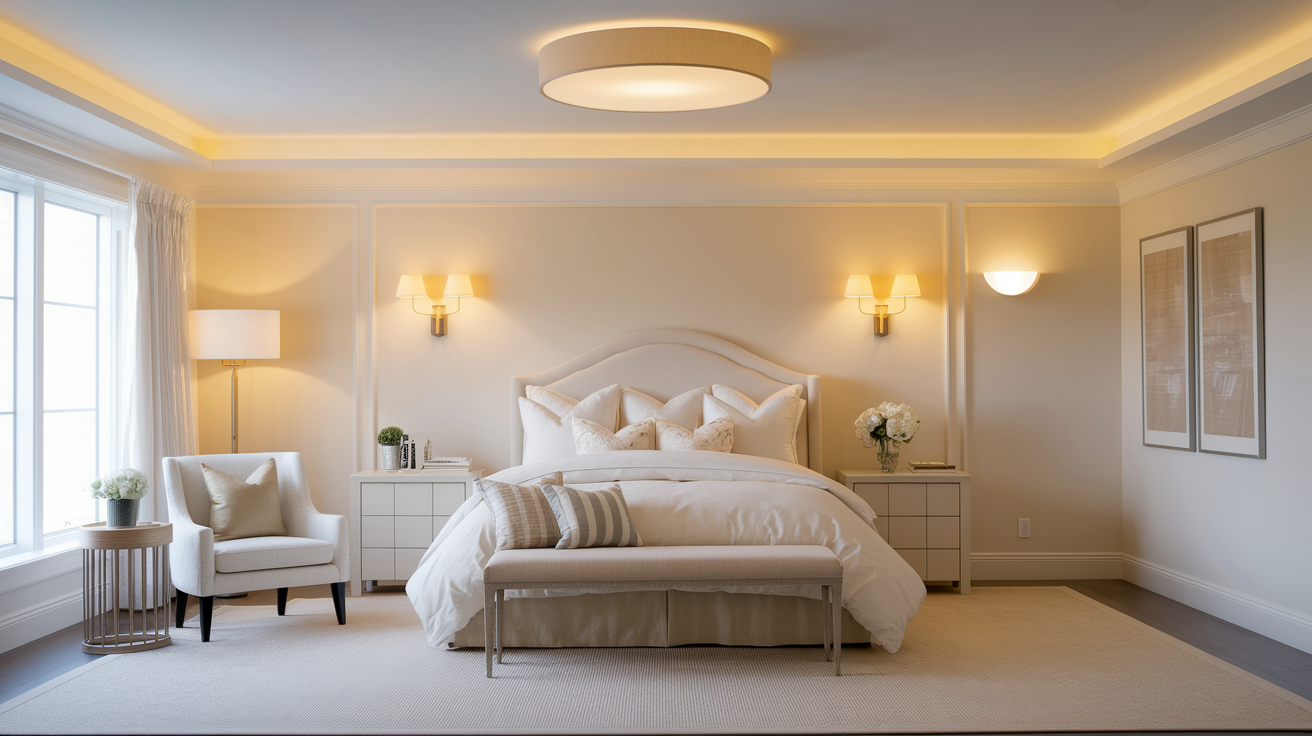
Light colors and smart lighting create the illusion of more space by increasing brightness and softening boundaries.
Walls painted in soft neutrals or cool pastels with a light reflectance value of 60 to 85 visually expand the room. White, pale gray, soft blue, and warm beige all work well. If you want contrast, use one darker accent wall but keep it to 20 percent or less of the total wall area so it doesn’t shrink the space.
Effective color strategies for small bedrooms:
Color drenching. Painting walls, trim, and ceiling in a single hue creates a cohesive, enveloping effect that can make boundaries feel less defined.
Dark ceilings with lighter walls. A dark ceiling paired with contrasting walls can visually raise the perceived height of the room.
Two-color palettes. Limiting the palette to two complementary tones (like white and soft sage) keeps the space calm and uncluttered.
Pattern in moderation. Use small-scale patterns on one or two textile pieces (a throw pillow or a single wallpapered wall), and keep pattern repeats minimal to avoid visual chaos.
Layered lighting adds depth and functionality without taking up surface area. Aim for 2,000 to 4,000 total lumens in a small bedroom. Use one ambient fixture (overhead or ceiling-mounted), bedside task lights delivering 400 to 700 lumens each, and accent lights at 100 to 300 lumens for mood. Choose warm color temperatures between 2,700 and 3,000 Kelvin for restful, cozy light. Wall-mounted sconces and plug-in LED fixtures replace table lamps and free up at least 12 inches of nightstand or dresser surface. Angled sconces in tight corners create elegant lighting vignettes without requiring floor space.
Budget-Friendly Décor Ideas for Small Bedrooms
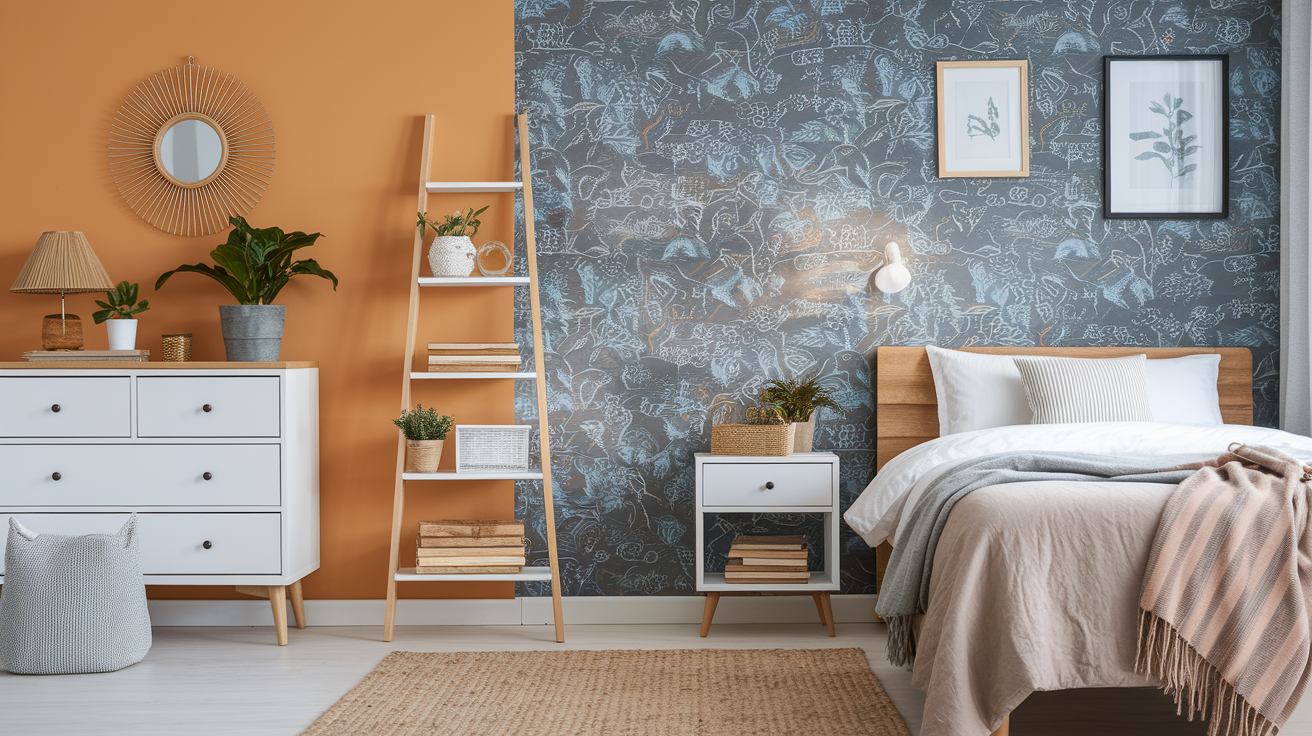
You don’t need a big budget to make a small bedroom feel more functional and put together.
Thrifted furniture, especially compact nightstands, benches, and bookshelves, can be repainted or refinished for a fraction of the cost of new pieces. Peel-and-stick wallpaper runs $20 to $60 per roll and can transform an accent wall in under an hour without the commitment or mess of traditional wallpaper. DIY floating shelves cost $20 to $60 in materials and tools, and you can install a pair in an afternoon to add vertical storage and display space.
Budget textiles make a big visual impact. Swap your curtains for floor-length panels mounted 4 to 6 inches above the window frame and extending 6 to 12 inches beyond the sides of the window. This costs $20 to $150 per panel depending on fabric, and it makes ceilings look taller and windows wider. Add a coordinating rug sized to anchor your bed. At least 18 to 24 inches of border should be visible around the bed edges. For a queen bed, choose a 6-by-9-foot or 8-by-10-foot rug. If your current rug is undersized, it can make the whole room feel off-balance.
Repurposing what you already own is one of the most cost-effective strategies. Use a dresser as a nightstand to add storage and surface area in one piece. Turn a ladder or a set of wooden crates into a bookshelf. Rearrange existing artwork into a single gallery wall to consolidate visual interest. Replace thick, high-pile rugs (which can be trip hazards) with low-pile options under 0.5 inches in tight, high-traffic rooms. These small shifts cost nothing and often make the room feel more intentional and less cluttered.
Realistic Before-and-After Examples of Small Bedroom Transformations
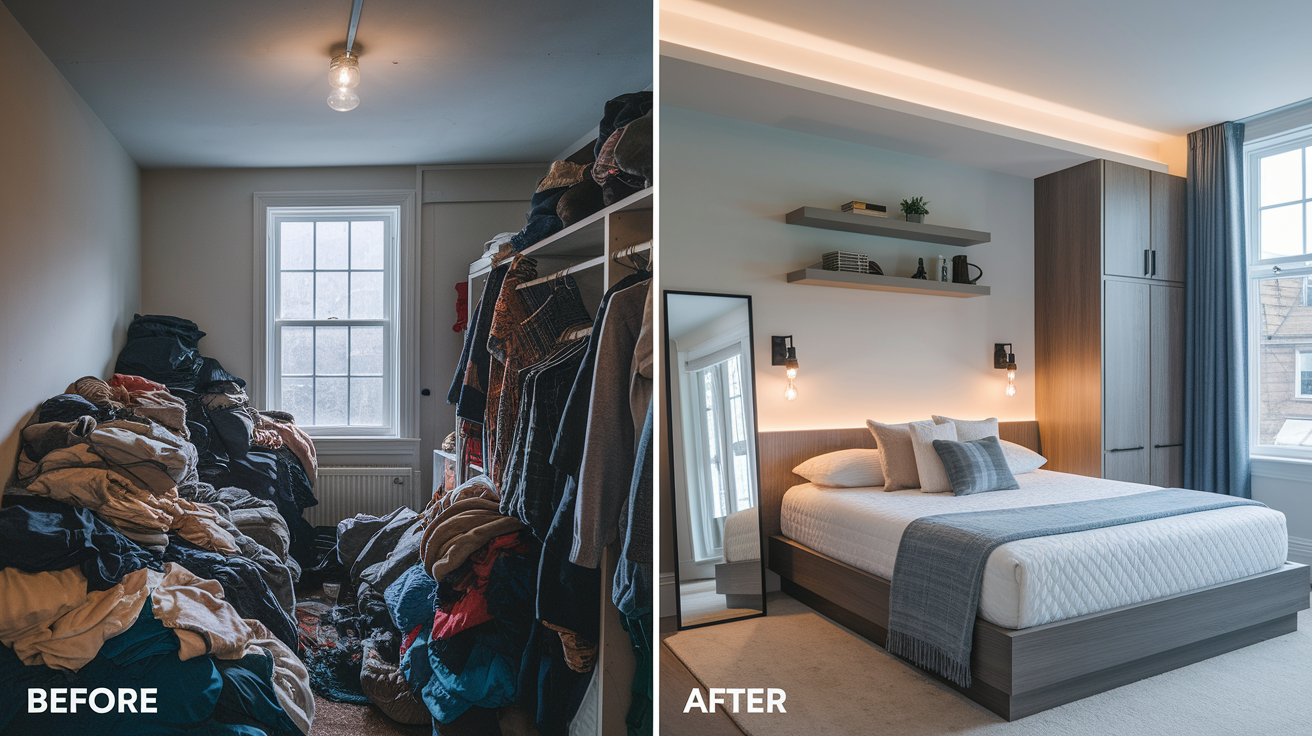
Most small-bedroom transformations start with the same problem: too much furniture, poor lighting, and no clear storage plan.
A typical before scenario includes a bed pushed into a corner, clothes piled on a chair, a single overhead light, and dark or outdated paint. The room feels cramped, cluttered, and hard to keep clean. The fix doesn’t require gut renovations. It’s usually a series of deliberate, low-cost changes.
In one 300-square-foot apartment, skipping traditional nightstands and installing wall-mounted sconces freed up about 2 feet of floor space on each side of the bed. The homeowner added a full-length mirror opposite the window, which doubled the perceived natural light, and painted the walls a soft warm white (LRV around 75). Total project cost was under $400. The room immediately felt 20 to 30 percent larger.
Here are four transformation steps that show up in nearly every successful small-bedroom makeover:
Declutter and edit décor. Remove 30 to 50 percent of non-essential items and limit decorative groupings to no more than three small clusters per wall.
Switch to a platform bed with storage. Adding built-in drawers reclaims 10 to 30 cubic feet of storage and eliminates the need for a separate dresser in some cases.
Install a closet organization system. Two-level rods, modular shelving, and pull-out bins can double usable closet capacity for $100 to $600.
Layer lighting and add a mirror. Replacing a single overhead bulb with ambient, task, and accent lighting, plus adding a large mirror, increases both function and perceived space.
Final Words
Start by swapping bulky furniture for multifunctional pieces and moving lights to the wall. It frees floor space fast.
Add vertical shelves, a light paint palette, mirrors, and under-bed storage to stretch the room visually.
The post covered quick layout fixes, smart furniture choices, storage systems, color and lighting tips, budget decor, and real makeovers you can copy.
For simple small space bedroom decor wins, try one change this weekend and build from there. You’ll get a room that feels bigger and works better.
FAQ
Q: What quick layout changes make a small bedroom feel larger?
A: The best quick layout changes for a small bedroom are placing the bed on the longest wall, keeping one clear traffic path, mounting lights, using under‑bed storage, and clearing surfaces for instant space.
Q: How do I choose furniture that fits a small bedroom?
A: Choosing furniture that fits a small bedroom means prioritizing scale: pick low, slim pieces, measure walkways, favor narrow dressers and a thin bed frame so the room feels open and traffic flows easily.
Q: Are multifunctional furniture pieces worth it for tiny bedrooms?
A: Multifunctional furniture is worth it in tiny bedrooms because drawers, fold‑down desks, and nesting tables save floor space, add storage, and let one piece do several jobs without crowding the room.
Q: What’s the best way to add storage without losing floor space?
A: The best way to add storage without losing floor space is using vertical shelves, over‑door organizers, wall hooks, under‑bed bins, and built‑in closets that keep items off the floor and easy to reach.
Q: Which colors and lighting tricks make a small room look bigger?
A: Colors and lighting that make a small room look bigger use light, cool tones, a consistent palette, mirrors, and layered lighting like ambient, task, and accent to add depth while keeping surfaces clear.
Q: What are fast, budget‑friendly decor upgrades for small bedrooms?
A: Fast, budget‑friendly decor upgrades include thrifted furniture, peel‑and‑stick wallpaper, swapping throw textiles, fresh bulbs, DIY shelves, and repurposing items for storage to quickly refresh the room.
Q: How can I avoid overcrowding when adding storage and furniture?
A: To avoid overcrowding, measure before you buy, limit pieces to essentials, choose slim or wall‑mounted items, and keep one clear walking path so the room stays functional and calm.
Q: Do under‑bed storage and built‑ins cause ventilation or mattress problems?
A: Under‑bed storage and built‑ins can affect ventilation and mattress care, so use shallow bins, leave small gaps for airflow, avoid fully sealed plastic, and rotate the mattress to prevent moisture buildup.
Q: What simple before‑and‑after steps give the biggest visual impact in a small bedroom?
A: Simple before‑and‑after steps with the biggest impact are decluttering, switching to light paint, mounting lights, adding a mirror, and swapping bulky pieces for multifunctional furniture for a clearer, brighter room.